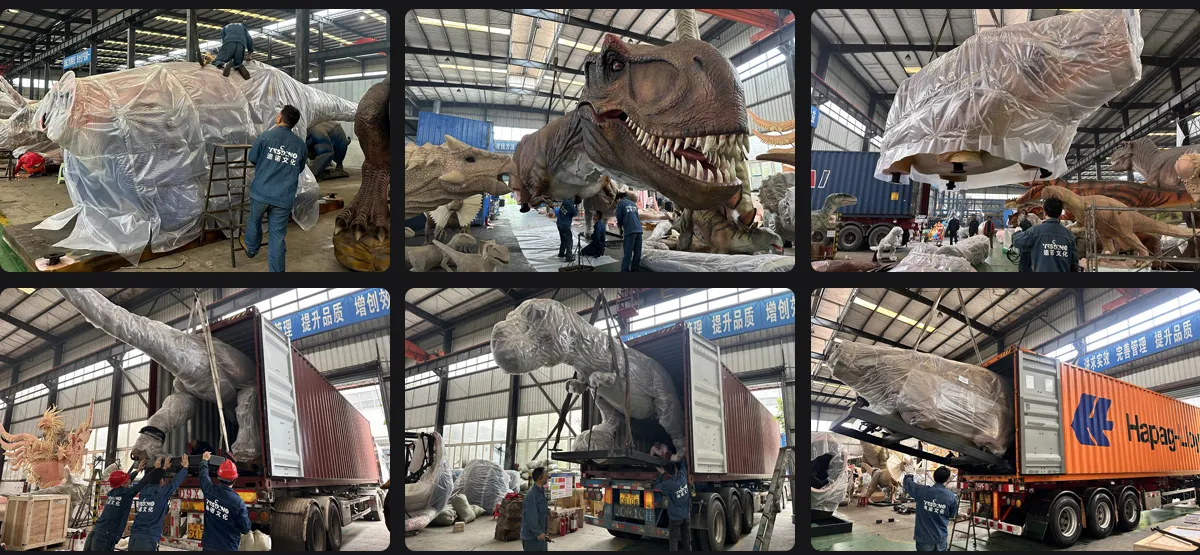


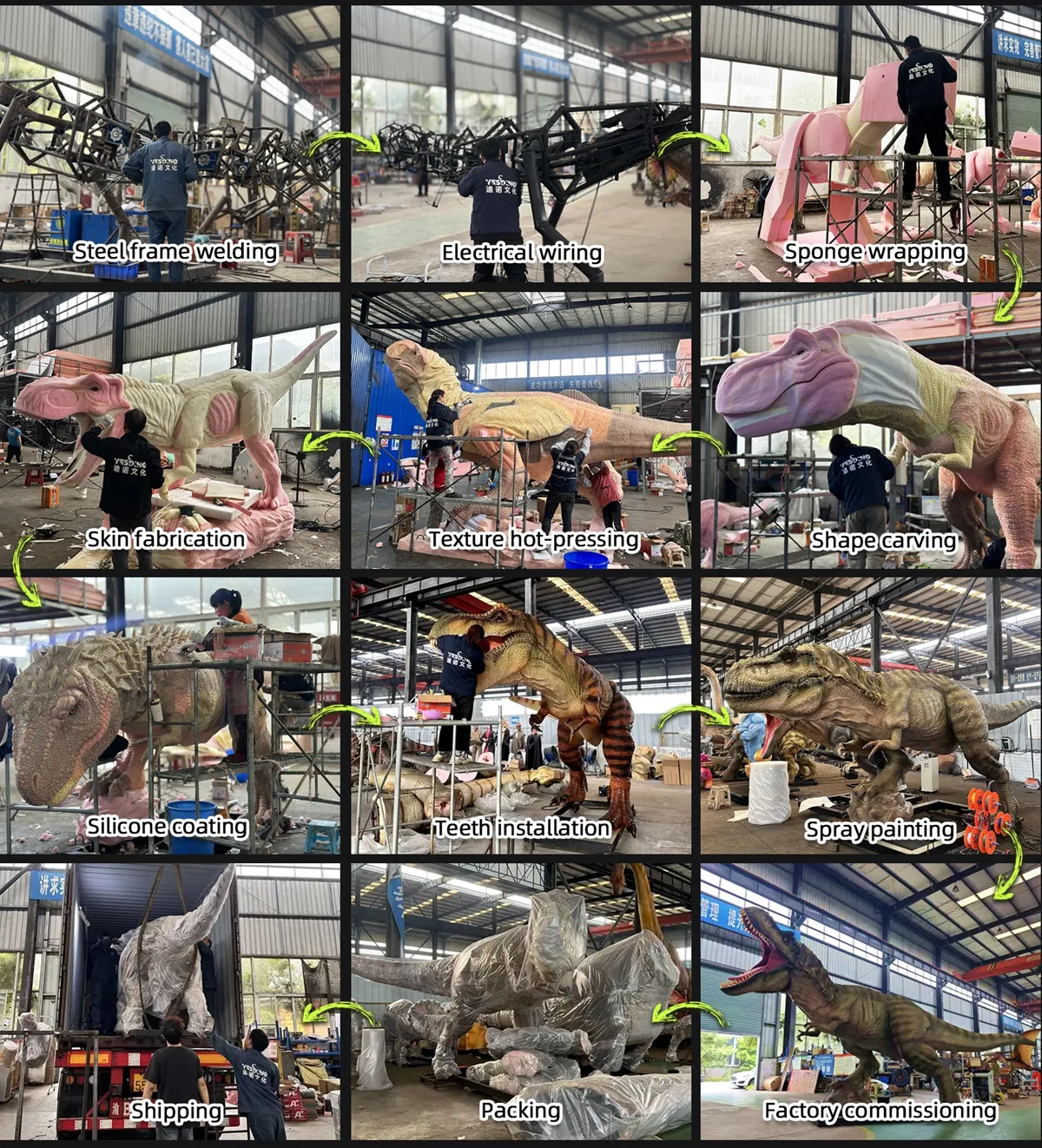
Production Process
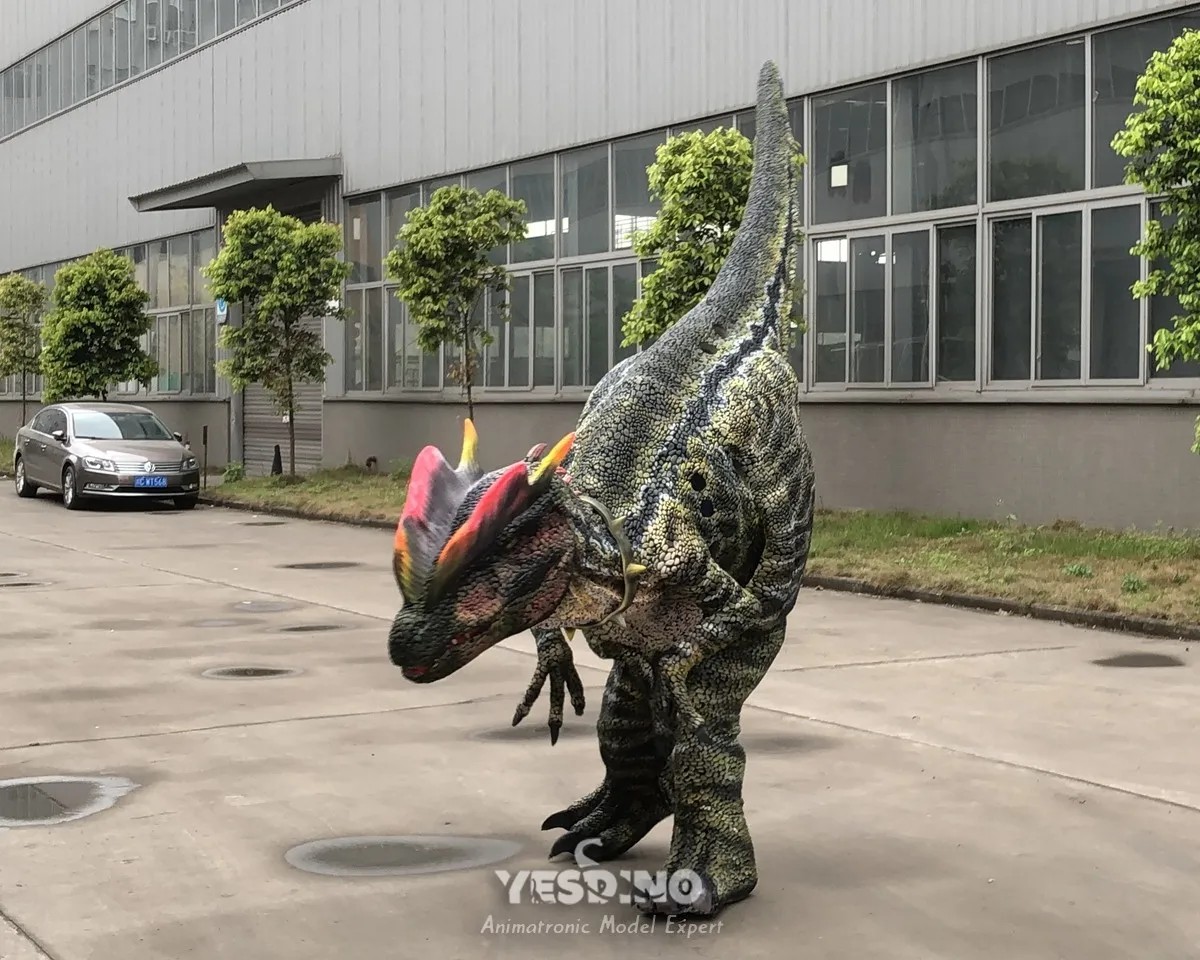
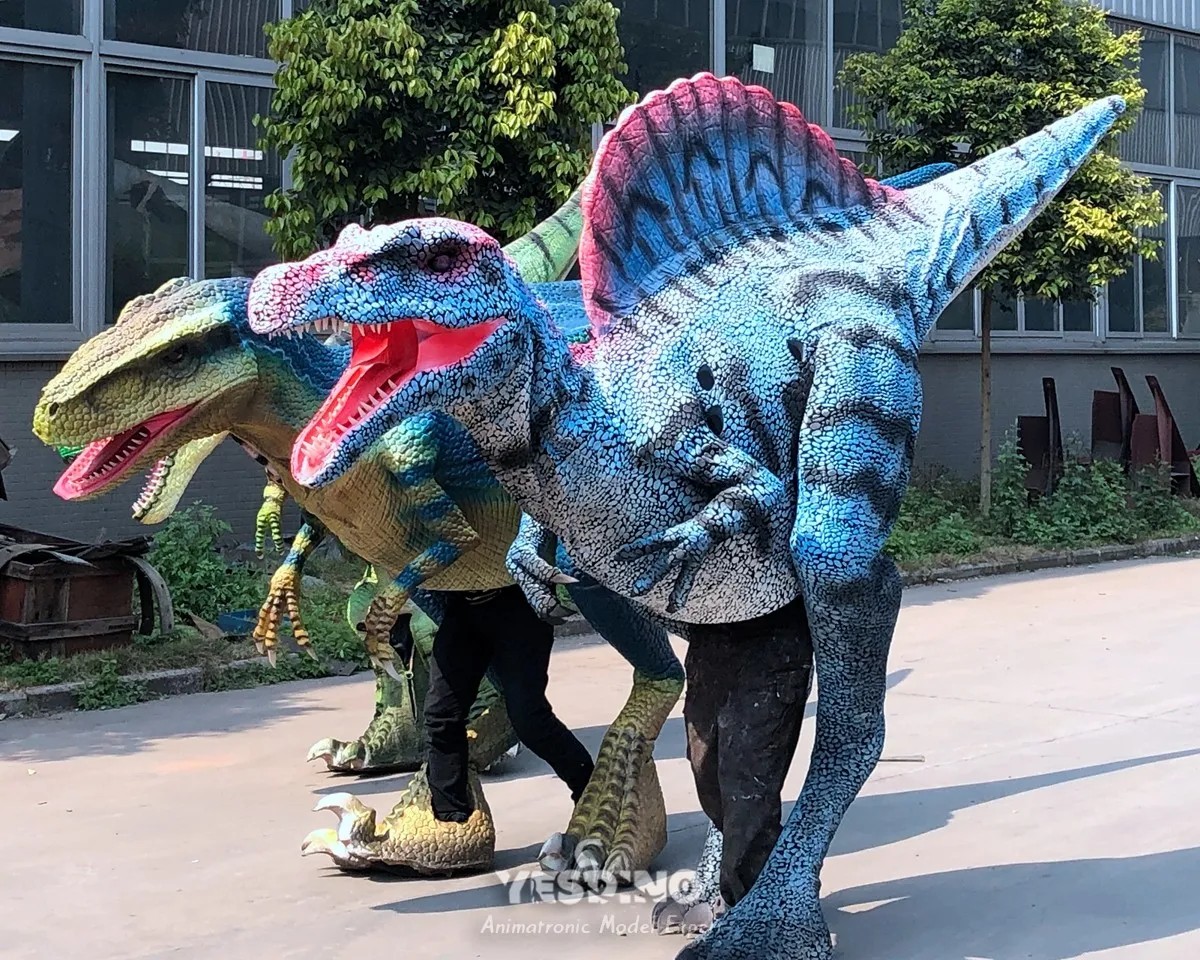
Almost every animatronic dinosaur is designed around a fixed site: a pad, a cable route, an anchor pattern. This one is designed around a van. Four metres long, 1.6 m tall, running on 12 V with about seven hours on a charge, and controlled from a wireless remote at up to a hundred metres.
SKU YKL-048: four metres long, 0.7 m across, 1.6 m tall. The scale can be built anywhere from a quarter to one and a half times this size — the four-metre unit is the one that fits a doorway and a car boot with the sections split.
What battery power changes
No cable means the animal can go where the crowd is rather than where the power is: a shop floor, a stage, a hotel forecourt, a film location with no supply. Seven hours covers a full event day with margin, and a spare battery set turns it into a two-day job.
The trade-off is planning. Battery units need charging discipline between events, and the drive specification is lighter than a mains build — this animal is not designed to stand outdoors through a winter. Tell us the usage pattern at enquiry and we'll confirm whether battery or mains is the right configuration.
Control: remote, or DMX
The standard controller is a 100 m wireless remote, which is what an operator wants for a walkabout or a photo session: a person nearby making the animal react to whoever is in front of it. DMX512 is the option to add when the animal is part of a show — cued from a lighting desk alongside sound and video rather than driven by hand.
Thermal overload protection is standard on the drives. On a unit that gets worked hard at events, that is the difference between a shutdown and a burnt motor.
Movement set
Mouth opening synchronised with the roar, head rotation around ±45 degrees, vertical neck movement, lateral tail movement, eye blink and a claw articulation. The head rotation range is wider than on a fixed trail build, because a roaming animal needs to address people on both sides.
At 1.6 m the animal is at chest height on an adult and eye level for a child, which is the height that works in a crowd: visible over a barrier, close enough to react to.
Where it earns its place
Event and hire operators. Battery, remote and no base plate is exactly the specification for a unit that works four venues a month.
Film and content production. A controllable animal at human scale, without a generator, is easier to place on a set than a static build.
Retail activations. Move it into a concourse for a weekend and out again on Monday, without a contractor.
Museums and science centres. A roaming animal for education sessions, where a fixed exhibit can't go.
Finish and delivery
Steel structure with high-quality silicone skin, high-density sponge volume and pigments. Two material finishes are available: the standard event finish, and a museum finish with finer surface detail for close inspection.
Freight, duties and certificates are quoted separately from the product price. Because the unit is battery-powered, ask about the battery shipping documentation early — it is a separate paperwork item from the animal itself and easier to arrange at the factory.
Operating it day to day
A battery unit lives or dies on charging discipline. Two battery sets and a routine of charging overnight after every event is what keeps a hire fleet running; one set and an ad-hoc approach is what produces a dead animal at a paid booking.
The other habit worth building is a pre-event check: remote pairing, joint travel, and a walk around the skin at the grip points. It takes ten minutes and it catches the two failures that actually happen — a flat battery and a remote that hasn't paired since the last venue.
Enquiry
Tell us how often it moves, whether it will be outdoors, and whether it needs to be cued from a show desk. Those three answers decide battery versus mains, standard versus museum finish, and remote versus DMX.
Where to go next
Two things come up in almost every enquiry on this build: how the size compares with the alternatives, and what it takes to get it on site. The wiring concealment notes sets out the length options side by side, and the park layout and theming strategies covers pads, access and assembly. Budget planning sits in the cost breakdown with the seven price factors.
For ideas on placing it, see layout strategies for themed trails. The rest of the range is on animatronic dinosaurs, and if this one is the wrong size for the slot, outdoor animatronic dinosaur ride for zoos is the closest alternative.
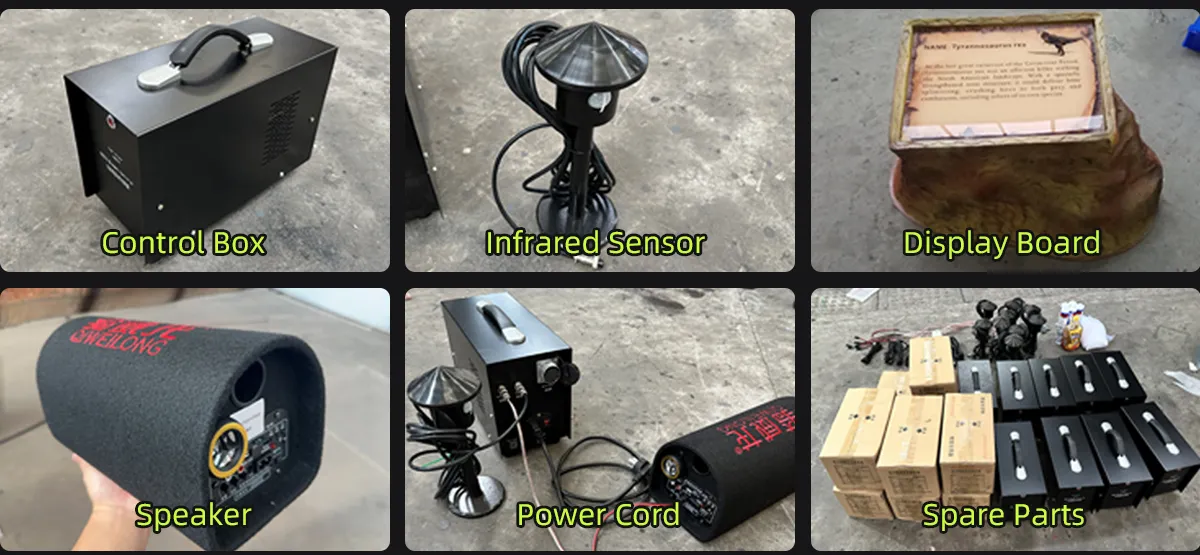
Product Accessories
Packaging and Container Loading