Production Process
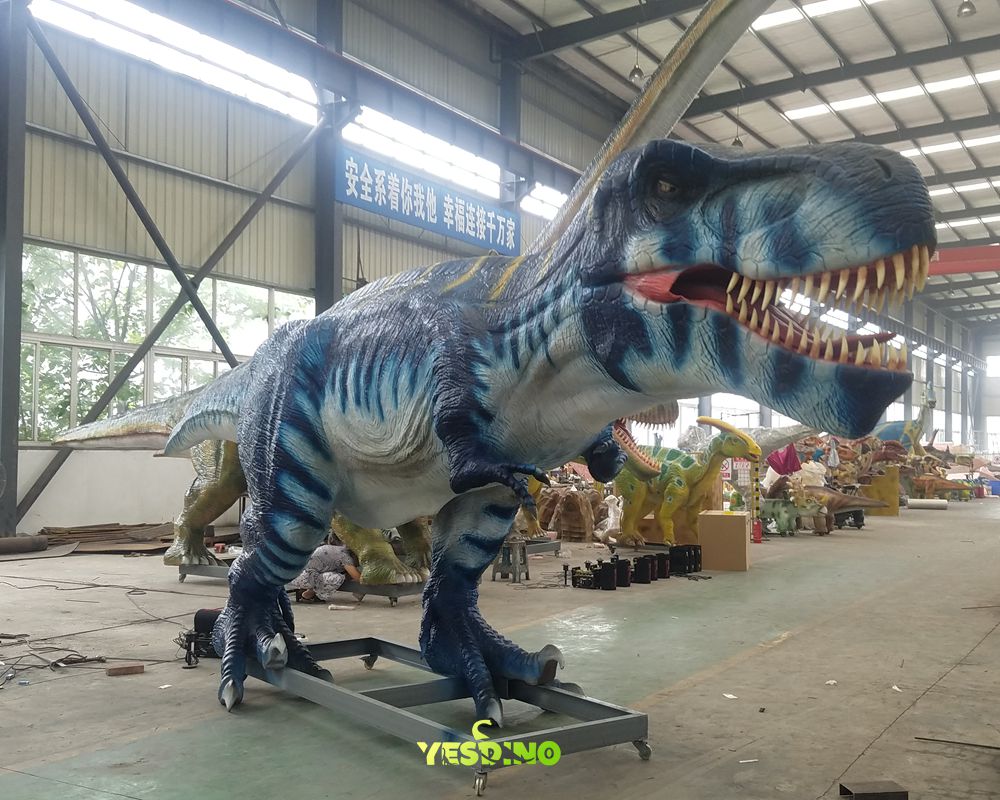
Walk a trail and you can tell which animals were drawn on a screen and which were built around a frame. It shows at the shoulder. An animal that is eight metres long and thin through the body looks like a drawing standing up; one with depth through the ribs looks like it weighs something.
A metre across, and why it changes the read
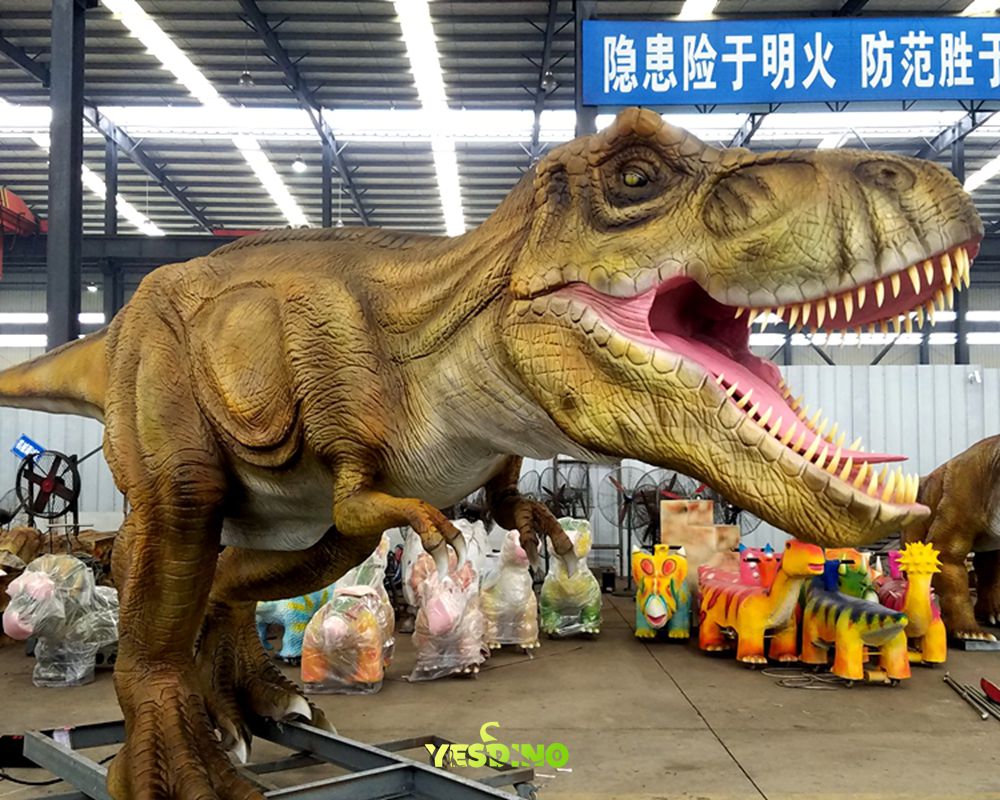
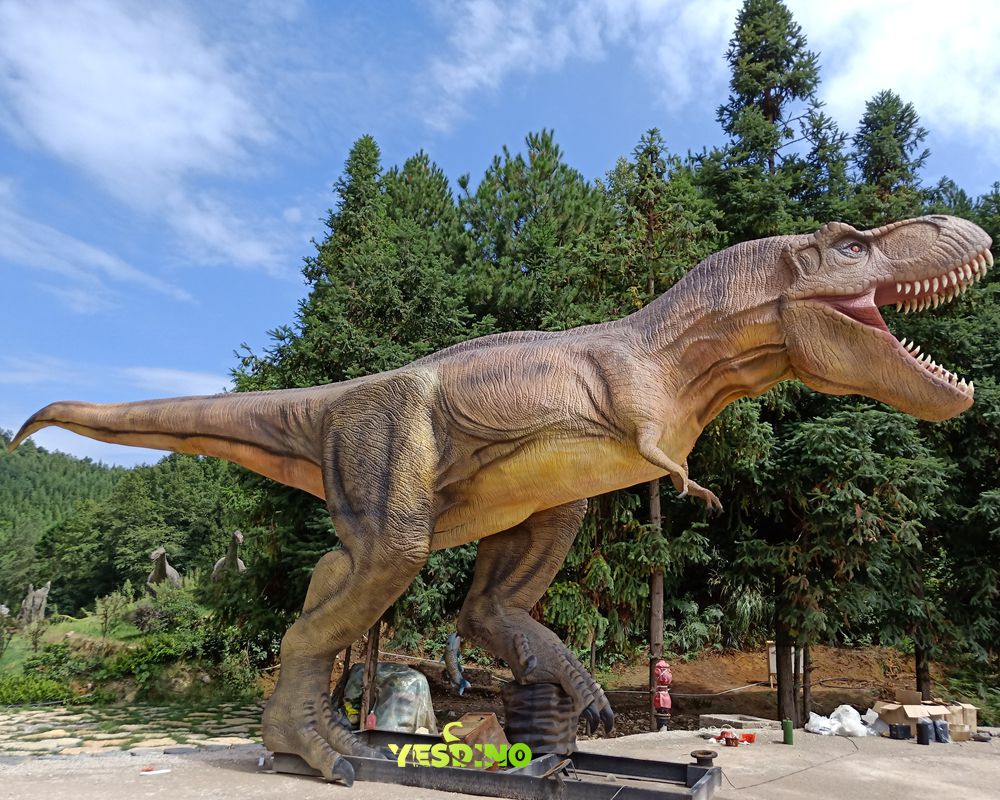
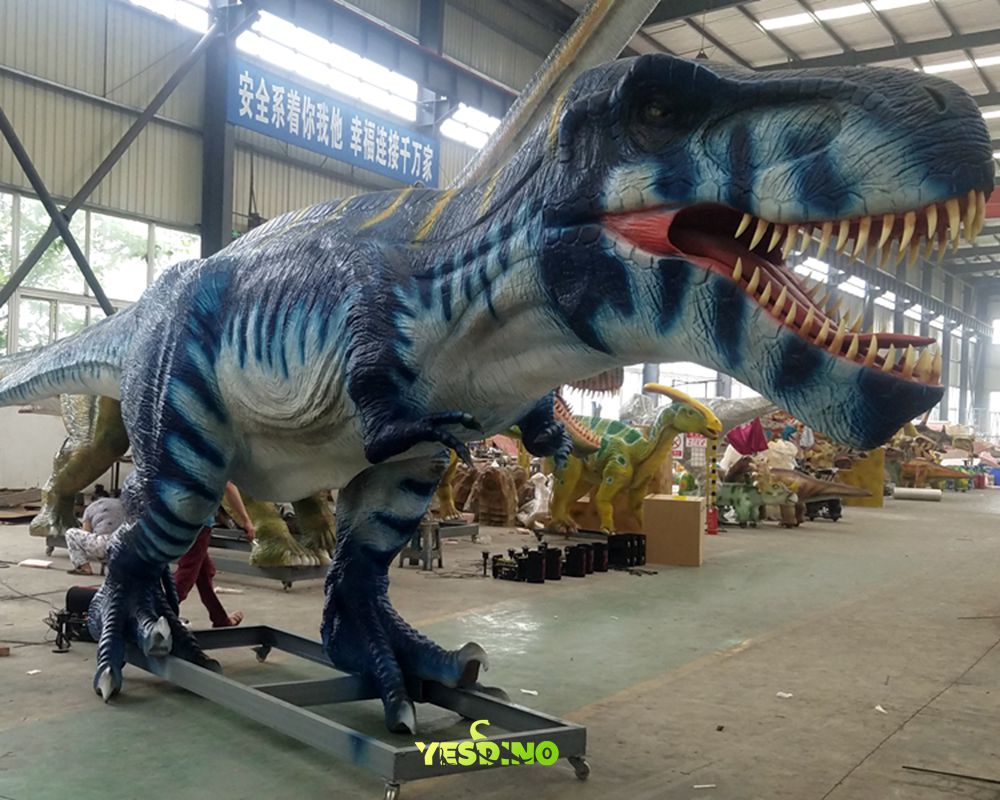
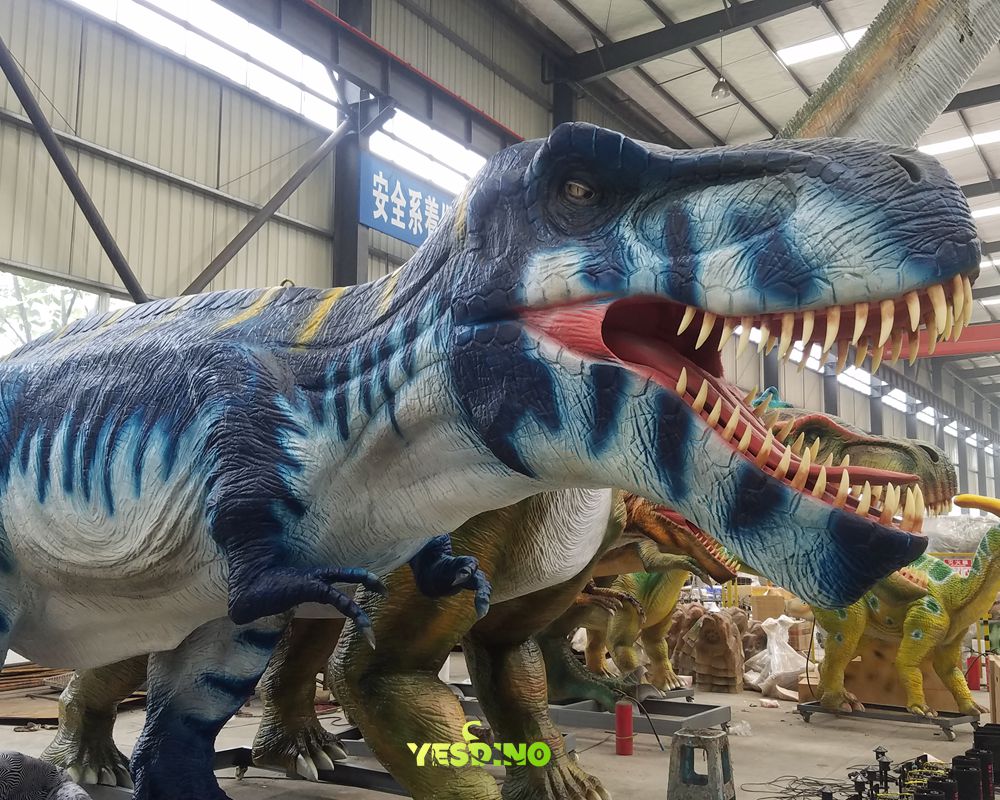
8 m long is a common length. 1 m across the body is not. Most builds at this length sit around 0.8 m, and that 200 mm shows from the side, where visitors actually see the animal: the ribcage has depth behind the forelimb, the hips carry the tail rather than tapering into it, and the neck has something to hold up.
What you pay for it is width on the ground and a little more skin. The animal needs a wider pad and slightly more room at the shoulder when it is walked past a fence. A small premium for the thing visitors remember.
Stance and where the feet land
At 2 m at the head the animal is low for its length, so the stance carries the character. Feet set slightly wider than the body line, one forward, weight over the front foot, head down and forward: that is the posture that reads as a predator about to move.
On site, the footprint wants a pad about 3 m by 2 m with the feet on the hard standing and the tail over soft ground. Place it so the approach comes at the shoulder rather than head-on. From the front, a Tyrannosaurus is a narrow animal with two small forelimbs and a wide skull; from twenty degrees off the line of travel, the depth of the body and the set of the legs both show.
Movement that sells the weight
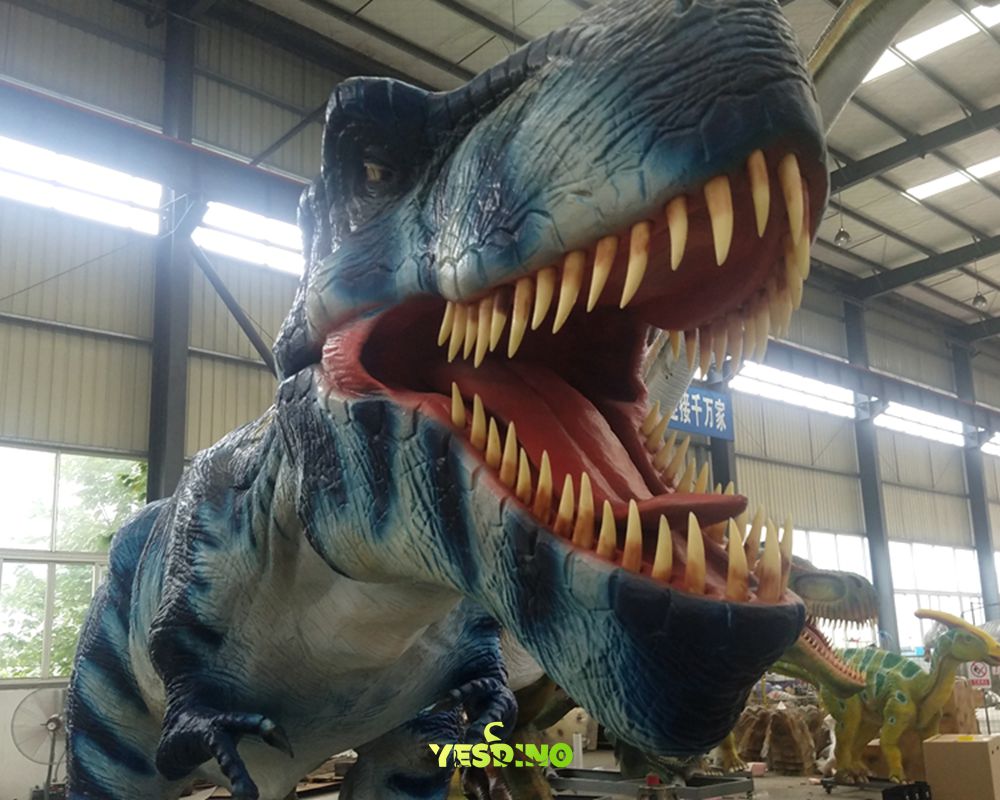
Head and neck first. A heavy skull turning on a neck that accelerates too fast looks like a puppet; the fix is a longer ramp on the first fifteen degrees and a small settle at the end of the turn. The jaw opens with a pause at the top. The forelimbs carry two-fingered hands and stay near the chest, which is where they belong on this animal.
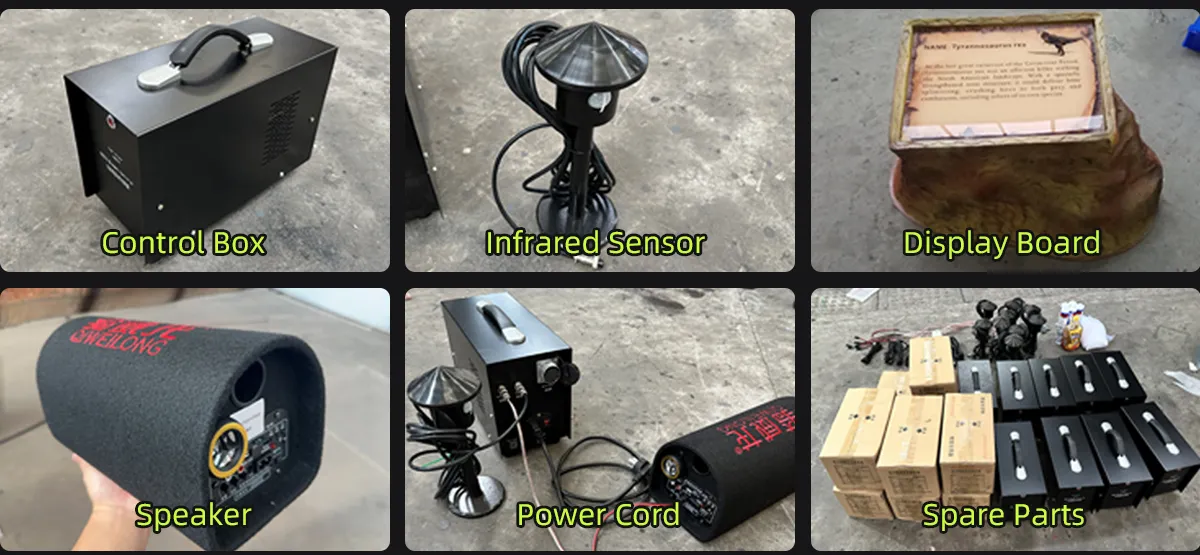
Triggering: one sensor at 6 m on the approach side with 0.8 s of delay, plus a second at 2.5 m if the path passes close. The near sensor starts the head turn early enough that the animal is already looking at people as they arrive; the far one holds the programme open while they stand and photograph. On an eight-metre animal, a lazy tail sway in the pause keeps the body from looking switched off between groups.
Frame, skin, and a body this deep
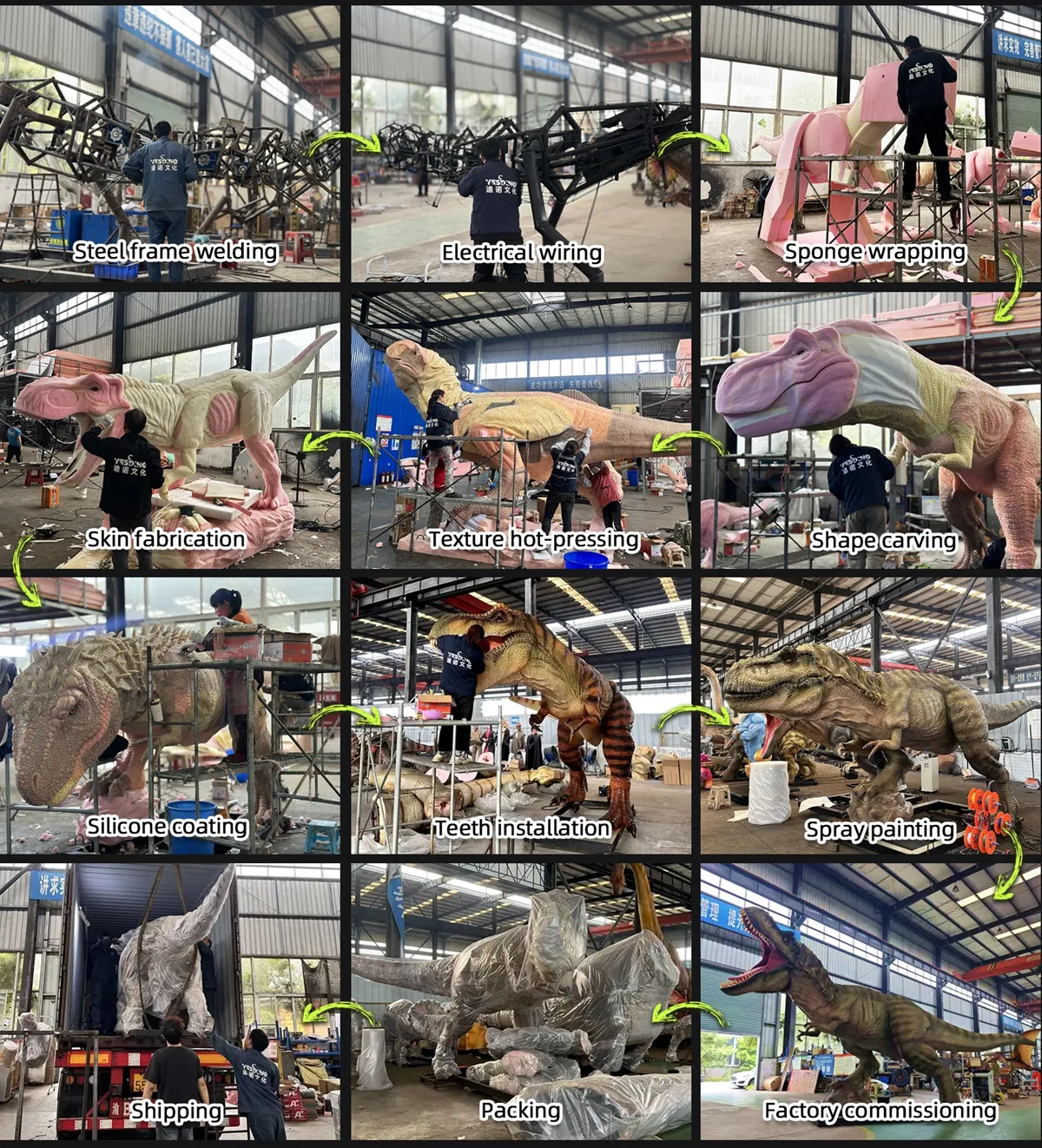
Q235 steel frame with rust treatment, body carved in high-density foam, silicone skin 5–7 mm sprayed in translucent layers. A deep body takes more foam and skin; the rib panels are the largest pieces on the animal, split at the shoulder and hip rather than run as one sheet.
Rated −25 °C to 45 °C. On a park animal the wear points are the flank where visitors reach over a fence and the top of the skull where birds sit; both take matching pigment from the batch record rather than a repaint. Core electronics carry a two-year warranty, and the parameters set at commissioning stay on file.
Onto the pad without a crane
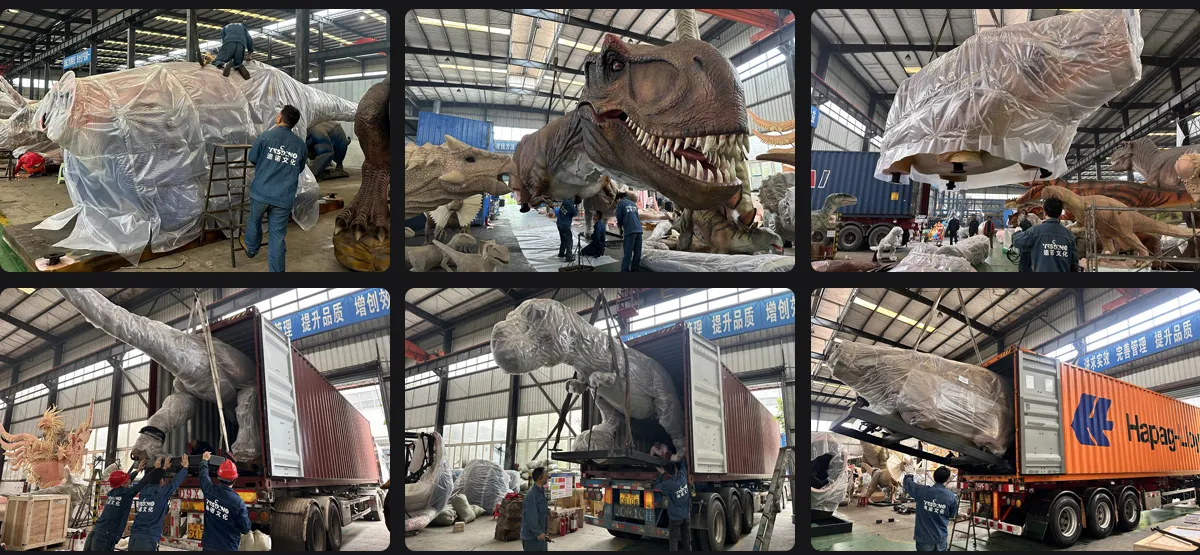
Four crates, the heaviest around 420 kg. Base frame first, then legs and body, neck and head, skin, power and programme. At 1 m across the body, a 1.4 m gate is comfortable and a 1.2 m one needs the animal walked through on its own feet with the skin off.
Anchoring is four M16 bolts into a concrete pad or ground screws into firm ground; a pad poured 200 mm wider than the base plates gives the installer somewhere to work. The cabinet sits behind the animal on the service side, door opening away from the path, 700 mm clear. Trails get maintained between opening and closing, so a cabinet facing visitors costs a barrier every time.
Before you order
Send the site plan with the animal's position marked, the direction visitors come from, the ground surface, and the gate or door the crates pass through. Confirm 110 V or 220 V and where the supply lands.
This is not the build for a plaza with a forty-metre approach, where the depth disappears and length does the work. On a trail with a 1.2 m path and no verge, the width becomes a liability; a narrower eight-metre animal suits that site.
Enquiry
Tell us the trail, the viewing angle and the ground, with one photo from where visitors will stand. We will confirm whether the wider body suits that position, and what the pad and gate need to look like.
Where to go next
If you are still comparing options, start with the spare parts and repair kit list — it lines up the builds by length and reach. Site work is covered in the size guide covering 3 m to 12 m builds, and the rental cost breakdown lists the factors that move the price.
For ideas on placing it, see outdoor placement notes. The rest of the range is on animatronic dinosaurs, and if this one is the wrong size for the slot, animatronic dilophosaurus for dinosaur parks is the closest alternative.
Product Accessories
Packaging and Container Loading