
Production Process
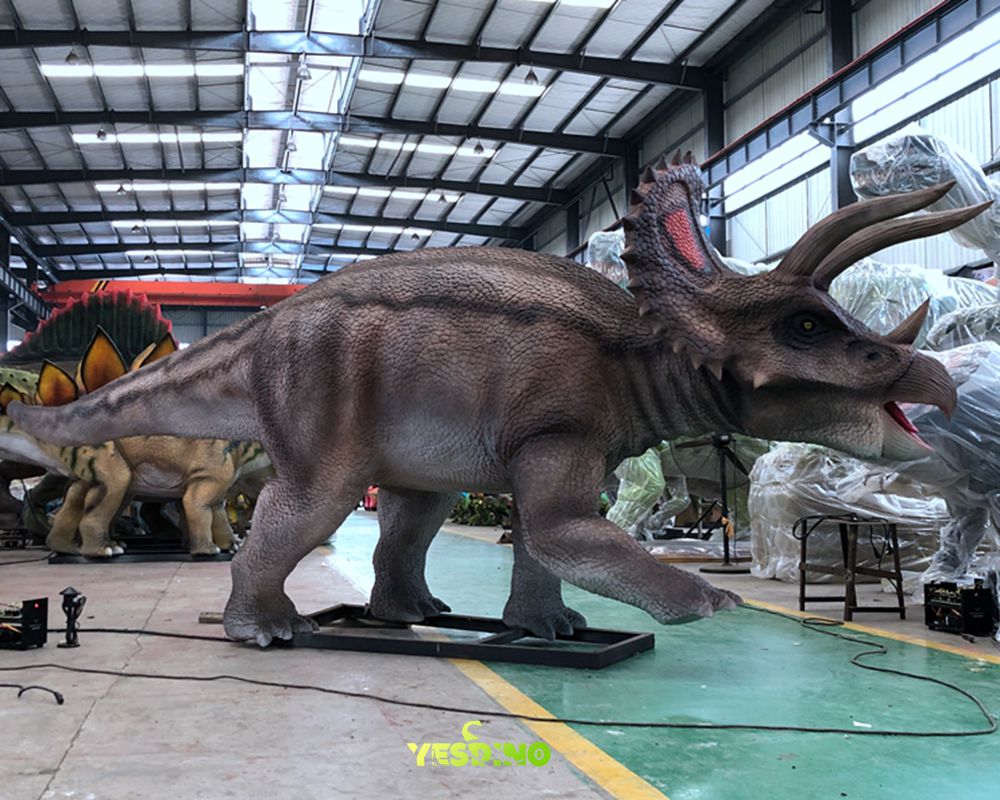
Most animatronic animals on a trail perform to a timer. This one has a sixth movement group — a lifting right leg — which changes what the animal can do: it looks like it is shifting its weight to move, rather than standing and rotating its head.
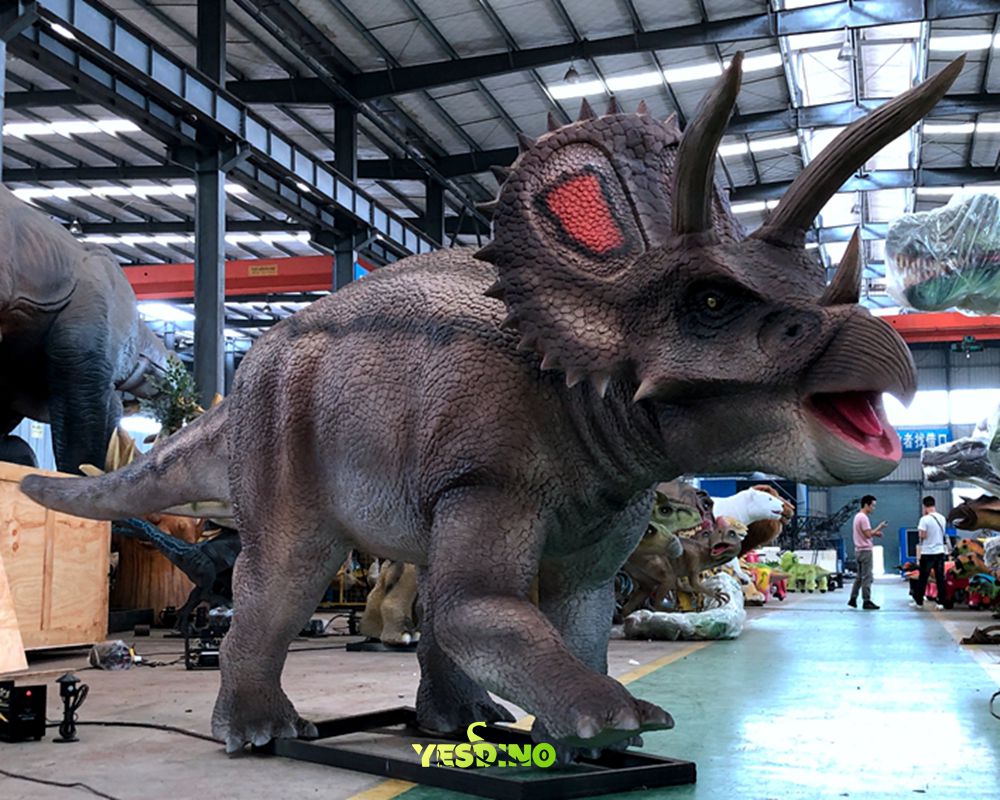
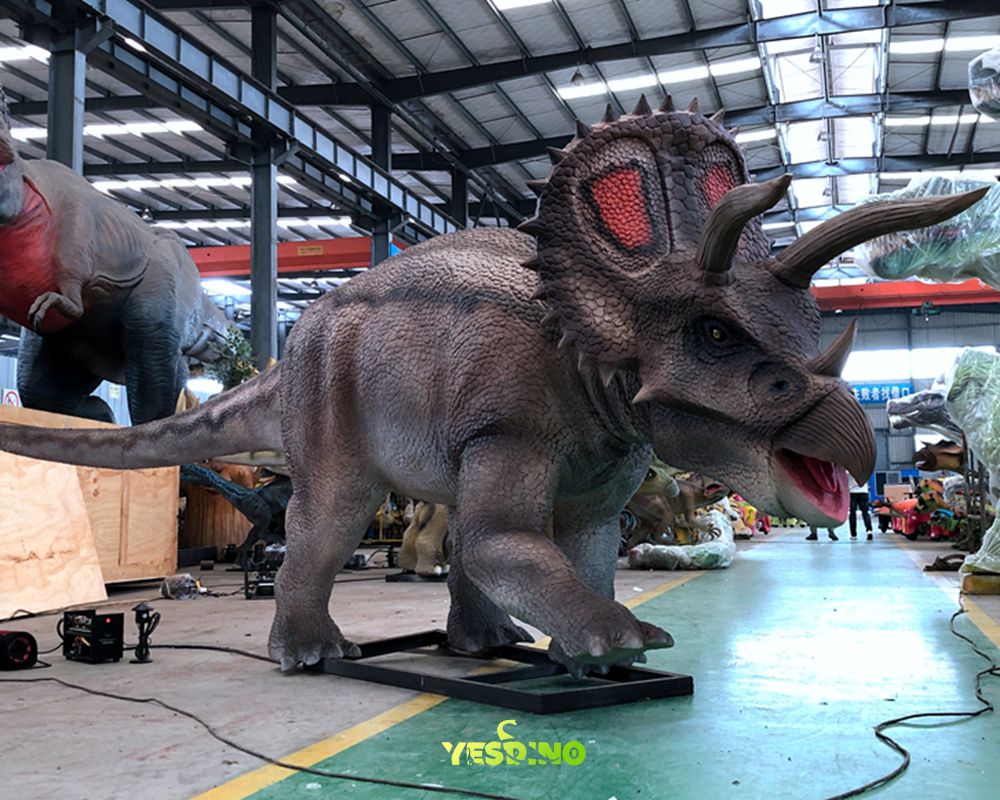
SKU YKL-079: five metres long, 0.65 m across the body, 1.9 m to the top of the frill.
What a leg lift adds
Five groups on a Triceratops — head, neck, jaw, eyes and tail — read as a head on a body. Adding a leg changes the whole read: the animal appears to be about to step, and visitors wait to see whether it will. It is the cheapest way to make a stationary model feel like it might move.
It also has to be built properly. The leg group carries more load than any other joint on the animal, so the hip pivot is a heavier assembly than the movement alone would suggest, and the base frame is designed to take the shift in weight rather than just the static mass.
Triggered, not looping
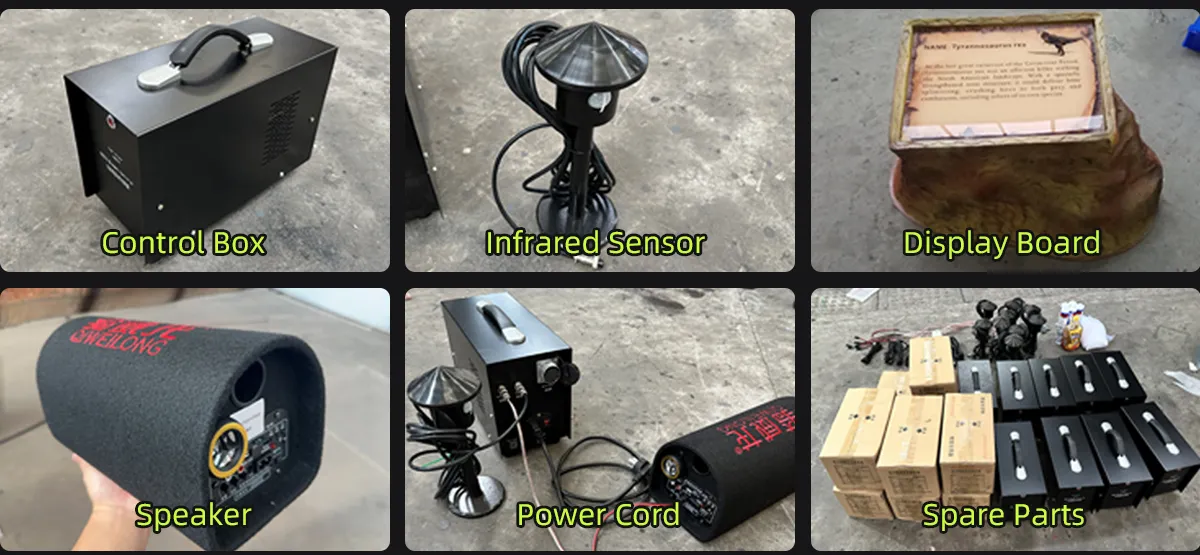
The sensor is what makes the sixth group worth having. A leg lift on a timer is a tic; a leg lift that happens when a group of visitors walks up is a reaction. We set a proximity sensor at the barrier with a short delay, so the animal responds a beat after the visitor arrives — late enough to feel like it noticed them.
The cycle also includes idle behaviour: a blink, a slight neck shift, a slow head turn. Without those, the animal is visibly frozen between triggers, which is worse than constant motion.
The frill at 1.9 m
At this height the frill sits just above adult eye level, which is the right band for photographs — close enough for detail, high enough not to block the path. The horns are sculpted from the skull reference and finished slightly darker than the skin so they read as bone.
The beak is worth the attention on a build this size. A hooked upper jaw and a defined lower jaw line are what separate a Triceratops from a generic horned head, and at two metres they are visible.
Where it works
Park trails. The intended setting: a mid-trail animal that reacts as visitors arrive, with room to walk around the head.
Petting zoos and family attractions. The response behaviour is what children remember, and the animal is calm enough not to frighten them.
Zoo dinosaur zones. A herbivore between two predators resets the rhythm of the walk.
Finish and delivery
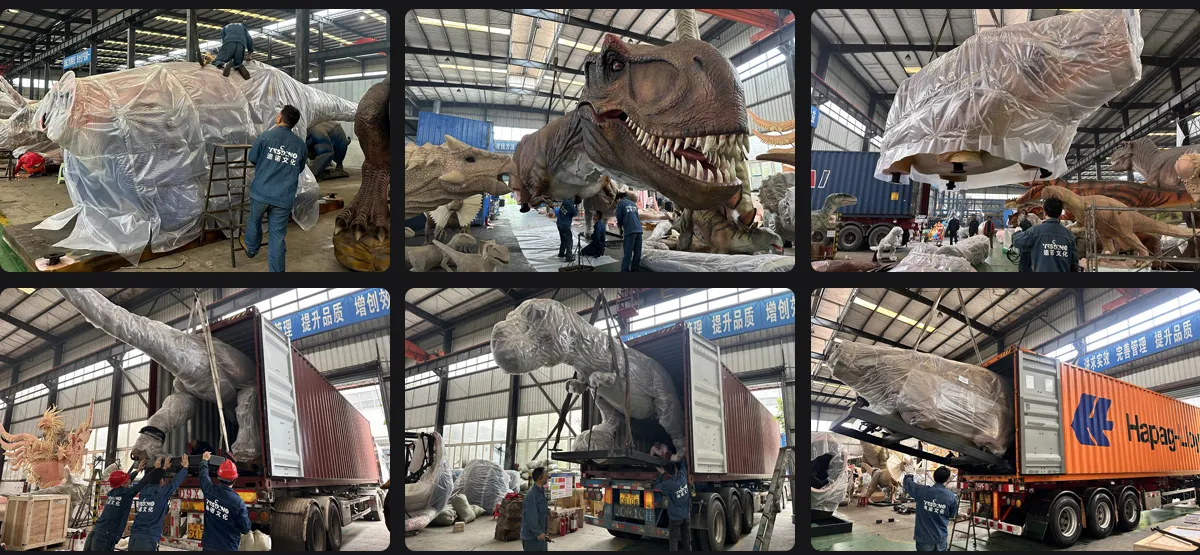
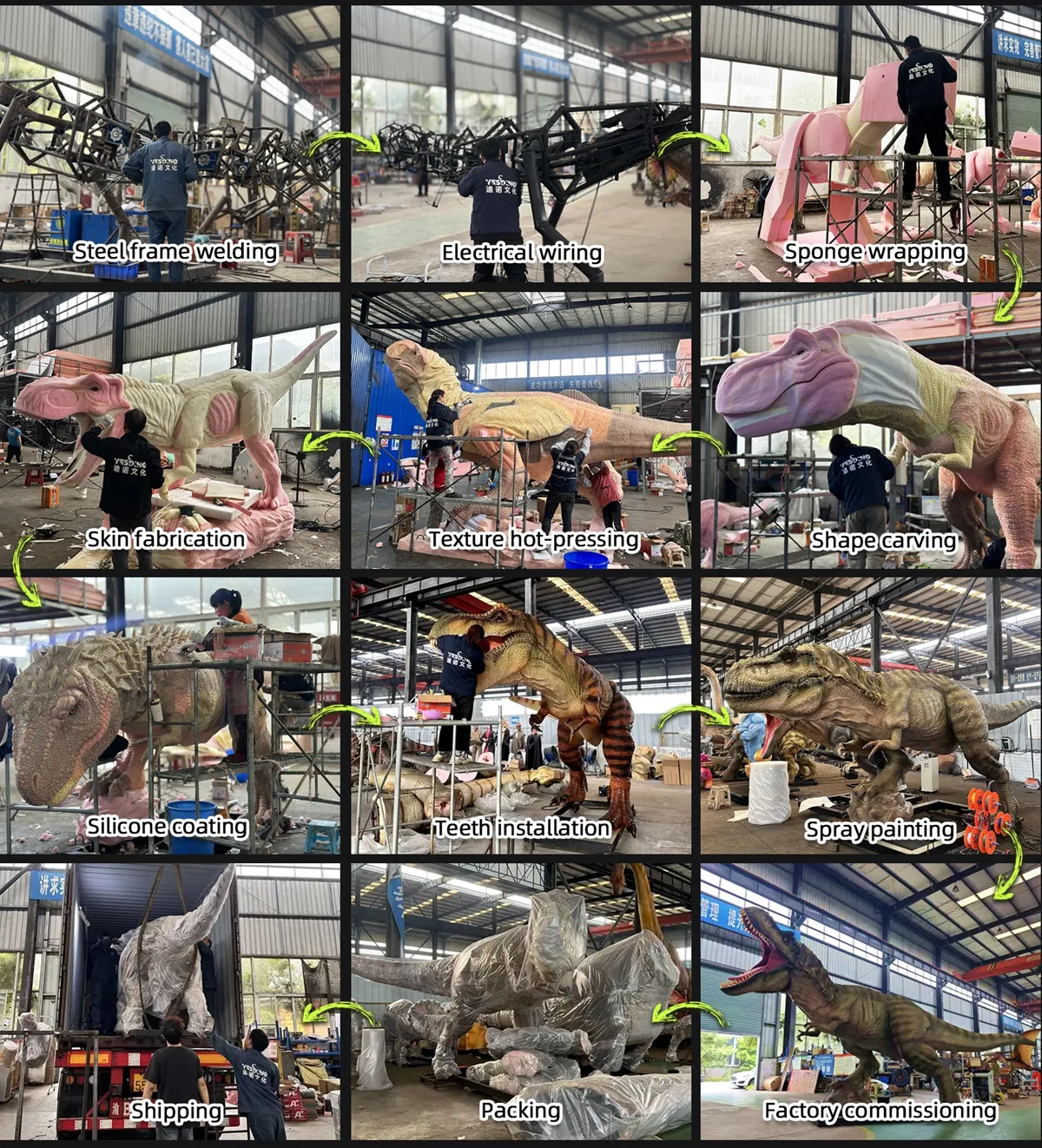
Welded Q235 steel frame with anti-rust treatment, foam volume, silicone five to seven millimetres, translucent layered colour. Rated −25 °C to 45 °C outdoors, 110 V or 220 V configured at build. Ships in sections with base frame, control cabinet, sound system, wiring diagram and calibration sheet.
Freight, duties, certificates and installation are quoted separately and are not part of the product price. The base needs a pad; on soft ground that means concrete, and the anchor pattern is supplied with the drawings so it can be cast in rather than drilled later.
The beak does the talking
A Triceratops jaw ends in a hooked beak, and the lower jaw carries a matching cutting edge. At two metres that is visible, and it is what tells a visitor the animal ate plants without a label. Models that leave the mouth as a soft line lose the single most useful detail on the head.
We build the beak as a distinct element in a darker, harder-looking finish, with the jaw line set so the two halves meet cleanly when the mouth closes. It is a small piece of moulding and it changes how the whole head reads.
Enquiry
Tell us where visitors will stand relative to the head, and whether the animal is on a path or in an open area. The trigger position and the leg-lift travel both depend on that answer.
Where to go next
Worth reading before you commit: the cost breakdown with the seven price factors for how the sizes compare, the spare parts and repair kit list for what the ground has to carry, and the size guide covering 3 m to 12 m builds for where the money actually goes.
For ideas on placing it, see exhibit planning walkthrough. The rest of the range is on animatronic dinosaurs, and if this one is the wrong size for the slot, animatronic spinosaurus for zoos is the closest alternative.
Product Accessories
Packaging and Container Loading