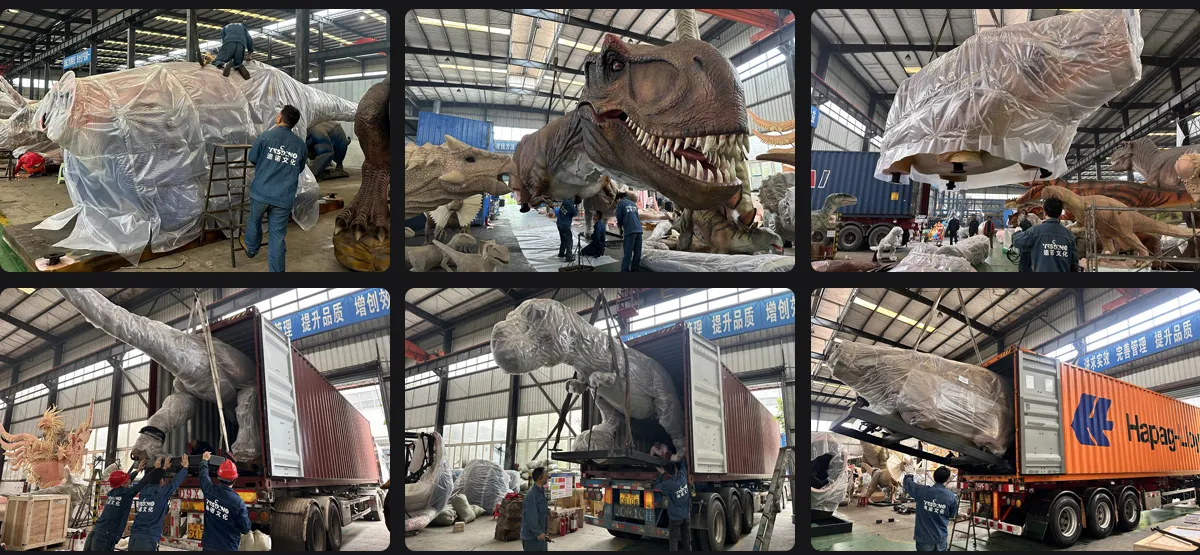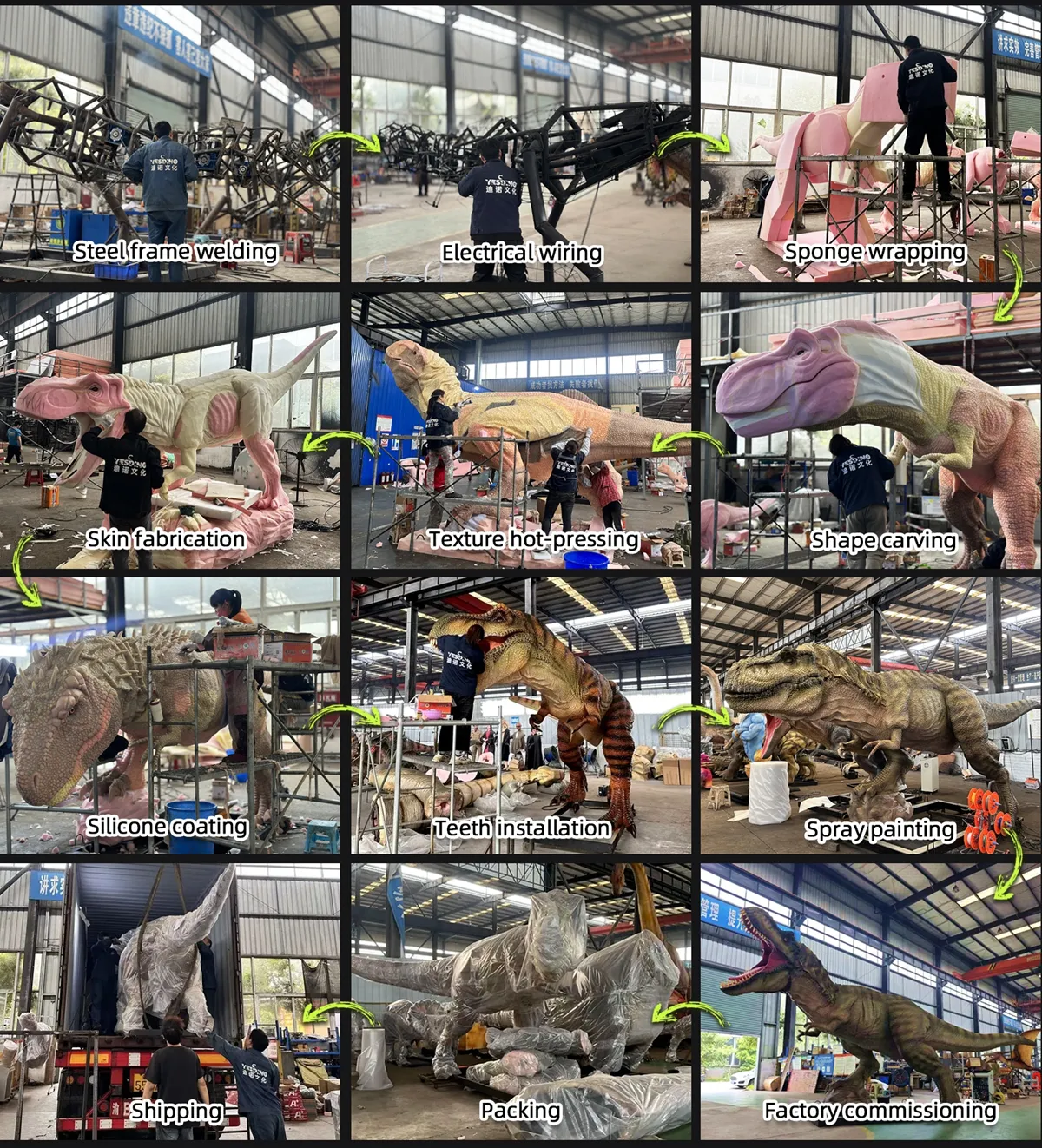
Production Process
The prop is the problem. A squirrel holding a pine cone in both hands looks simple until the arms have to close on the same point every cycle, from both sides, at a scale where a small drift is visible. Most of the build time on this animal goes into the hands and the pine cone rather than the fur. SKU YAA-017: 1.5 m along the curve of the body, 1.1 m at the head.
A character build at squirrel scale
A squirrel is a small animal, and at 1.5 m this is a character build rather than a zoological one. The size is chosen so the pose — upright, both hands on a prop, head turned — reads at photo distance, with the head at 1.1 m, roughly the eye level of a child standing beside it.
The cost of that choice: at this scale the face and the hands are seen close, and both are the hardest parts to make convincing. A character animal lives or dies on the face, and the body is comparatively forgiving.
Photo points and winter trails
Themed trails, winter and Ice Age displays, family entertainment centres, museum temporary exhibitions, mall sets. The prop gives people something to stand beside and the pose gives them a reason to face a camera, which is what a photo animal has to do.
Indoor and outdoor both work inside the temperature range, though a fur build in a wet climate wants a covered position. Check the plinth: at 1.5 m on a plinth the head is at photo height, and on the ground it is at knee height.
What moves: two hands on one fixed point
Head turn and tilt, jaw, blink, ear flick, tail, and the arms. The arms are the build problem: holding an object with both hands means both arms close on a fixed point, which is a harder movement than a free swing. The hands arrive from two directions, and the prop sits where the geometry allows rather than where the drawing wanted it.
So the prop is set first and the arms are built around it; the pine cone is a matched part of the assembly, and a different shape means re-setting the grip. Worth tuning is the head tilt with its pause — a character animal is read through the face, and the tilt is what gives it a personality.
Sculpted fur, reinforced tail
Q235 steel frame, rust-proof treatment, carved foam, 5–7 mm silicone with pigment in translucent layers — the same build as the rest of the range, with more hours in the face and hands because those are what people look at.
Fur texture on a character animal is sculpted into the foam and carried through the skin rather than applied as strands, since applied hair reads as a costume at this size. The tail is a separate structure with its own travel and the part most often touched, so its skin gets the reinforcement.
An hour on a plinth
One crate, base frame, control cabinet. At this size the animal installs in an hour on a plinth, a deck or a bolted pad, with the arms set last and the pine cone in place. Rated −25 °C to 45 °C, 110 V or 220 V to destination, electronics on a two-year warranty.
For a photo point a floor mat suits better than a proximity sensor: the animal reacts when someone stands still rather than when they walk past behind it. Parameters are set at commissioning and handed over as a record.
Before you order: the character question
Two things to settle before a deposit, and only one of them is ours. The first is the site and the pose: the space, the plinth height, and where the photographer stands.
The second is naming. This is built as an extinct squirrel-like animal from an Ice Age setting, holding a pine cone. If your marketing uses a film character's name, likeness or logo, that permission belongs to the rights holder and sits outside the build — we make the animal, and the branding question belongs with your legal side and theirs. Many sites run it as the squirrel with the acorn and leave the name alone.
Where it is the wrong buy: a trail where animals are seen from a distance, or a site that wants a realistic woodland species. This is a character piece, and it wants a camera in front of it.
Enquiry
Send the space, the plinth idea and the viewing distance, plus whether the pine cone stays the same prop all season. If you plan to change the prop, tell us at order, because the grip is built around one shape. Freight, duties, certificates and installation are quoted separately from the product price.
Where to go next
Two things come up in almost every enquiry on this build: how the size compares with the alternatives, and what it takes to get it on site. The pneumatic versus hydraulic comparison sets out the options side by side, and the cost breakdown with the seven price factors covers pads, access and assembly. Budget planning sits in the wiring concealment notes.
For ideas on placing it, see exhibit planning walkthrough. The rest of the range is on animatronic animals, and if this one is the wrong size for the slot, animatronic tiger specimen replica for museums is the closest alternative.
Product Accessories
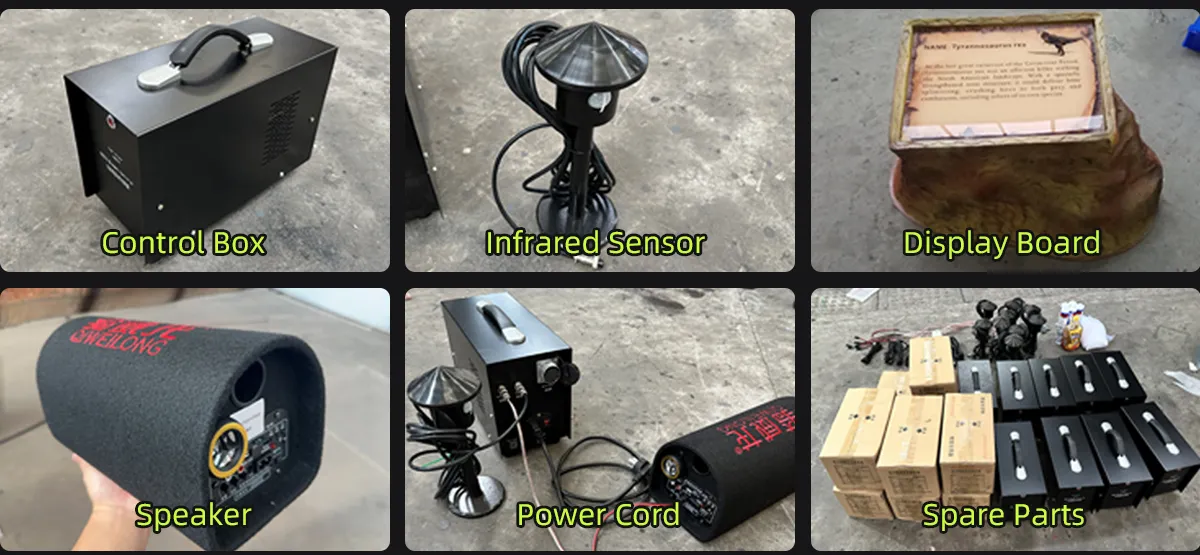
Packaging and Container Loading