





Production Process
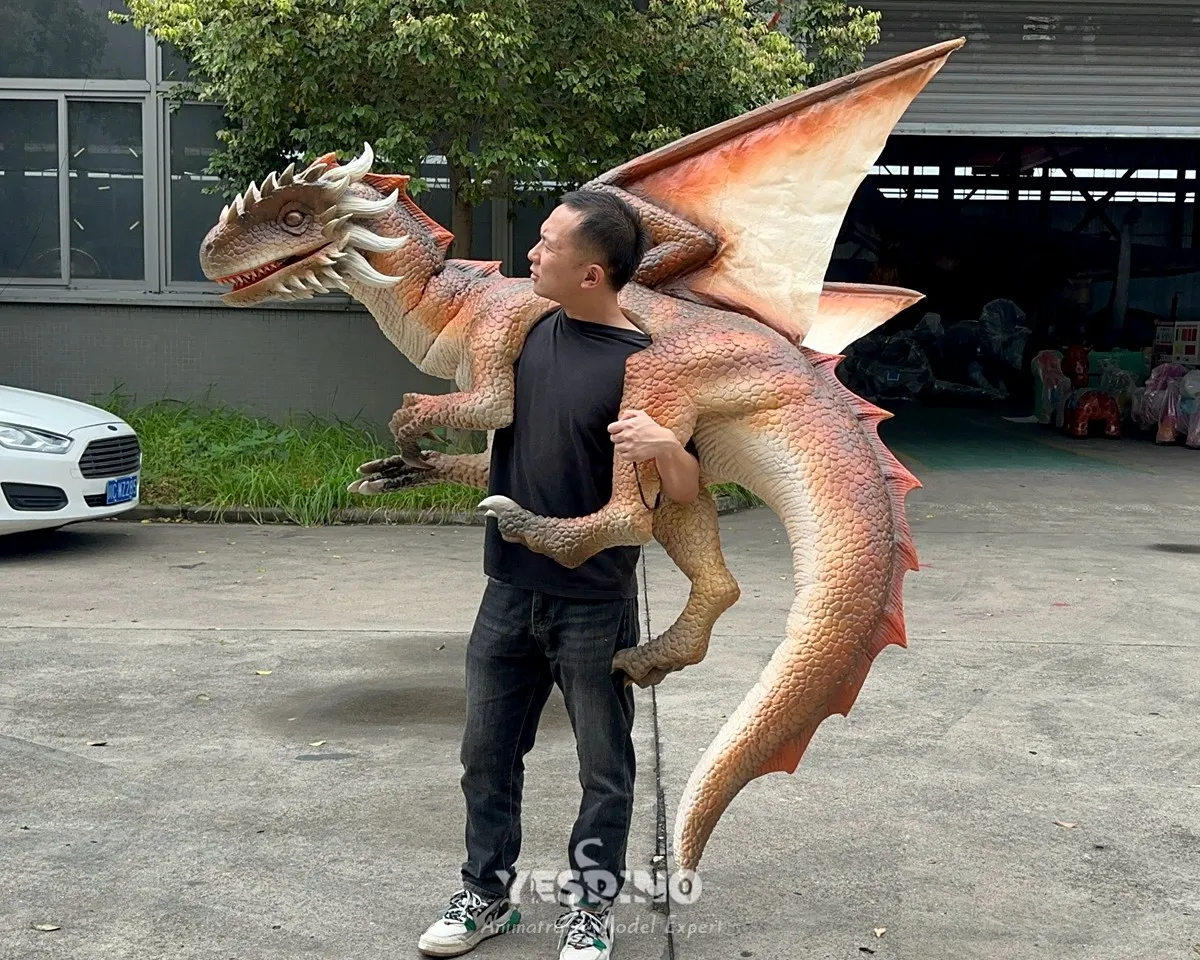
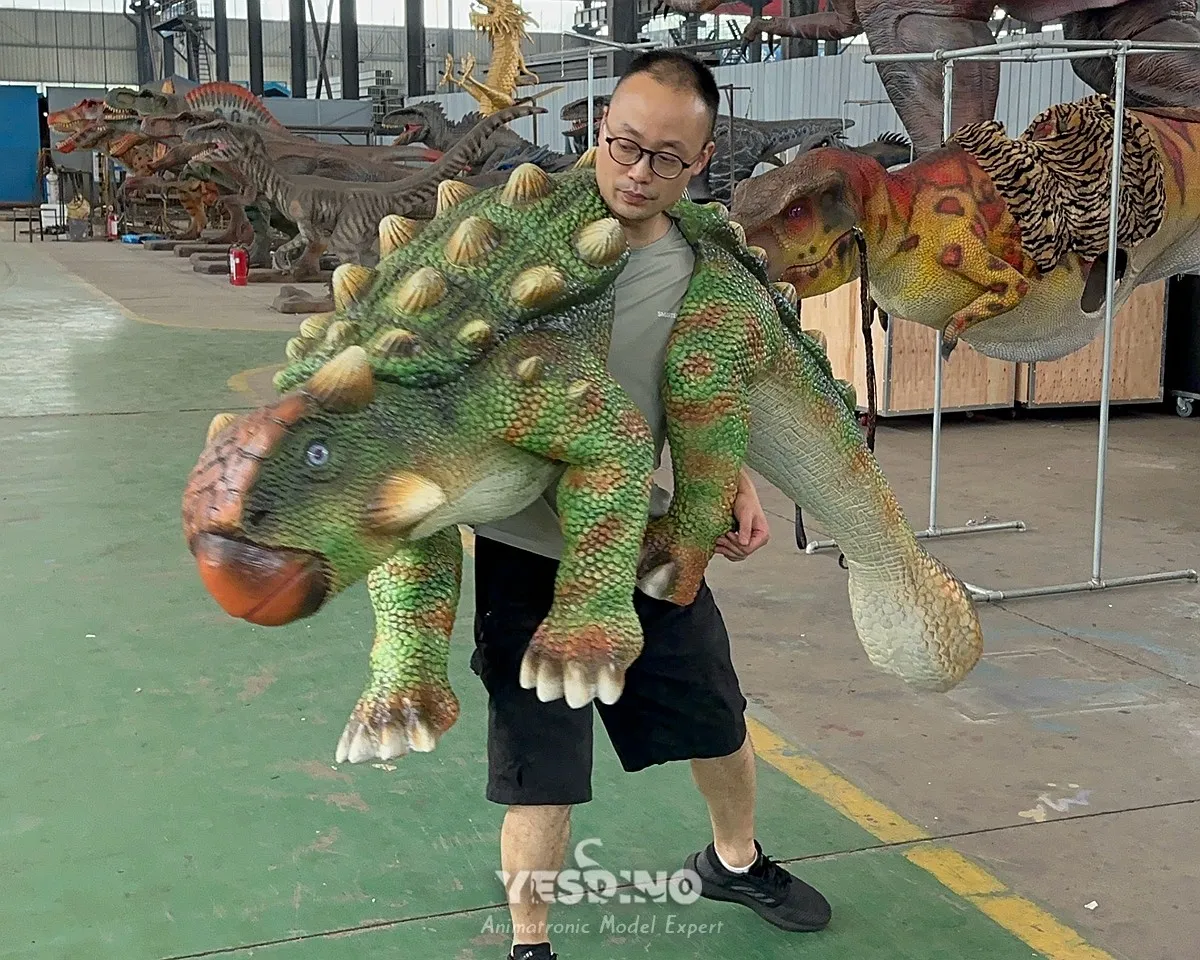
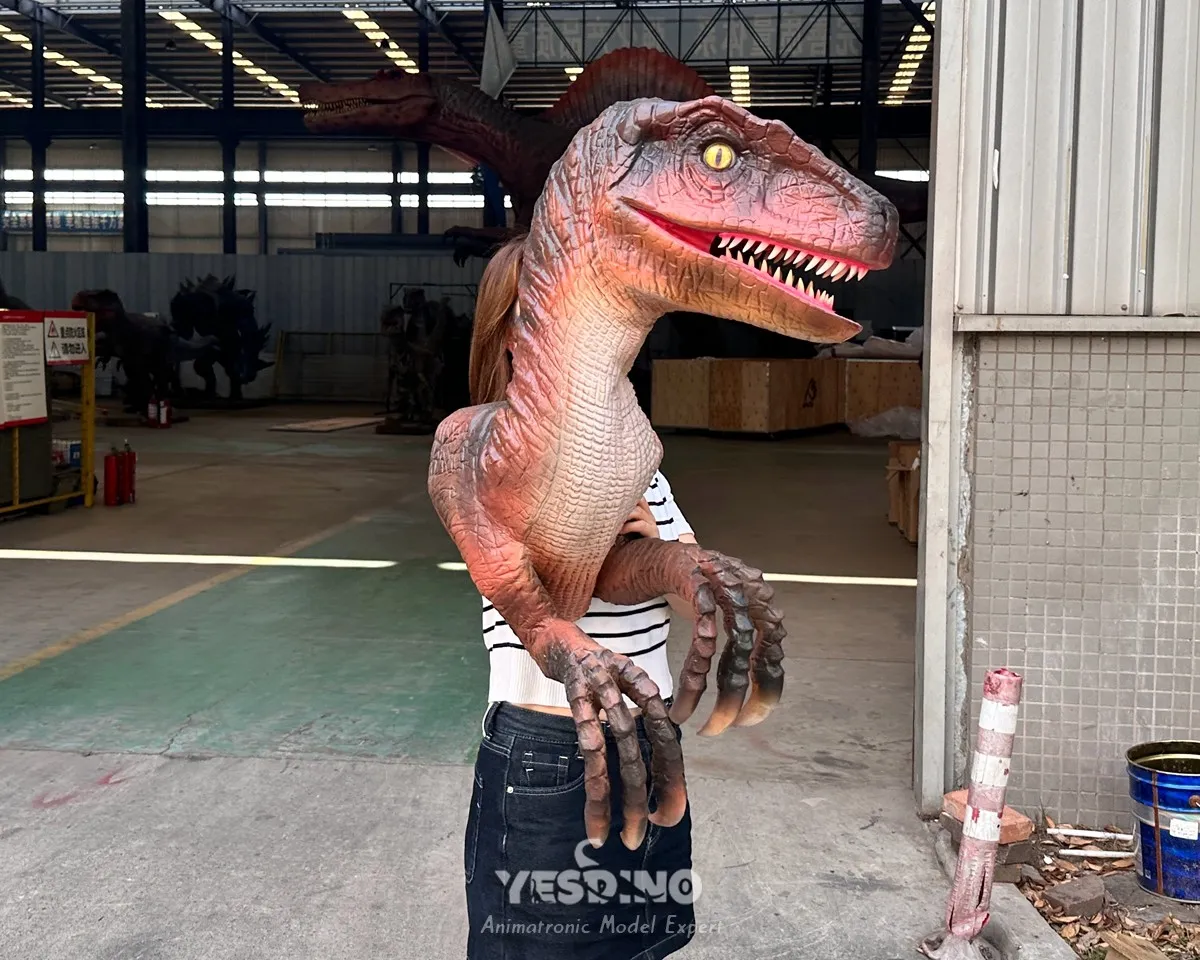
A metre is the useful size for a raptor you have to carry. Long enough to read as a dinosaur from ten metres, short enough to tuck under one arm between sets. This one is finished in tan and grey with darker banding down the back, a narrow snout with visible teeth, and a tail that counterweights the head.
Two hands, two jobs
Your working hand goes in through the opening under the belly. Inside, on the steel frame, that hand works the eyes, the head turn and the jaw. Your other hand stays outside on a small multi-key remote, and each key fires a different call, so the mouth and the sound land on the same beat rather than a second apart.
The control box carries the speaker and runs on 12V. Box and speaker go in a jacket or trouser pocket, speaker facing forward, cable tucked along the arm. Nothing hangs in view.
The size that suits an entrance
Entrance work is short, repeated and crowded. A one-metre puppet can drop to a child's eye level without the performer kneeling, turn inside a doorway, and be lifted clear when a group surges. The head is large relative to the body, which is what makes eye contact possible at two or three metres.
Sound timing
Four calls on four keys is enough for a walkabout: a short bark for attention, a longer call for a photo moment, a low growl for suspense, and a lighter sound for children who are unsure. Because the remote sits in the free hand, an operator can answer a child's reaction immediately instead of queuing sounds.
Where it works
Park and attraction entrances, where the job is to slow people down and start a queue.
Mall atriums and concourses, on flat floors with room for a two-metre circle.
Museum foyers and school visits, where the puppet introduces a topic before a talk.
Stage and photo sets, where the tail can be posed and the jaw held open.
Practical notes
The frame is steel, so the body keeps its shape in a case or a van. Wipe the skin with a damp cloth after outdoor use, and store the tail supported so it does not take a set. Keep the jaw hinge clear of grit, and check the sound box charge before a set rather than during one.
Questions
Can one person work it alone?
Yes. One hand inside, one hand on the remote, sound box in a pocket.
Is the mouth movement linked to the sound?
Not automatically; the operator times the jaw to the key press, which is what gives the performance its timing.
Can the calls be changed?
The remote carries several sounds as standard; tell us what the act needs and we will confirm what can be loaded.
Does it need a stage?
No. It works at floor level in a crowd, which is where most of these are used.
Want it in a different species or colour?
Same frame and same controls, different shell. Send a reference and the size you want and we will come back with what the change costs and how long it takes.
Product Accessories

Packaging and Container Loading