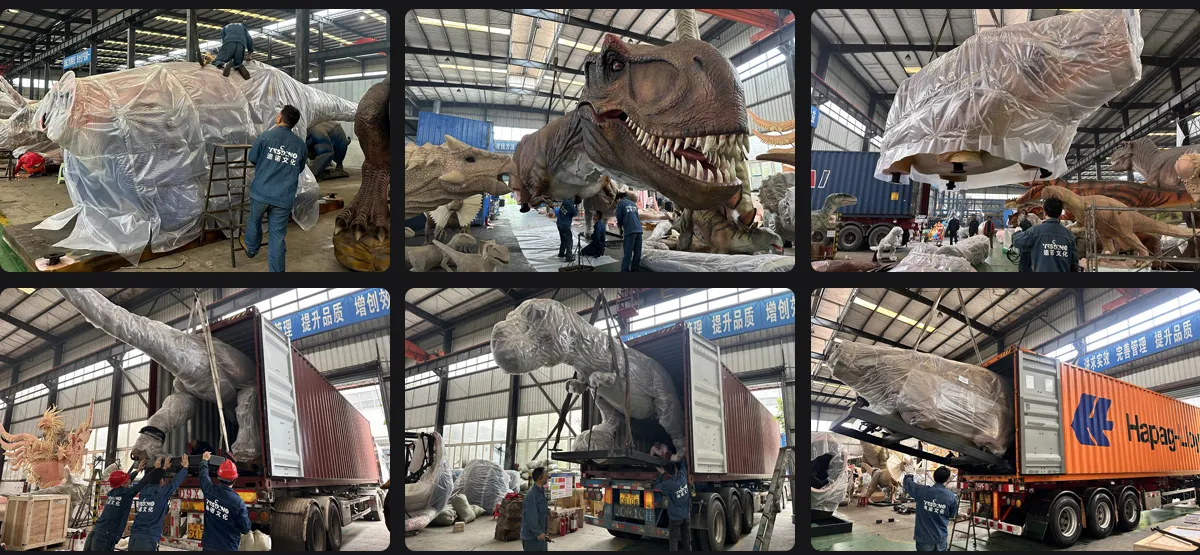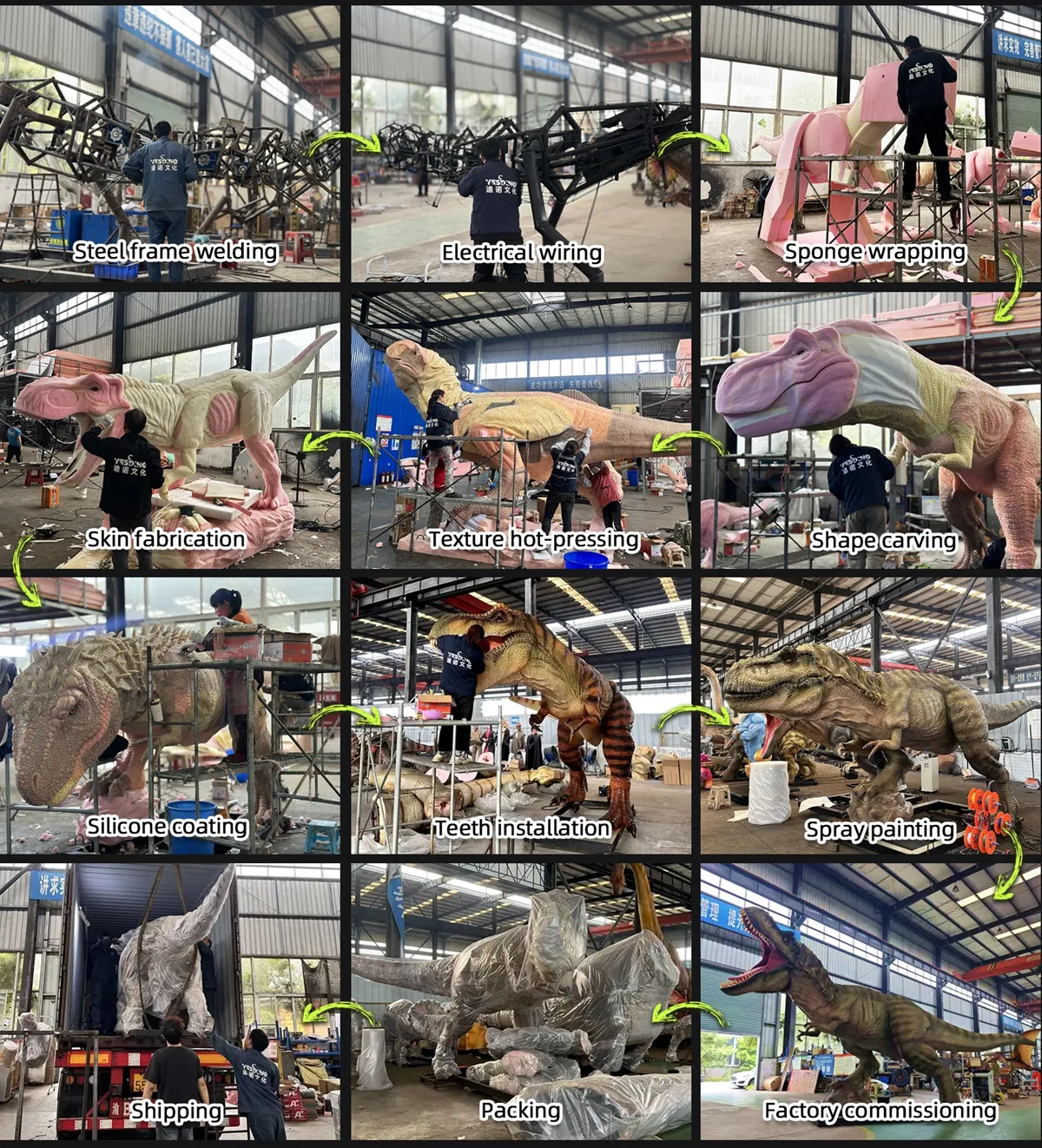
Production Process
Some sites have space in the wrong direction. A strip four metres wide and twenty long between a car park and a ticket window swallows a low, stretched-out dinosaur. A vertical animal at 2.8 m uses the height instead.
Six metres long, 0.75 m across the body, 2.8 m at the top of the sail.
Height where length does not fit
At 2.8 m it stands above adult head height, so the silhouette reads against sky or a wall rather than gravel. Six metres of length gives it a body to stand behind, and 0.75 m of width keeps the footprint narrow enough for a walkway edge or a strip beside a queue.
The trade is stability and clearance. A tall build carries more load at the base and more wind on the sail, and it needs 3.2 m of clear space once the head lifts. On soft ground or an exposed site, the base design changes and the install gets longer.
Entries, photo points, roadside strips
Positions that work: the edge of a ticket plaza, the end of a queue line, a photo spot beside a sign, a gap between two buildings where a low animal is invisible until you are on top of it. Each is viewed from two to five metres, slightly below, where the sail works.
Two measurements decide the site. Clear height: 3.2 m above the standing point keeps the head and the top of the sail out of signage and lighting track. Door or gate width: at 0.75 m the body goes through a 1 m opening, but the sail sections are separate and go in flat, so a narrow service gate is not a blocker.
The sail stays still, the neck works
The sail is a silhouette feature, not an animated one, built as a rigid structure over the spine with skin laid across the spines; movement there would flex the skin at the base of every spine. The head and neck carry the performance: a slow sweep with the snout lowered, then a lift.
The jaw opens wide on a long crocodilian snout, and the conical teeth show when it does. Head turn runs slower than on a short-necked build because there is more mass at the end of the neck, and the neck-to-jaw timing is set during commissioning. Body sway stays small; at 2.8 m a big sway at the hips swings the whole sail.
Weight low, skin sealed
Q235 steel frame with rust treatment, high-density foam carved to volume, silicone skin at 5–7 mm and colour in translucent silicone layers. The frame carries ballast low in the base and the legs are built to take the sail's load, so the animal stands on a footprint similar to a six-metre low build.
Outdoors, the sail is the part that takes weather. Water sits on the upper edge, so the skin there is laid with a slight fall and the seams face down; when a repair is needed it is a patch with matching pigment at the spine line, not a reskin. Work range is −25°C to 45°C, 110V or 220V set for the destination.
Standing it up on site
The build ships as base, legs, body, sail sections and neck-and-head. Sail panels travel flat in their own crate, which is how a tall animal comes through a normal gate. Two people and a pallet truck move the parts; the lift onto the legs wants three.
Order: base frame levelled and anchored, legs bolted, body lowered on, sail sections fixed from the front spine back, then neck and head, then skin closure. The control cabinet sits in the base with the door facing away from the viewing side, and the sensor goes at about 1.1 m on the approach, angled slightly down so it sees visitors rather than the sky. Cable entry is from below, so the power route is decided before the base is fixed.
Before you order
Send the standing point, the clear height above it, the wind exposure (open field, courtyard or sheltered), the surface, and the approach direction. A sheltered courtyard needs less base than an exposed car park edge.
When a tall build is the wrong answer. A long approach where people first see the animal from twenty metres, since the height reads but the detail is lost and a longer build uses that distance better. And a low covered area, a marquee or a shopping centre with a 2.6 m soffit, where the head has no room to lift and the sail would sit in the lighting.
Enquiry
Send a photo of the spot with a person standing in it, the clear height, the surface and the prevailing wind direction if the site is open. Tell us where the power comes in and what voltage the site runs.
Freight, duties, certificates and installation are quoted separately from the animal. The base drawing comes with the quote so your contractor can price the pad before you commit.
Where to go next
If you are still comparing options, start with the size guide covering 3 m to 12 m builds — it lines up the builds by length and reach. Site work is covered in the rental cost breakdown, and the pneumatic versus hydraulic comparison lists the factors that move the price.
For ideas on placing it, see holiday display ideas. The rest of the range is on animatronic dinosaurs, and if this one is the wrong size for the slot, animatronic carnotaurus for zoos is the closest alternative.
Product Accessories
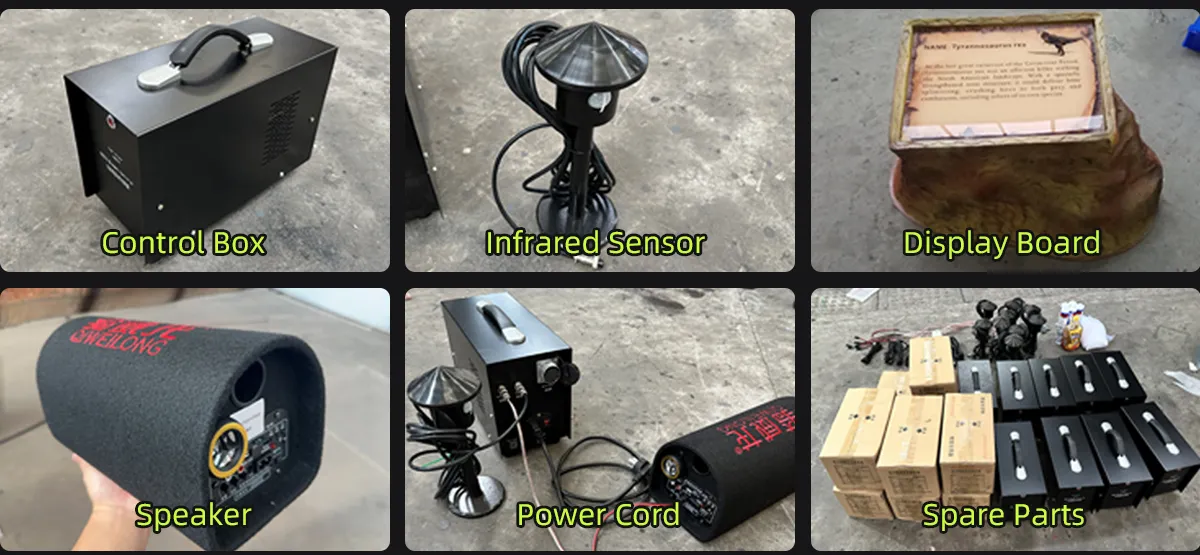
Packaging and Container Loading