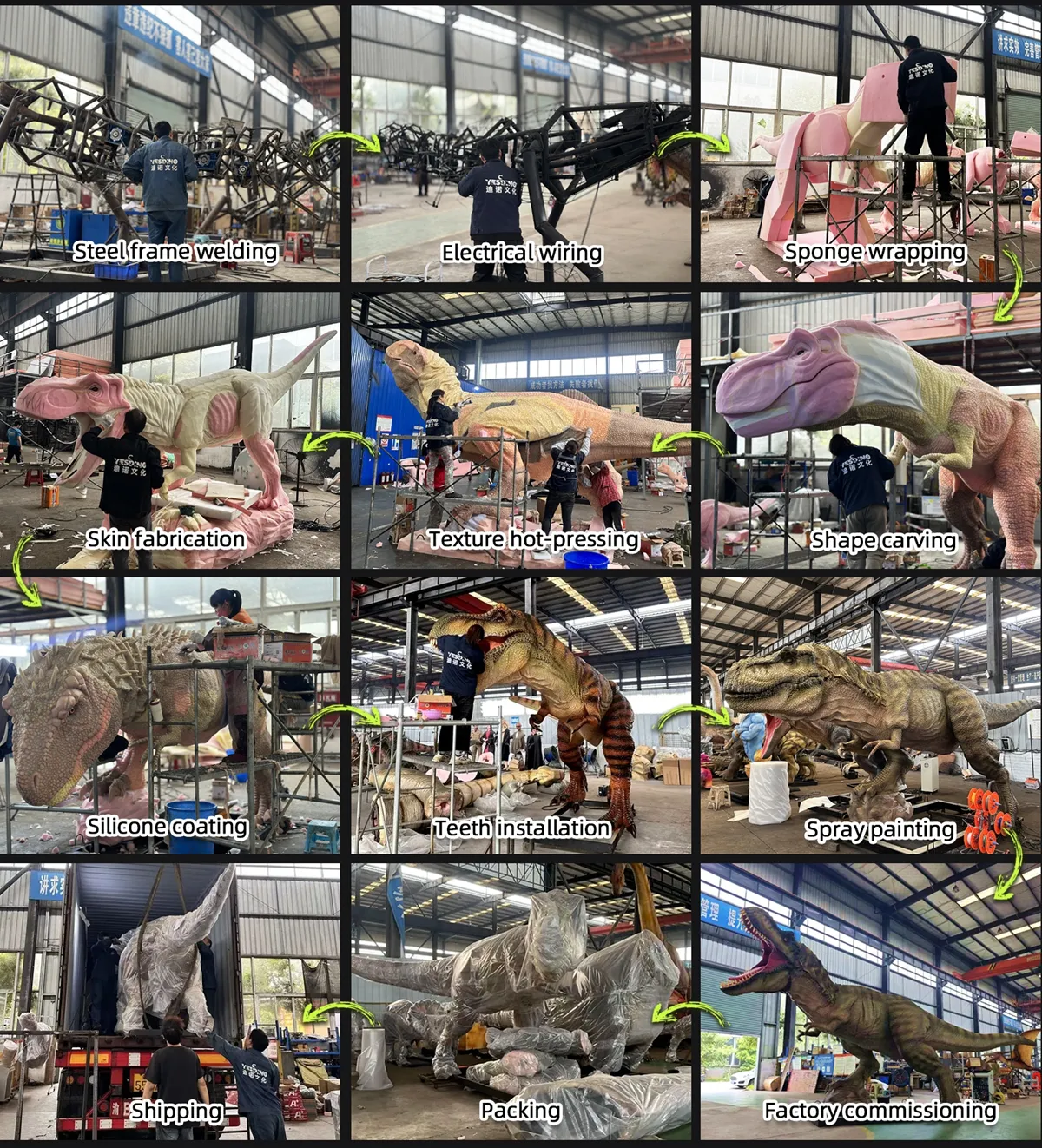
Production Process
A 6 m T-Rex is the size most parks buy first. It is small enough to stand beside a path without a foundation, big enough to stop someone walking past, and it costs about the same as a season of printed signage. The question buyers ask at this price is not whether it moves - it is what the skin is made of.
What silicone actually changes
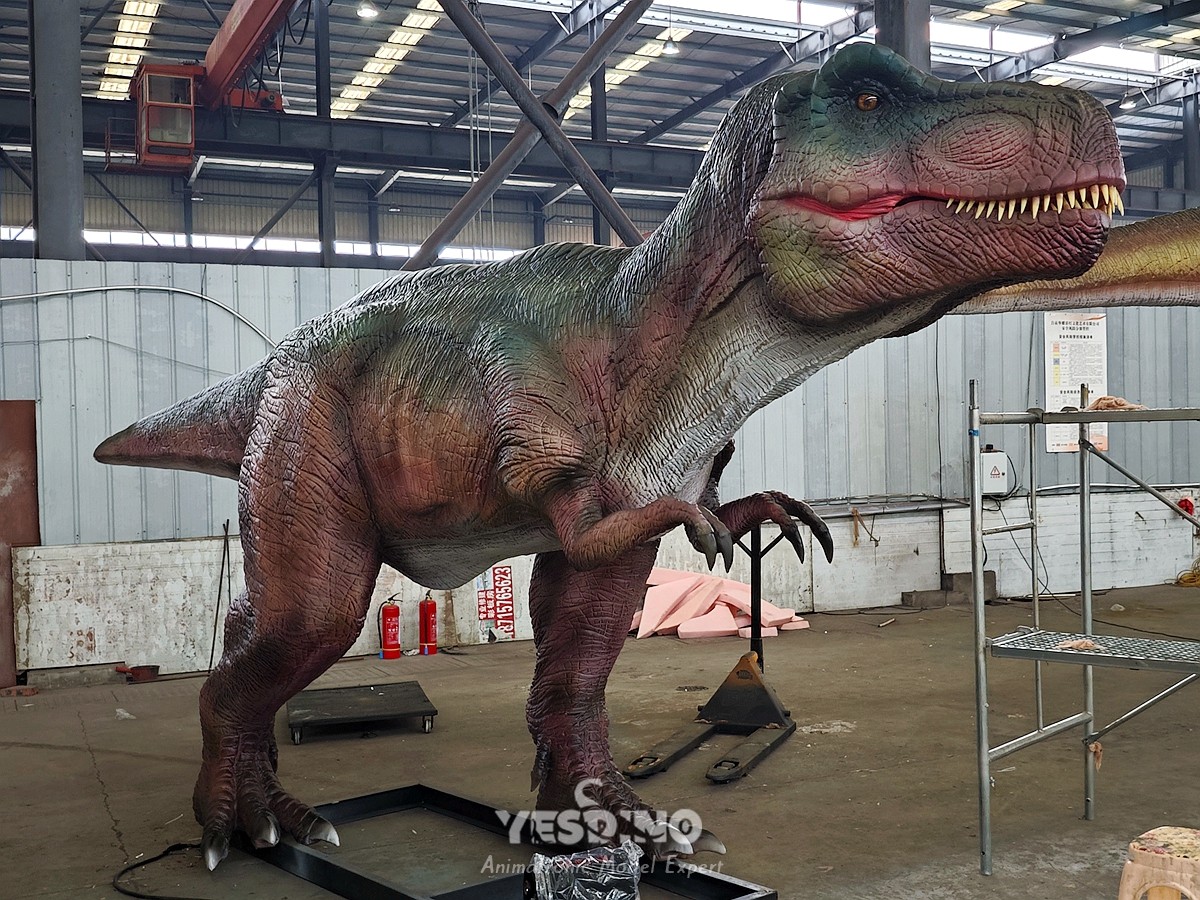
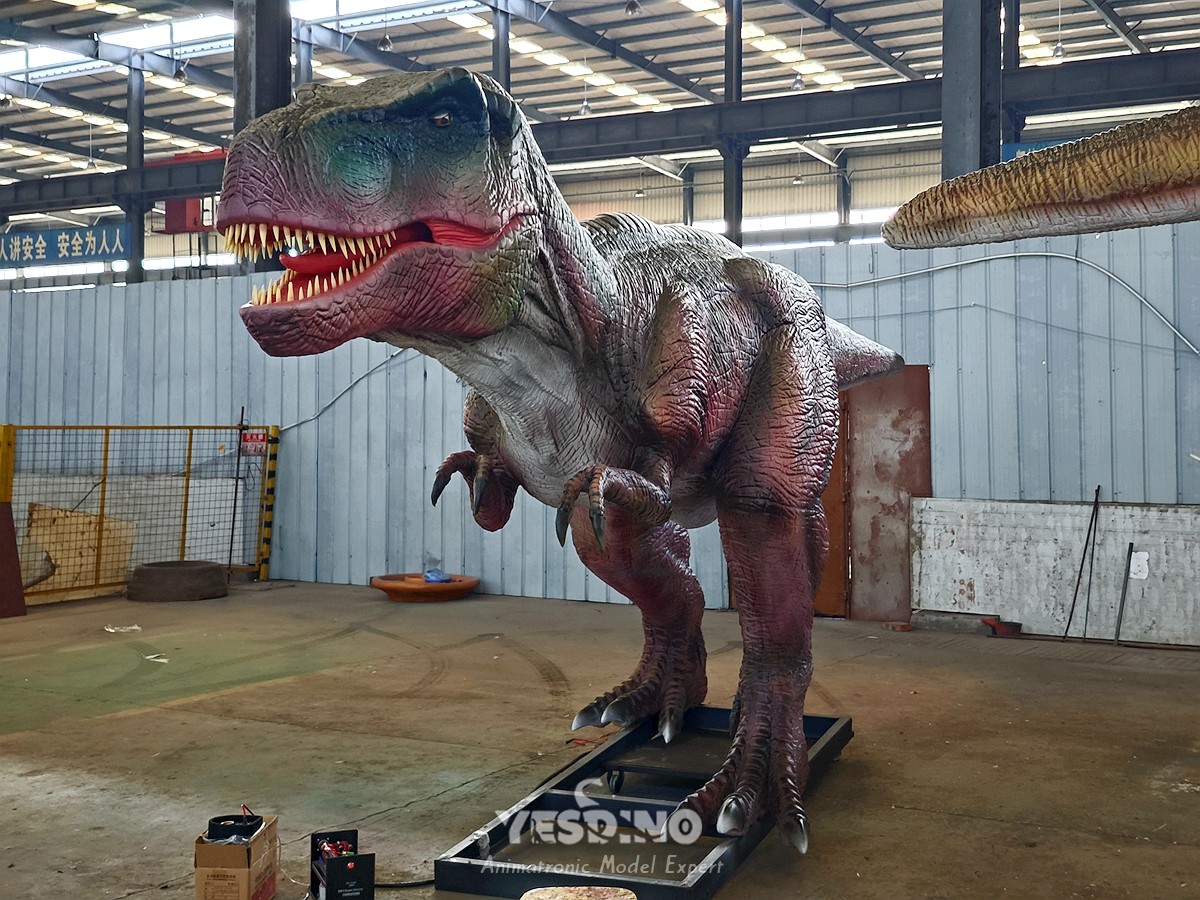
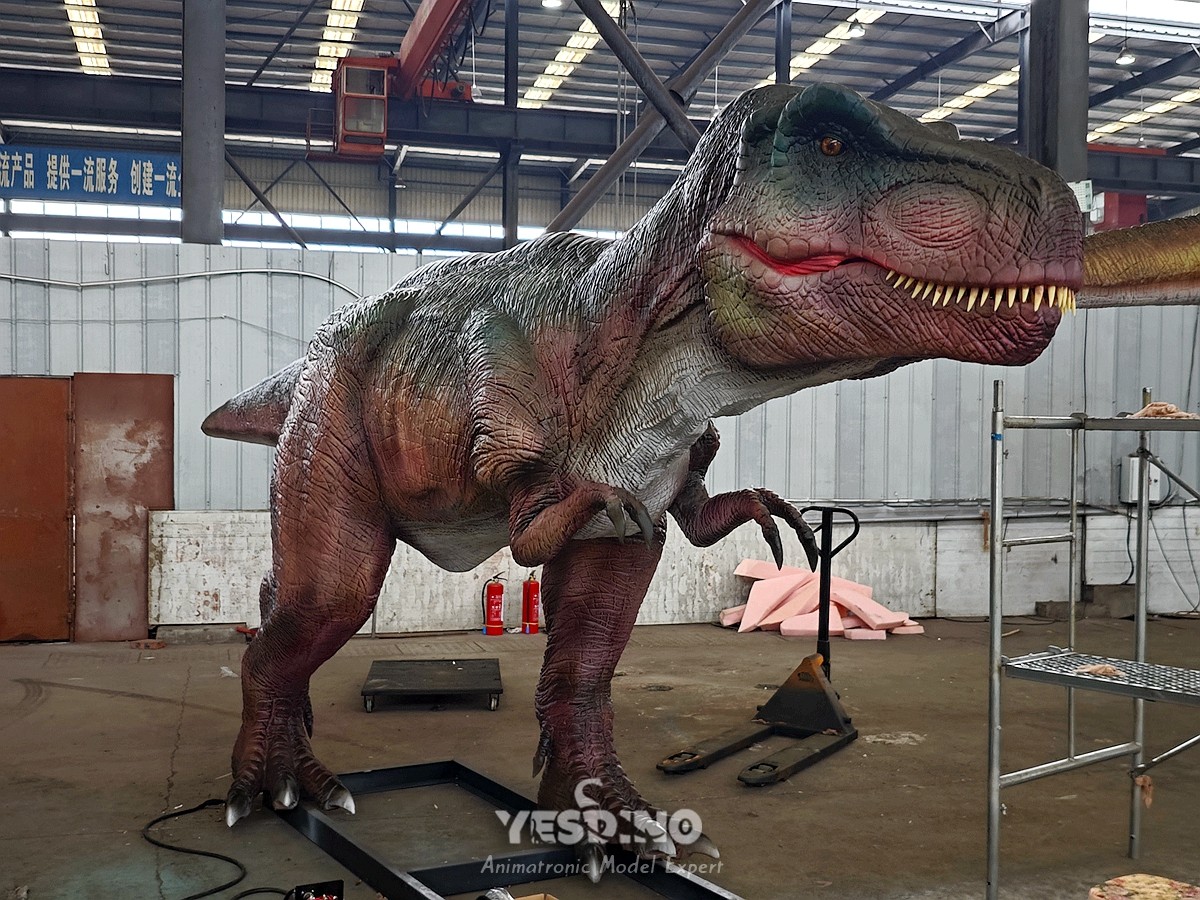
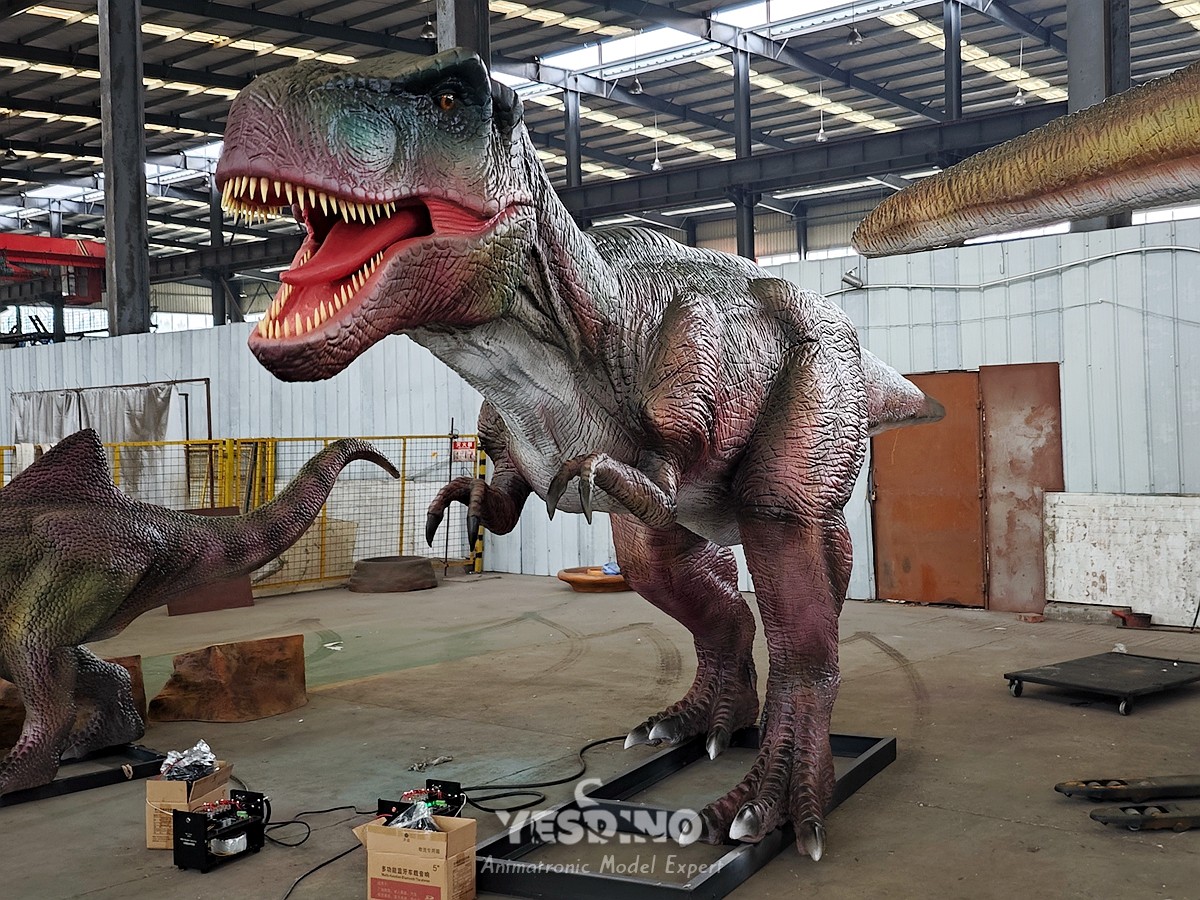
Painted foam looks right from ten metres and wrong from one. Silicone is a 5-7 mm skin laid over the carved foam in layers, with colour in translucent coats rather than one opaque finish, so the surface keeps depth under direct sun instead of going flat. On a 6 m animal that matters more than on a fifteen-metre one, because visitors reach it in about four steps.
It also decides the repair story. A scuff on painted foam is a repaint of the area. A scuff on silicone is usually a clean and a re-seal, which a park can be taught to do in an afternoon.
Where the six metres go
At this length the animal reads best at 3-5 m from the path, slightly above visitor eye level. Set it lower and the jaw is lost against the ground; set it further back and people walk past without stopping. If the site is flat and open, one animal at this size is a photo stop rather than an exhibit - which is fine, as long as it is placed where the photo happens.
What moves
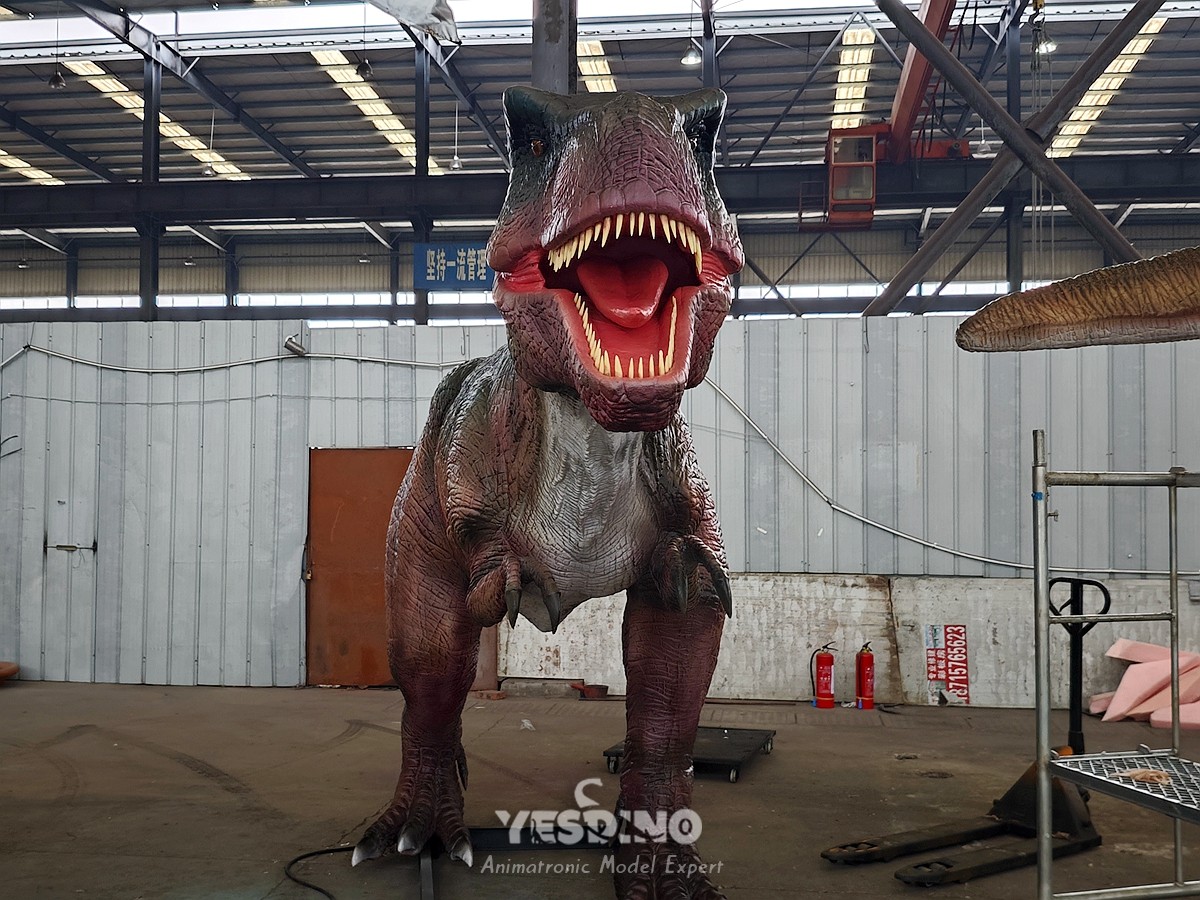
Head left and right, neck up and down, jaw open with the roar, blinking eyes, tail wag. That is five joints, the normal set for this length band. Each runs on a 450 W brushed DC motor through a relay control board, with limits set at build so the animal cannot drive itself into a pose it cannot leave.
If a joint has to hold a position under load - a head held up mid-roar, for instance - that joint moves to a servo with its own controller, which is a different cost class. Worth deciding before the quote, not after.
Skin, seams and the first winter
Seams are the part that fails first outdoors, and they fail at the joints, not in the middle of a panel. The build leaves a service gap at each joint so the seam can be re-sealed without removing the skin. In a wet climate, plan on one seam check before the first winter and one after it.
Site, power and moving it
The animal runs on 110 V or 220 V single phase. The control cabinet needs to sit out of standing water and out of direct sun, and it needs to be reachable without a ladder. At 6 m the unit is light enough for a pallet truck and two people, so fix the final position before the base is anchored.
What the price covers
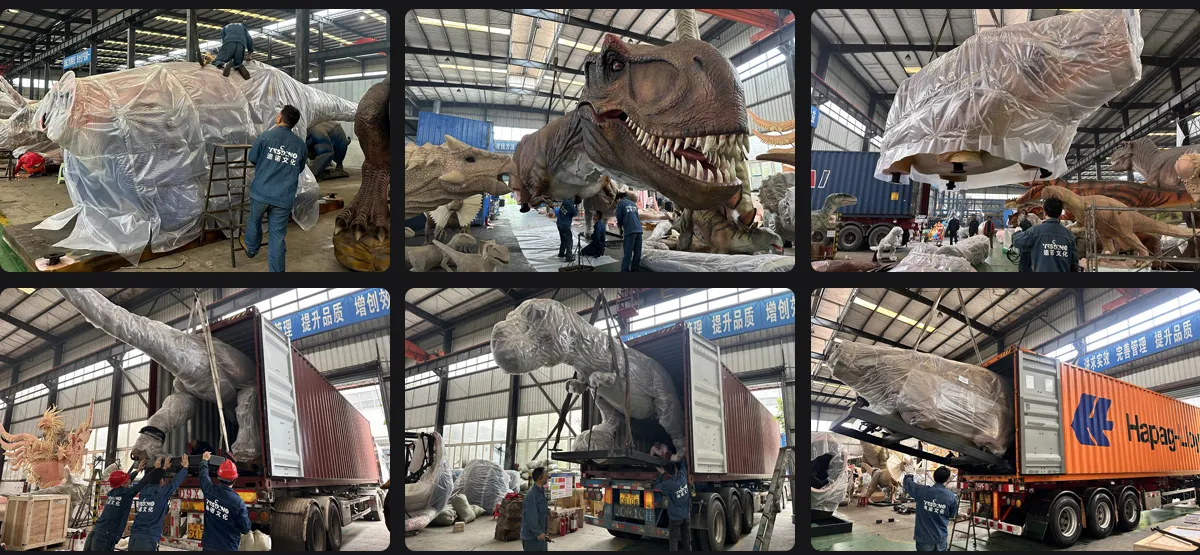
Included: the framed and skinned animal, wiring, control, the movement set above, export packing, and two years on the core electronics. Not included, and worth putting in the budget as separate lines: freight, duty, certificates, installation crew travel and local labour, foundations, and any delay caused by site conditions.
Technical specifications
| Item | Spec |
|---|---|
| Length | 6 m |
| Joints | 5 |
| Frame | Welded Q235 steel, anti-rust coating |
| Skin | 5-7 mm silicone over carved foam, colour in translucent coats |
| Drive | 450 W brushed DC motors, relay control board |
| Power | 110 V or 220 V single phase |
| Environment | -25 °C to 45 °C, sealed cabinet |
| Shipping | Sectioned; pallet truck and two people on site |
| Warranty | 2 years on core electronics |
Frequently asked questions
Is silicone worth it on a 6 m model?
It matters more at this size than on a large animal, because visitors get within arm's reach. Silicone keeps surface depth under direct light and can be spot re-sealed, where painted foam needs the area repainted.
How many joints does the 6 m T-Rex have?
Five as standard: head left and right, neck up and down, jaw with roar, blinking eyes and tail wag. A joint that must hold a pose under load is upgraded to a servo with its own controller.
Can it stand on grass without a foundation?
Yes at 6 m. The unit is light enough to reposition with a pallet truck, so the final position should be fixed before the base is anchored.
Product Accessories
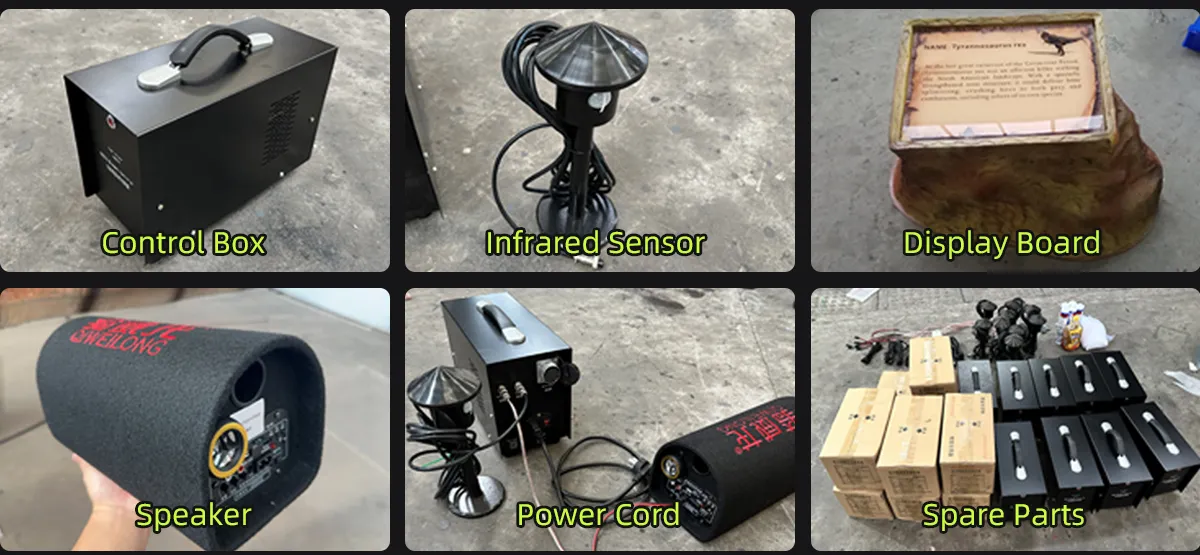
Packaging and Container Loading