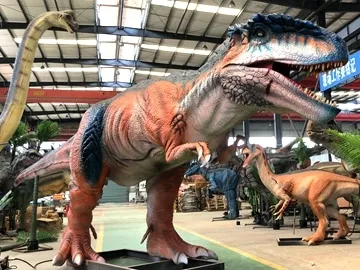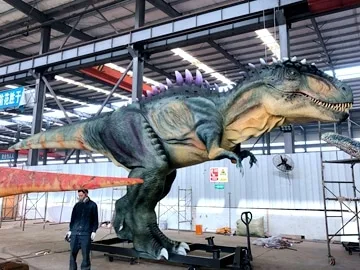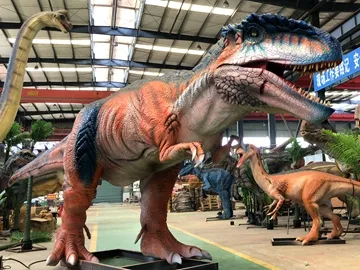
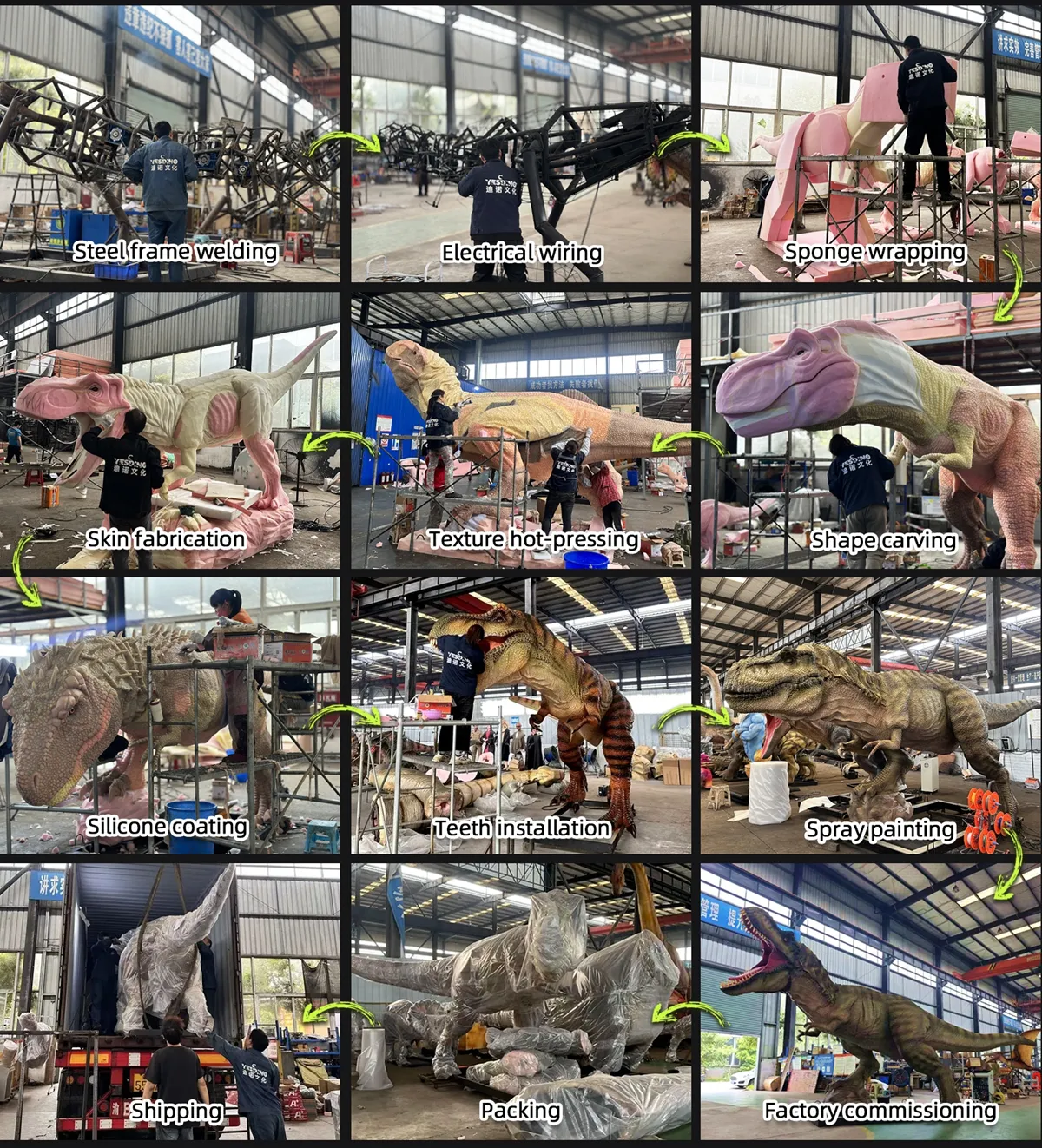
Production Process
The second predator problem
Most parks that call us about a Giganotosaurus already have a T-Rex. The T-Rex works, it is the photo everyone takes, and the brief is usually some version of "we want another one that big".
What actually improves the site is not a bigger animal in the same place. It is a second predator with its own territory, placed so the two are seen in the same walk. A 15 m theropod on the opposite side of a path turns one landmark into a scene with two sides, and costs a fraction of what a second land purchase costs. That is the job this model is specified for.
Where a 15 m theropod belongs
- Park entrance, offset from the gate - not facing the ticket window. Angled so visitors meet it side-on and see the length first.
- Drive-through and ride-through routes - set back 6 to 8 m from the vehicle line, head turned toward the traffic. At this length the approach reads for several seconds, which is what a drive-through needs.
- Opposite an existing T-Rex - the highest-value placement if you already own one, and the cheapest way to add a second headline exhibit.
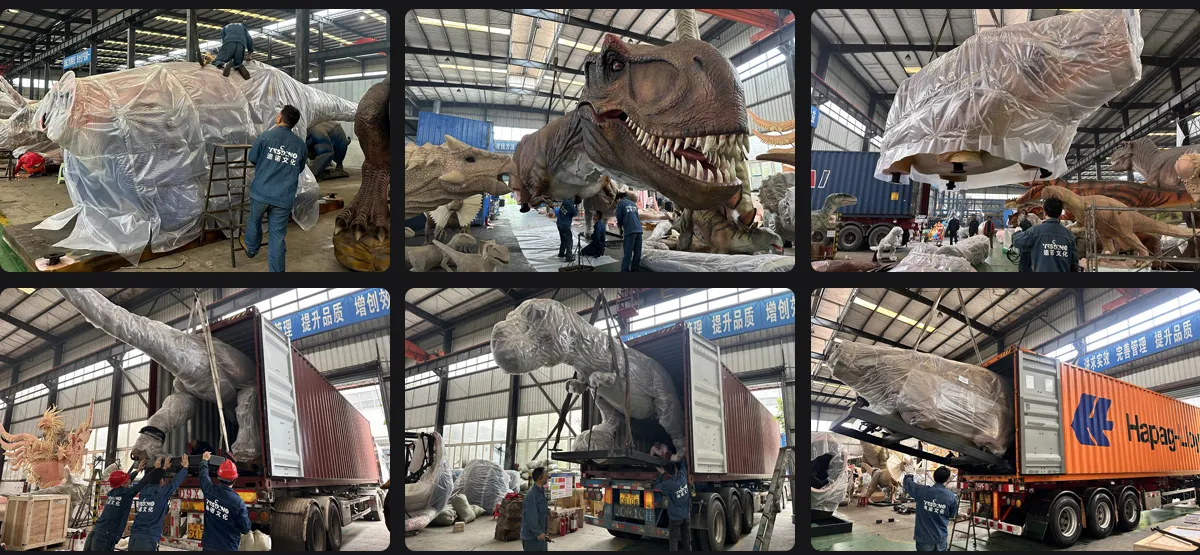
Length is the number that decides everything practical. At this size the frame splits into several transport sections, a crane is needed on site, the crew is there for more than a day, and the engineering is reviewed before we quote rather than during production - 15 m sits near the top of the 3 m to 16 m we build. If the access route will not take the longest section, that changes the design, so it is worth checking before production rather than after.
Movement on a large theropod
Head turn, jaw with the roar, neck, tail sweep and forelimbs - five to seven joints, the top of the usual range, because on a 15 m piece the head sits above visitor height and every one of those movements is read from below. Body rise is available; on a piece this size it is a subtlety most visitors will not register, and it is the most expensive add-on per unit of visible effect.
Eyes that blink only pay off indoors or at close range. In a drive-through park they are invisible, and the money is better in the neck, which is what carries the head across the sightline.
Built, tested, filmed
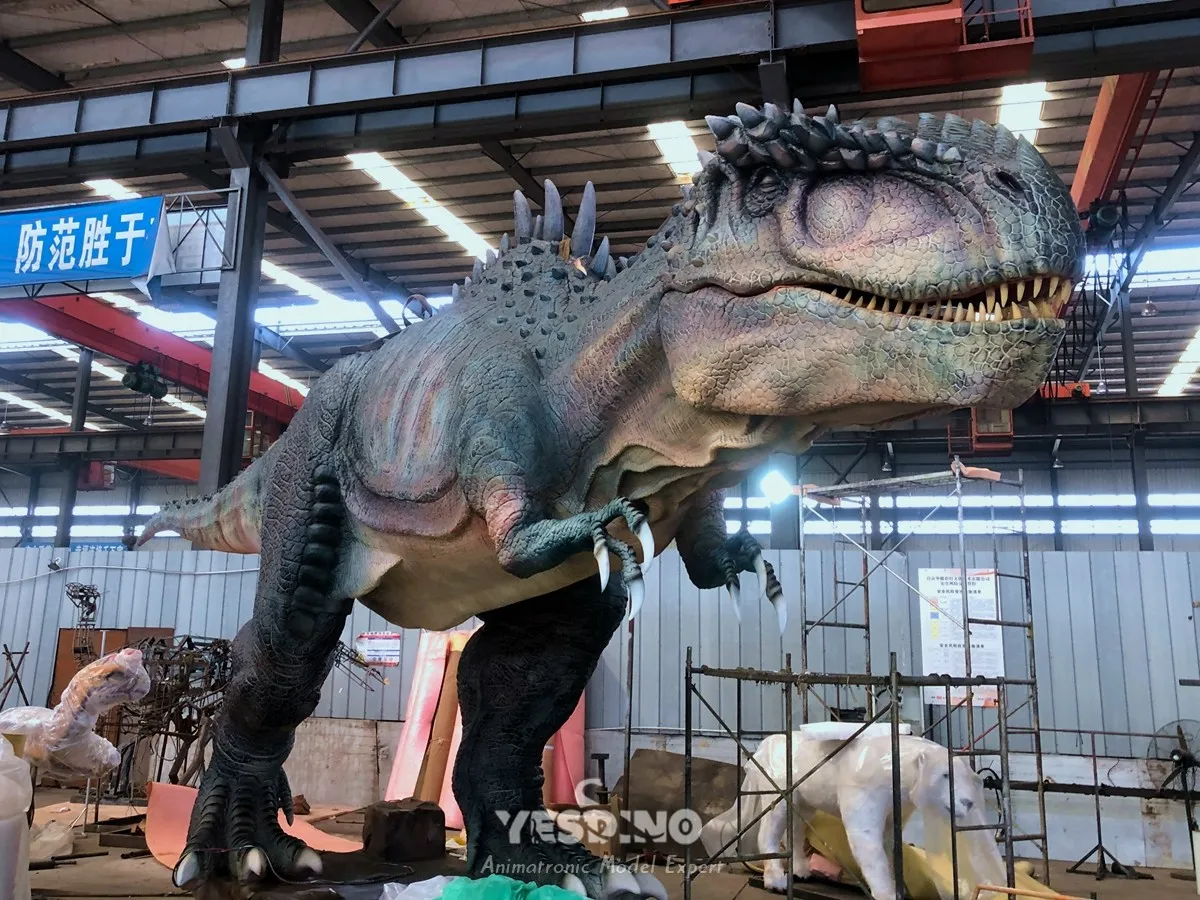
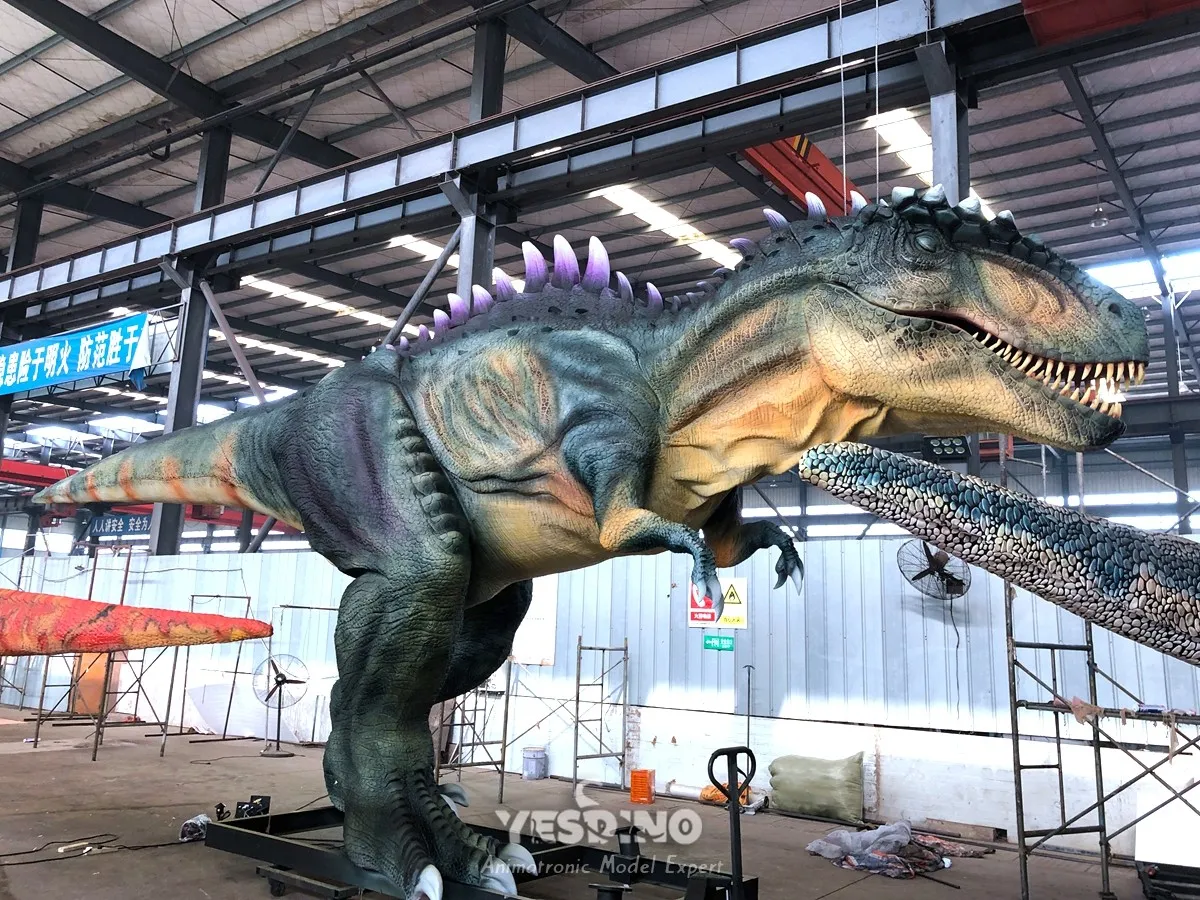
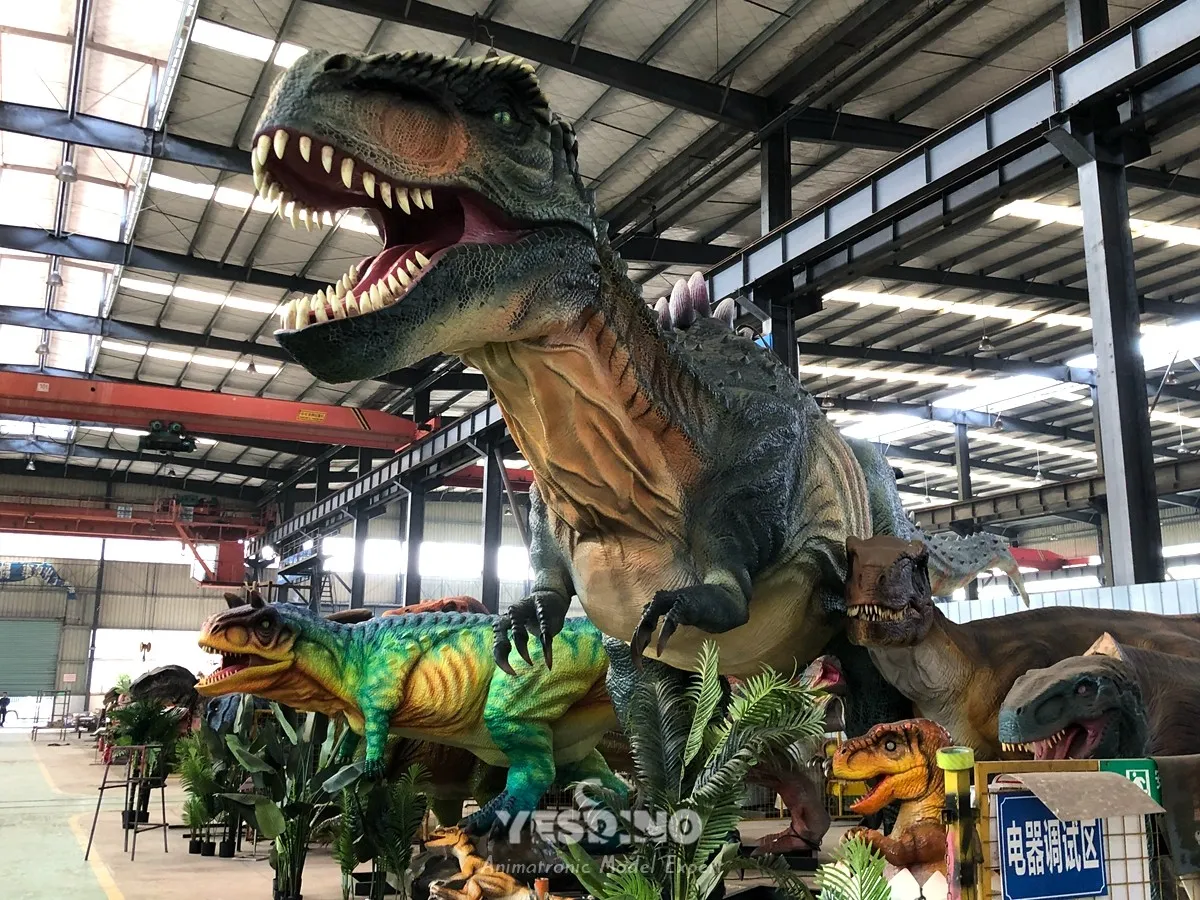
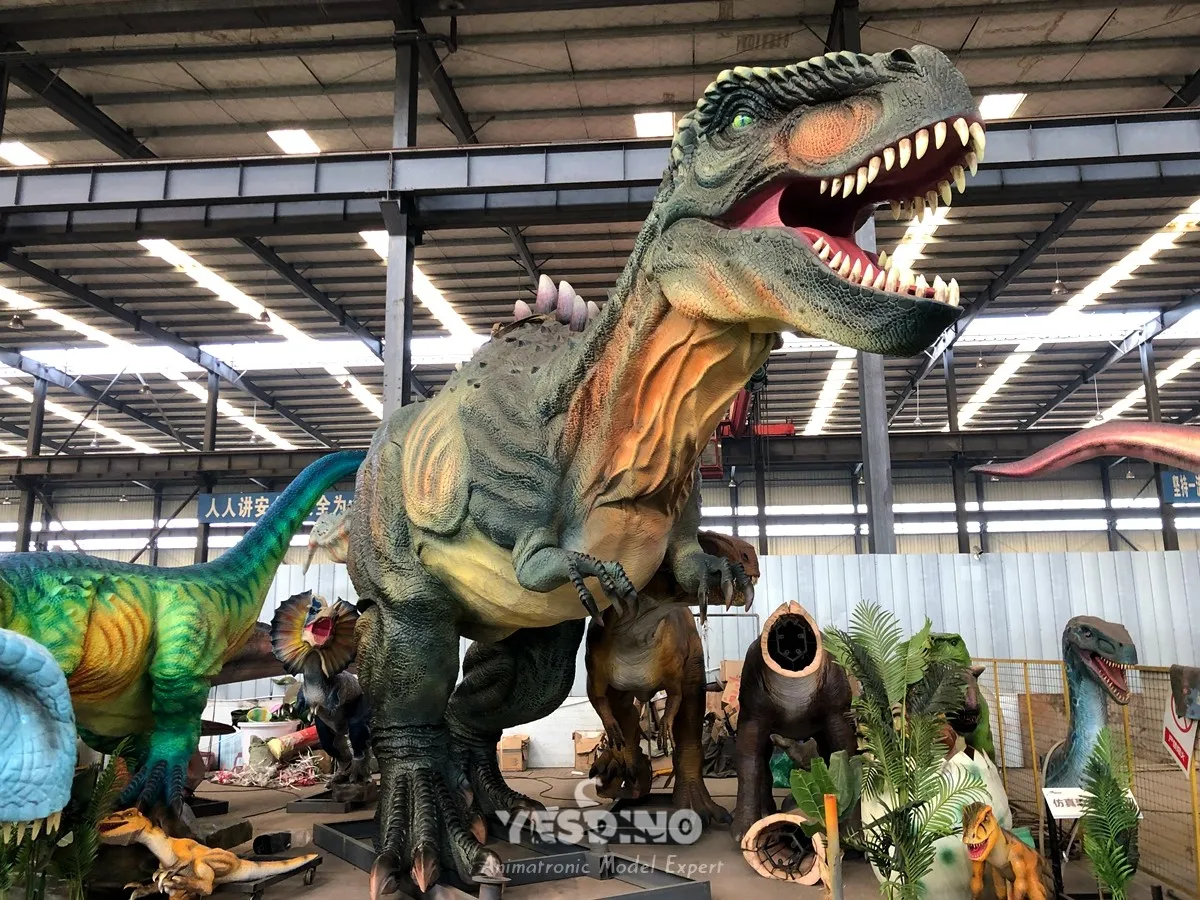
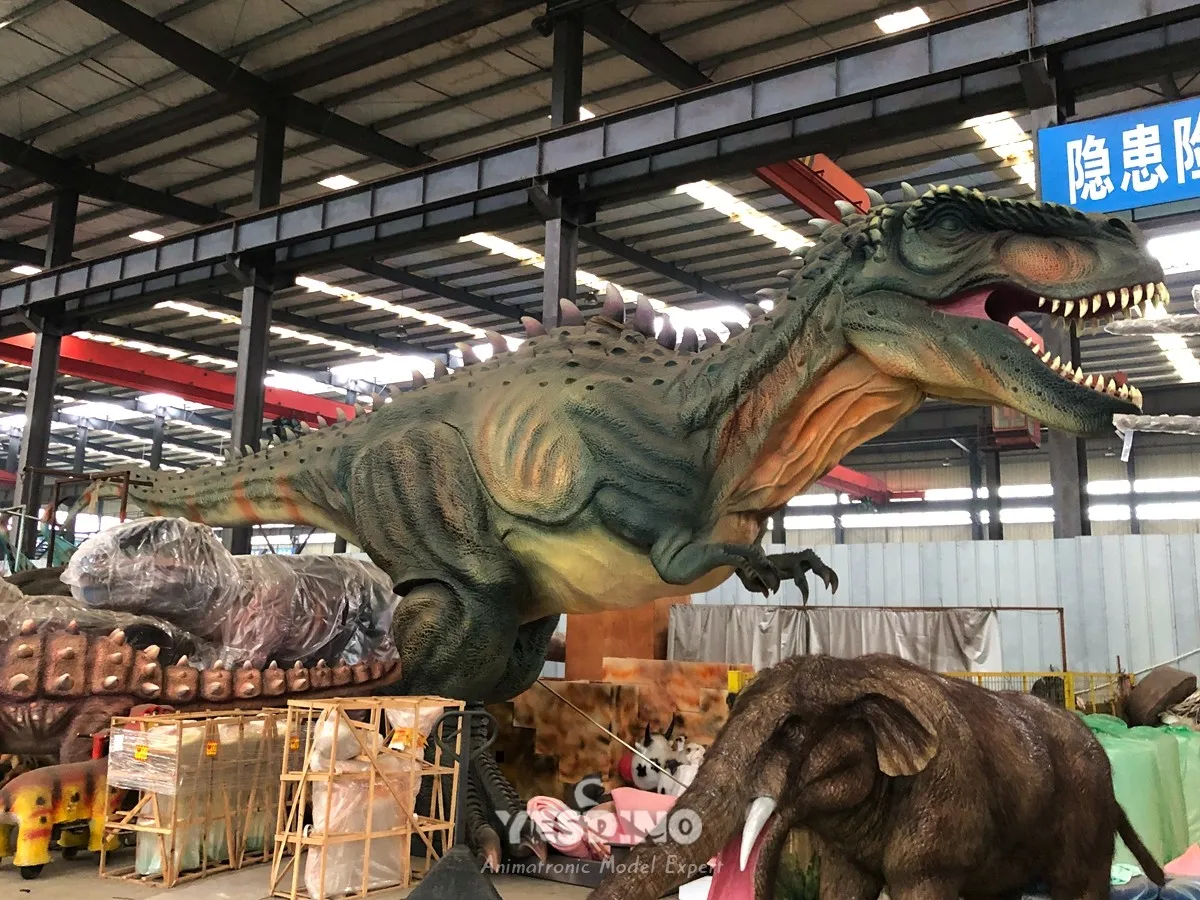
A 15 m theropod is a transport problem before it is a sculpting problem. The frame is laid out in sections from the start, because section length decides which container it travels in, which crane lifts it and how wide the gate has to be. Joint positions are set at the same stage - the skeleton decides what the animal can physically do once it is standing.
From there it is hand work: foam carved for volume and muscle line, scale texture worked into the surface rather than printed on, 5-7 mm of silicone built up in layers, colour in translucent coats so the depth still reads under direct light.
The finished animal runs its full cycle, and that test is filmed. The clip you receive before packing is the unit you bought, not a stock video. On a 15 m build the silicone is the largest single material line - the foam is not, which is the opposite of what most buyers assume.
Site, weather and the maintenance routine
Outdoor year-round service needs three things done properly: sealing at the cable entry, a cabinet that stays dry, and a base designed for wind load. Everything else on the animal is built for rain and sun. The failure pattern we see is boring - a seam that opened, a cabinet that took water, a joint that seized from standing still - and none of it needs a technician to prevent.
Run the full cycle daily before opening and listen for a change in sound. Wipe the skin and check seams monthly. Re-seal the jaw hinge and base seams before winter. In the off season, exercise the joints monthly rather than leaving them still. Keep a relay and a motor of the same rating on site; those two cover most of what goes wrong.
Technical specifications
| Item | Spec |
|---|---|
| Model | Giganotosaurus, 15 m |
| Model code | YKL-028 |
| Length | 15 m (top of the 3-16 m range we build) |
| Height | Fixed on the shop drawing |
| Frame | Welded Q235 steel, anti-rust coating, split into transport sections |
| Body and skin | Carved foam volume, 5-7 mm silicone skin, translucent colour coats |
| Movement | Head turn, jaw with roar, neck, tail, forelimbs; 5-7 joints |
| Drive | 450 W brushed DC motors, relay control board |
| Power | 110 V or 220 V single phase |
| Environment | -25 °C to 45 °C, sealed cabinet for year-round outdoor service |
| Shipping | Multiple sections; crane or forklift on site |
| Warranty | 2 years on core electronics |
| Custom options | Length, pose, colour, sound, LED, smoke |
What the price covers
Inside: the animal framed, skinned, wired and tested, the movement set and control board, export packing for the transport sections, two years on the core electronics.
Outside: freight and insurance, duty and taxes at both ends, market certificates, installation with crew travel, crane and local labour, foundations and site works, and delay costs from permits or weather. On a 15 m piece, freight and crane are not small lines - get both quoted before you fix the budget.
Questions buyers ask about this model
Is it bigger than a T-Rex?
At 15 m it is longer than most T-Rex builds we ship, which are usually 7 m to 12 m. Longer does not mean heavier in the same proportion - frame and skin area decide that, and both are quoted on the drawing.
Can it be delivered to a site with a narrow access road?
Usually, if we know the constraint before production. Section length is a design input, so send door widths, gate width and turning space and the frame is split to suit.
Can we get it in a different colour scheme?
Yes. Colour is applied in translucent coats, so patterns and gradients are possible. Send a reference image or an existing animal on site and the palette is matched to it.
The build stages and site checklist are on the animatronic dinosaur features page. If you want the two-predator pair, the 15 m T-Rex for theme parks is the counterpart we most often ship alongside this one. The rest of the range, species by species, is listed under animatronic dinosaurs.
Product Accessories
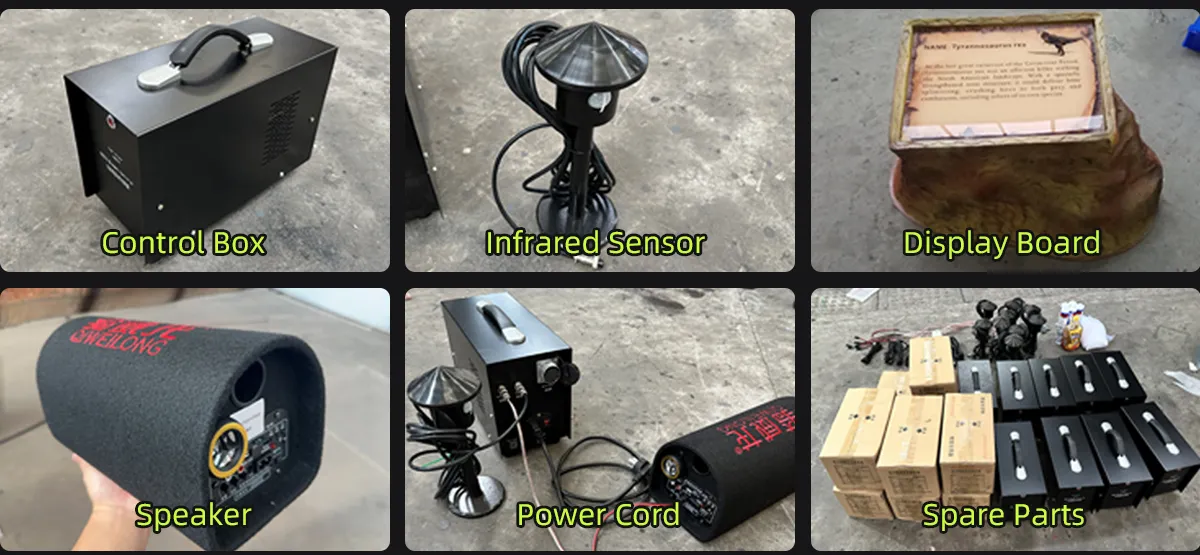
Packaging and Container Loading