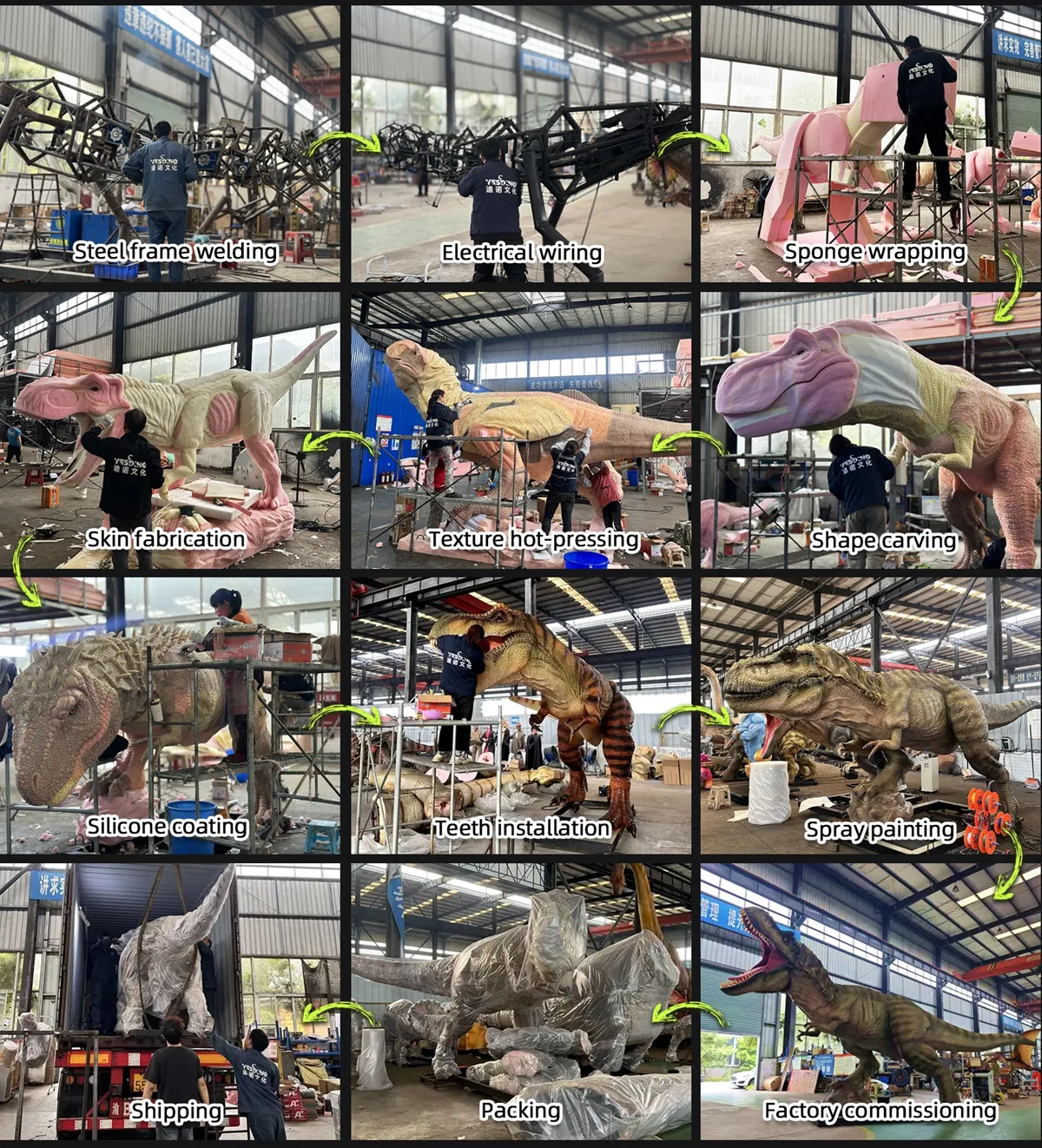
Production Process
Length is the number everybody quotes and the one that says least about an animal. Giganotosaurus is longer than Tyrannosaurus and lighter, and building it correctly means building a runner rather than a brawler.
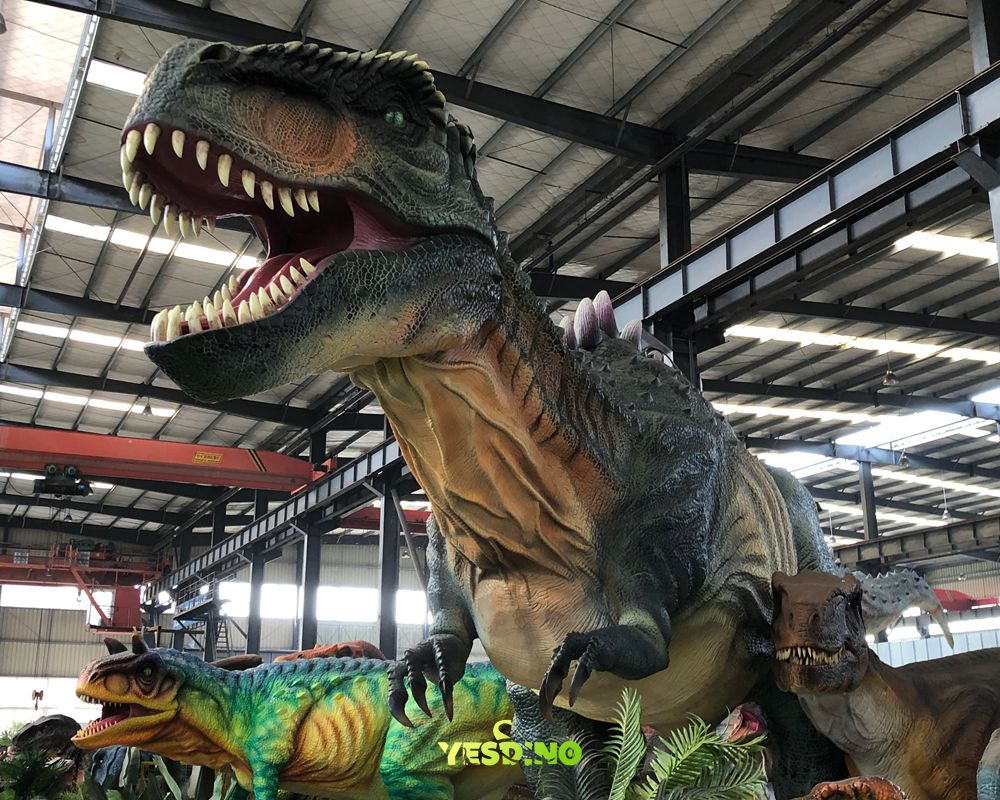
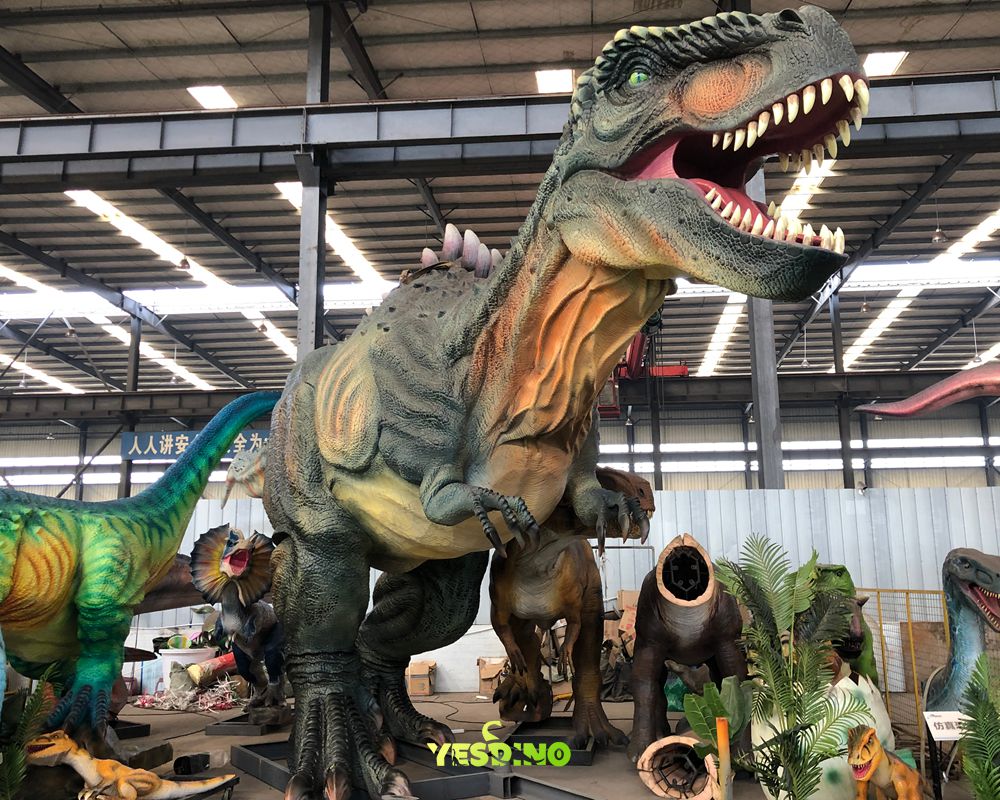
SKU YKL-103: thirteen metres long, 1.8 m across, 3.2 m to the top of the head. This is one of the few builds on this site where the listed length sits close to the fossil animal rather than being scaled for a space.
The number is honest this time
Large theropods are usually sold oversized, because a twelve-metre animal looks like a nine-metre animal in a photograph. At thirteen metres this build matches the published size of the Argentine specimens, which matters if your audience includes schools, museums or anyone who has looked it up.
It also means the practical numbers are real: the crate sizes, the clearance needed at the head, the footprint. Nothing has been quietly inflated, so the site plan you draw from our dimensions will be the site plan that works.
Long and light, not deep and heavy
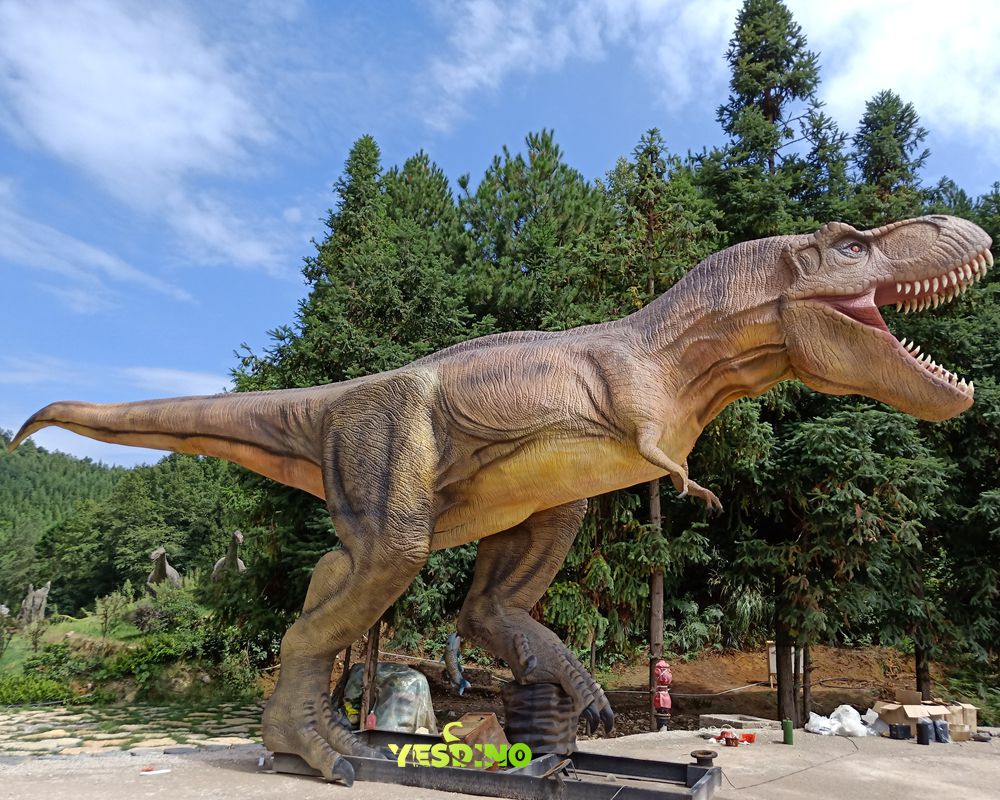
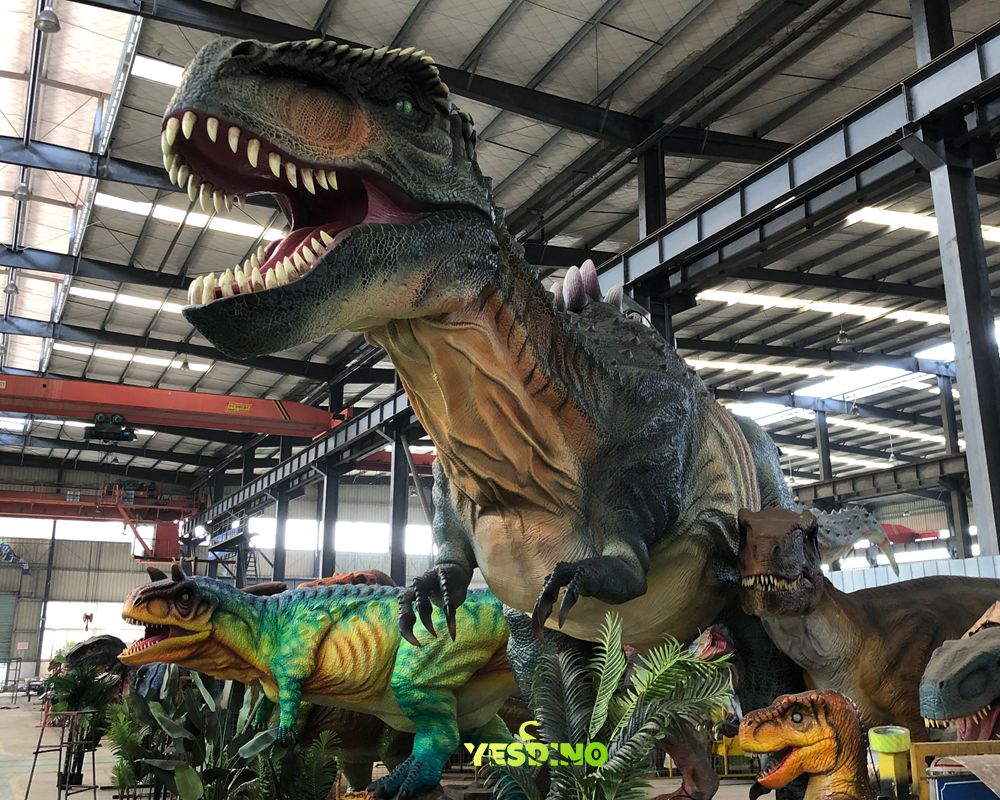
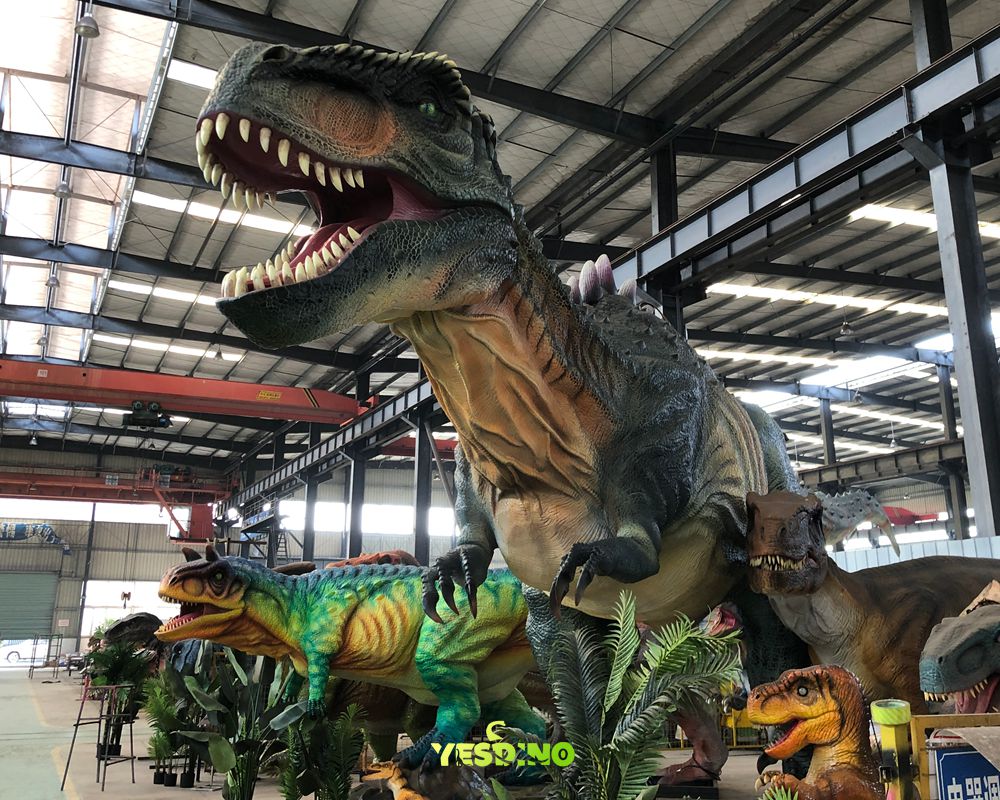
The skull is long and shallow with a slight curve to the snout, the neck is strong but not thick, and the body is carried higher off the ground than a tyrannosaur's. Three fingers on the hands, not two — a detail that is wrong on most cheap models of this genus.
That combination changes how the animal should be posed. A low, forward-leaning stance with the head near the ground makes it look like it is feeding; a walking stance with the head level makes it look like it is moving. For a trail animal the second is almost always the better choice, and it needs the neck set higher at build.
Six movement groups
Head left and right, neck up and down, jaw open and close with a roar, blinking eyes, tail sweep, forearm scratch. The tail is the group to think about on a thirteen-metre animal: the tip covers more ground than visitors expect, and the base frame has to carry that momentum without the tail section flexing.
Each group runs on an independent drive with end-of-travel protection, on a loop or triggered from a sensor. Speeds are set at commissioning — a walk-in animal moves slowly and heavily, and slowing the neck down usually does more for realism than adding movements.
If you already have a tyrannosaur
Two large theropods on the same site is a common plan and a common mistake: they end up beside each other, and visitors compare them the way they compare two cars. Separate them by at least a hundred metres of path, and vary the pose so the second animal is doing something different — one standing over a kill, the other walking.
If the site is small, this animal is also the wrong choice beside a T-Rex. A single large predator plus three mid-size animals makes a better trail than two giants competing for the same fifteen seconds of attention.
What thirteen metres does to the delivery
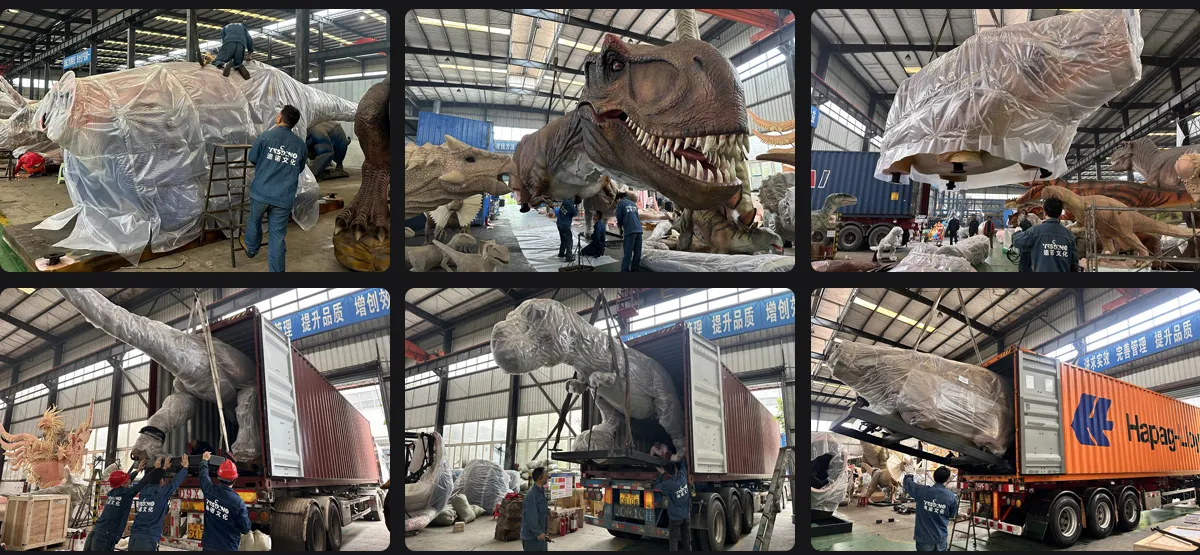
At this length the animal stops being a single object and becomes a logistics project. The body section is the constraint: it sets the crate size, which sets the vehicle, which sets the access road. Before the container is booked we ask for the gate width, the gate height and whether a crane can set down within reach of the pad, because a thirteen-metre animal that arrives on a truck too big for the site is an expensive afternoon.
Assembly is straightforward once the pieces are on the ground: legs and base frame first, body lowered onto it, then neck, head and tail bolted and shimmed. Two people with the right lifting gear can do it in a day; the joint calibration and the first program run add a second.
The base is the part worth specifying carefully. A long animal with a sweeping tail puts load at the feet and then transfers it sideways, so the pad has to extend under the full frame rather than just the hips. On soft ground, that means a concrete pad; on a hard surface, an anchored base plate.
Finish and delivery
Welded Q235 steel frame with anti-rust treatment, foam volume carved over it, silicone five to seven millimetres thick, translucent silicone airbrushed in layers. Standard palette is a grey-brown body with darker striping across the back and a pale underside; the pattern is scaled to the animal rather than repeated, which matters at this length.
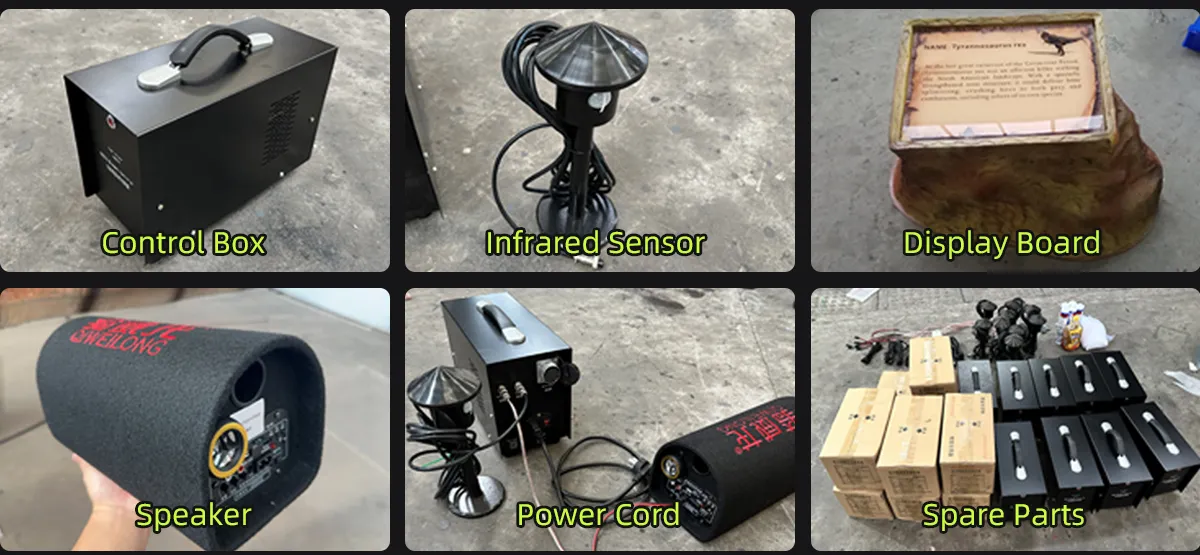
Rated −25 °C to 45 °C, 110 V or 220 V configured at build, two-year warranty on core electronics. Ships in sections with base frame, control cabinet, sound system, wiring diagram and calibration sheet. Freight, duties, certificates and installation are quoted separately and are not part of the product price.
Enquiry
Send the site photo, the viewing distance and whether another large predator is already on the trail. If the honest answer is that a smaller animal would serve the space better, we'll say so before quoting.
Where to go next
Two things come up in almost every enquiry on this build: how the size compares with the alternatives, and what it takes to get it on site. The size guide covering 3 m to 12 m builds sets out the length options side by side, and the rental cost breakdown covers pads, access and assembly. Budget planning sits in the pneumatic versus hydraulic comparison.
For ideas on placing it, see exhibit planning walkthrough. The rest of the range is on animatronic dinosaurs, and if this one is the wrong size for the slot, 5m t-rex for exhibition stands is the closest alternative.
Product Accessories
Packaging and Container Loading