|
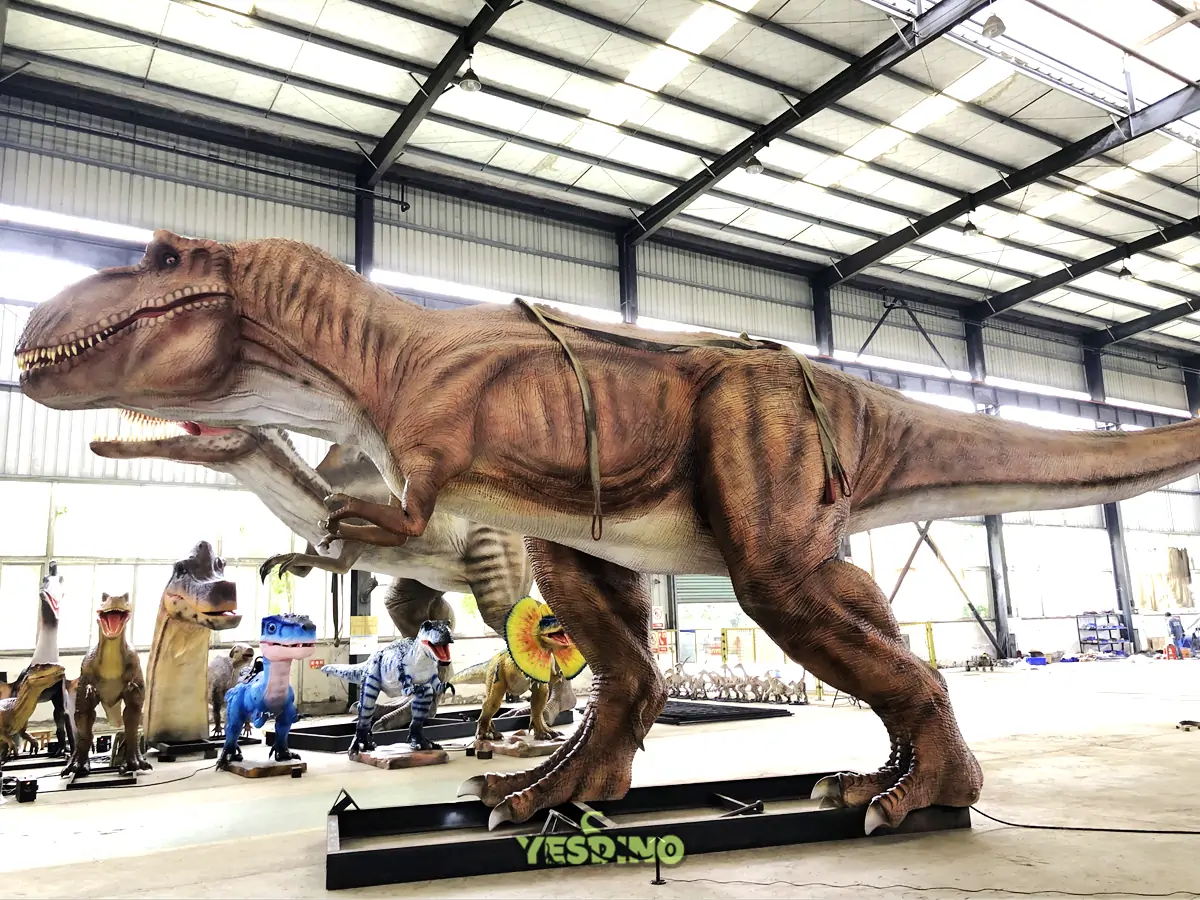
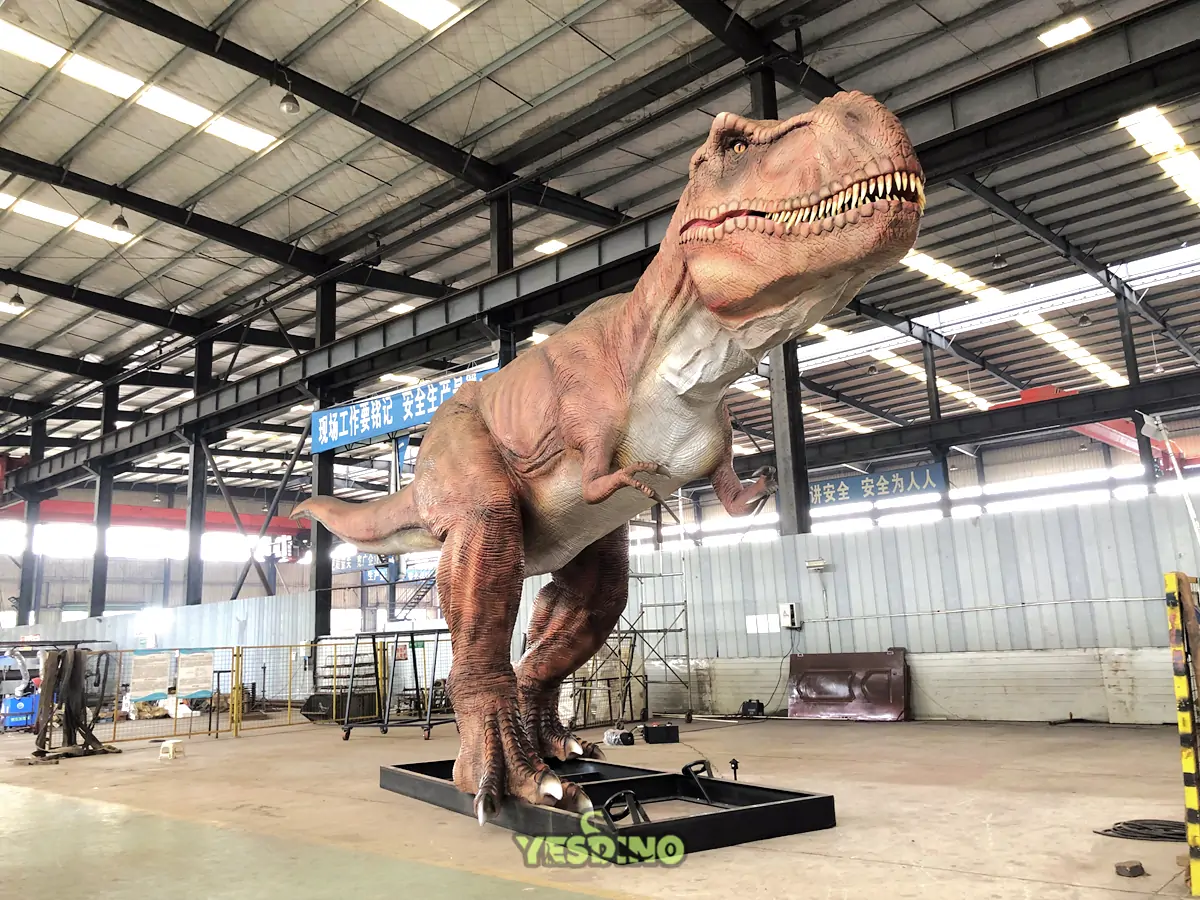
Most inquiries about an animatronic Tyrannosaurus rex start with two questions: "Does it roar?" and "How does it move?" Roar audio is easy. Keeping a large animatronic running 12+ hours a day, 300+ days a year without constant downtime is the real problem. On our build floor, we look closely at five areas: head and neck mechanics, leg structure, skin bonding, service access, and site setup.
Head and Neck: Where Half the Cost and Headaches SitOn a 10-meter (33 ft) T-Rex, over half the build cost and a big share of repair risk sit in the head. It isn't just about sculpting—it is a load, gearing, and heat problem.
Head Weight on the Neck CantileverA standard 10-meter T-Rex head runs about 1.2 to 1.5 meters (4 to 5 ft) long. Once the steel frame, high-density foam, silicone skin, and resin teeth are on, the head weighs well over 50 kg (110+ lbs). All of that weight hangs off the neck shaft and base bearings. Thin shaft walls or undersized bearings will wear fast under constant motion, leading to droop, play, or flange cracking. Jaw Motion, Limits, and GearboxesOpening and closing the mouth looks basic on paper, yet four details make or break it:
Motor Watts and 2-Hour Heat TestingWhen comparing head actions—jaw, yaw, pitch, blinking, mist, and sound—look past the action count and check motor wattage and heat behavior:
Legs and Base: Keeping Two Feet BalancedA four-legged sauropod spreads weight under its belly. A T-Rex balances a heavy head out front and tail weight in back over two hind legs and the pelvis. On an 8 to 12 meter (26 to 39 ft) T-Rex weighing over 1 metric ton (2,200+ lbs), the hind legs carry 60% or more of the weight. Do not skimp around the pelvis. Main frames should use structural steel like Q345B with wall thickness scaled by size (around 3 to 6 mm), reinforced pelvis framing and gusset/rebar support, and full continuous welds. On larger units, Finite Element Analysis (FEA) helps catch high stress at the hip roots and neck base before welding starts. Cut corners there and cracks can show up within six months. Base anchoring matters just as much. Outdoor models at 10 meters and up catch heavy wind—weight alone won't hold them. Plan embedded anchors or expansion bolts for permanent outdoor spots, or heavy ballast plates for temporary setups. Never set heavy frames on fresh concrete before it cures, or settling will throw off alignment. Skin and Finish: Close-Up InspectionGuests walk right up to a T-Rex—often within 1 meter (3 ft)—with their phones out. Separate teeth vs. painted strips, inner mouth detail, and whether eyelids or mouth corners roll or pull during motion are all obvious up close. Foam density is usually 25 to 35 kg/m³ (about 1.5 to 2.2 lbs/ft³)—too soft sags, too stiff feels dead. Skin bonding typically takes 3+ coats of adhesive, and adhesion around moving spots like mouth corners and eye sockets is where most touch-up repairs happen. For outdoor sites, check UV, weather, and water resistance, and lock in warranty terms instead of looking only at base price. Service Hatches in the Drawings FirstSound, mist, and lights are great until a part fails and nobody can reach inside. The head is notorious for this: jaw drives sit tight inside the skull, so missing access hatches turns simple checks into major teardown work. We put quick-release inspection panels—roughly 300 × 200 mm (about 12" × 8"), easy to pop open one-handed—in low-visibility spots out of main photo angles. Aim to keep running noise under 65 dB; louder than that gets uncomfortable for people standing close. When a unit runs 12+ hours a day, every hour down is lost gate time. Site Access, Rigging, and HandoverT-Rex models over 10 meters ship in modular pieces—usually 5 to 6 sections (head, neck, body, hind legs, tail) with bolted flanges for on-site assembly. Check gate widths, path clearances, turn radii, slopes, and crane reach before ordering. If dimensions push you into a high-cube container or special freight, price that in early. Lift only from marked steel lift points during rigging. Slings wrapped around skin or neck sections can crush the foam underneath. Sort out foundation readiness, power specs, and control mode (timer loop, button, or central control) ahead of time instead of fixing wiring on site. Send spare wear parts with the unit—motors, controllers, audio modules, sensors—so a cheap sensor out of stock doesn't shut down the display. Include wiring diagrams, maintenance notes, and basic troubleshooting steps, and agree on remote support hours upfront if time zones differ.
Common QuestionsHow fast is a normal jaw open-and-close cycle on an animatronic T-Rex?Most industrial builds use a 55° to 70° opening angle and complete a full open-close cycle in 0.8 to 1.2 seconds. Why test motors for 2 continuous hours?A 2-hour full-load run checks for heat-related torque loss so movements don't slow down or lose range during long daily park hours. How are 10m+ T-Rex models shipped and secured?They typically ship in 5 to 6 bolted flange sections and need pre-checked site access, crane reach, and ground anchors or ballast plates, especially outdoors. If you have a project coming up—indoor or outdoor, rough size, and target opening date—send over the details and we can look at what fits your site. |