|
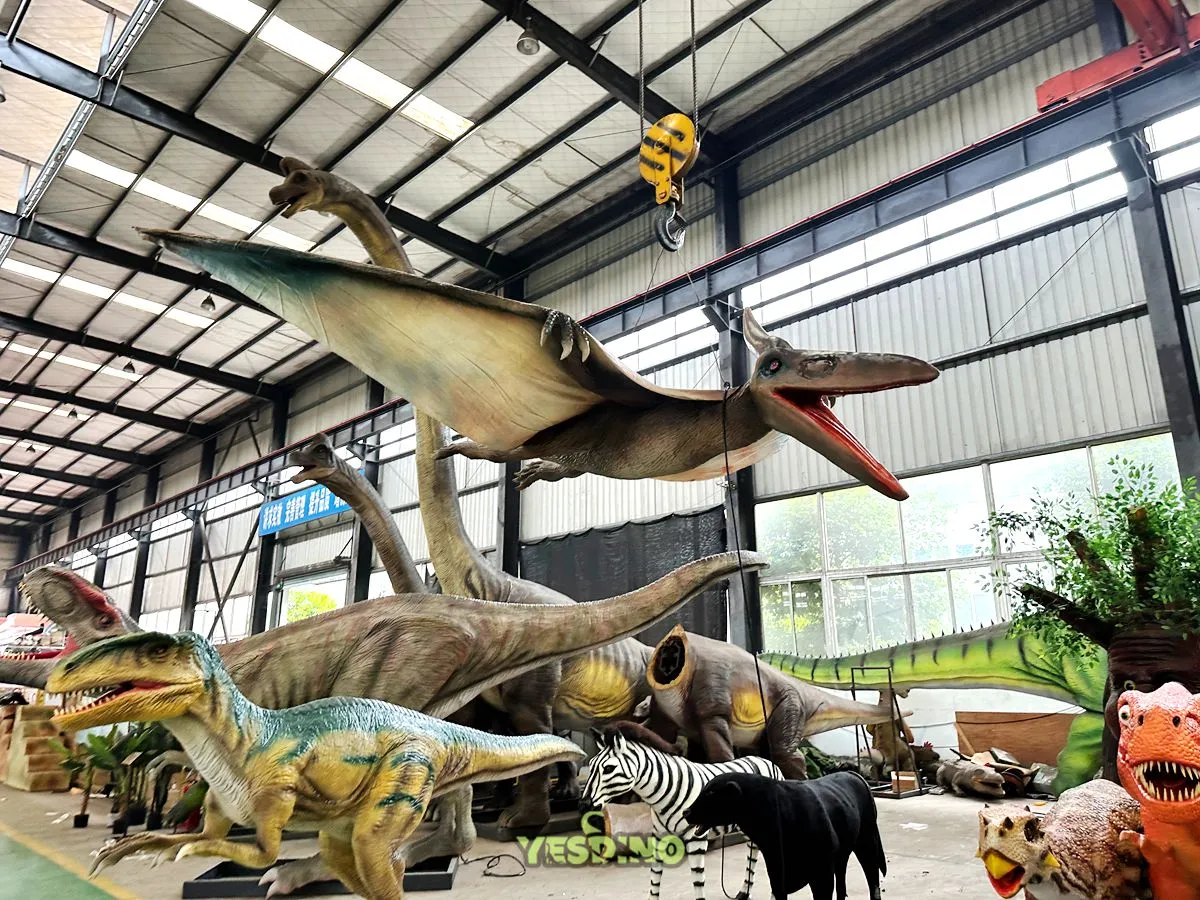
Walk into ten dinosaur theme parks, and nine of them greet you with a roaring T-Rex right at the front gate. Honestly? Guests’ camera rolls are getting a little fatigued. If you want visitors to stop dead in their tracks, look up, and immediately pull out their phones to film, you need to own the airspace. First, let’s clear up a quick nerd fact: a pterodactyl isn’t actually a dinosaur. They were evolutionary "cousins",living at the exact same time, yet taking two completely different paths. Dinosaurs walked on land; pterosaurs elongated their fourth finger to stretch out a massive skin membrane and conquered the skies first. If you put "Flying Dinosaur" on your park’s educational plaque, hardcore paleo-fans will call you out. The smart, accurate hook? "The Dinosaur’s Flying Cousin." That technicality doesn't stop a 20-foot (6-meter) custom animatronic pterodactyl for theme parks,flapping its wings overhead and screeching on cue—from becoming the undisputed star of your attraction. No sales fluff today. We’re pulling back the curtain on three things every park buyer needs to know: what actually drives the price, whether to hang it or mount it on the ground, and the five questions that instantly separate real manufacturers from middlemen.
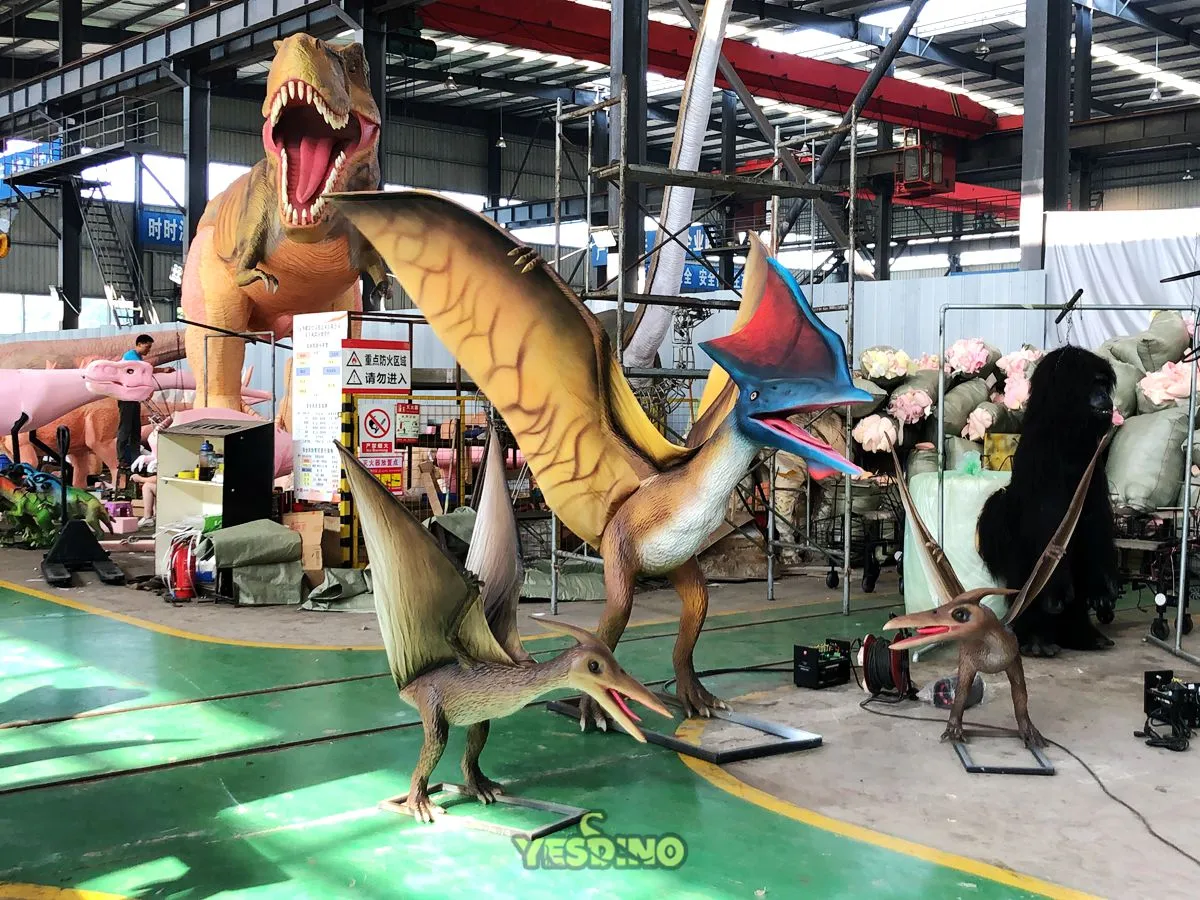
1. Let’s Talk Real Numbers: How Much Does a Custom Animatronic Pterodactyl Cost?Search online and you’ll see quotes ranging from two thousand dollars to tens of thousands,so wide it feels like people are talking about completely different products. Truth is, those numbers are all accurate, because they’re pricing completely different builds. For international theme park procurement, pricing typically falls into two core tiers (plus custom mega-installations): Entry-Level Display Models ($2,200 – $3,500)Usually 6.5 to 10 ft (2–3m) wingspan with basic movements (jaw opening, head turning, simple wing flaps). Ideal for indoor mall atriums, storefronts, or temporary pop-up exhibits. This is the most price-competitive segment on the market. Theme Park Commercial Grade ($3,800 – $5,000)13 to 20 ft (4–6m) wingspan, upgraded with industrial brushless motors, richer skin membrane textures, and programmable movement sequences. This is the sweet spot for permanent museums and theme parks. (Note: Giant 26 ft+ mega-builds or multi-unit track flying systems are quoted as custom engineering projects). One-Second Quote Reality Check: If a supplier throws out a flat "one-size-fits-all" price right off the bat, they’re likely offloading leftover warehouse stock,or planning to hit you with hidden add-ons after you sign. A legitimate factory will always ask you three things first: What wingspan do you need? Hanging or ground-mounted? Indoor or outdoor? 2. Wingspan Is the Number That Makes or Breaks Your ProjectWhen buying a terrestrial dinosaur, your first question is "How long is it?" When buying an animatronic pterodactyl, your first question must be "What’s the wingspan?" Change the wingspan, and your clearance width, ocean freight container, rigging load, and concrete footing change with it:
Two Spatial Blind Spots That Trip Up First-Time Buyers:The Wing Sweep Arc Is Wider Than the Static Wingspan: Many buyers measure a 16-foot corridor and assume a 16-foot pterodactyl will fit. Wrong. As the wings flap up and down, they travel in an arc that sweeps wider than the static pose. Industry rule of thumb: for a 16.5 ft (5m) wingspan, leave at least 20 ft (6m) of clear width, and keep lighting fixtures or fragile props well outside the wingtip radius. Insist on Detachable Modular Wings: If the wings are welded permanently to the torso, your model won't fit in a standard shipping container,forcing you into open-top or flat-rack ocean freight that doubles your shipping bill. Top factories engineer modular quick-connect wings using heavy-duty steel pins and waterproof aviation plugs, allowing two techs to assemble the bird on-site in 30 minutes.
3. Hanging vs. Ground-Mounted: Choosing the Right SetupMost buyers don't realize there are two completely different ways to stage an animatronic pterodactyl,and picking the wrong one for your site can turn maintenance into a headache. Option A: Overhead Hanging Models (Maximizing Vertical Airspace)Having a prehistoric predator swoop overhead is unbeatable for Dark Rides, indoor atriums, and high-ceiling walkways. Just watch out for three non-negotiables:
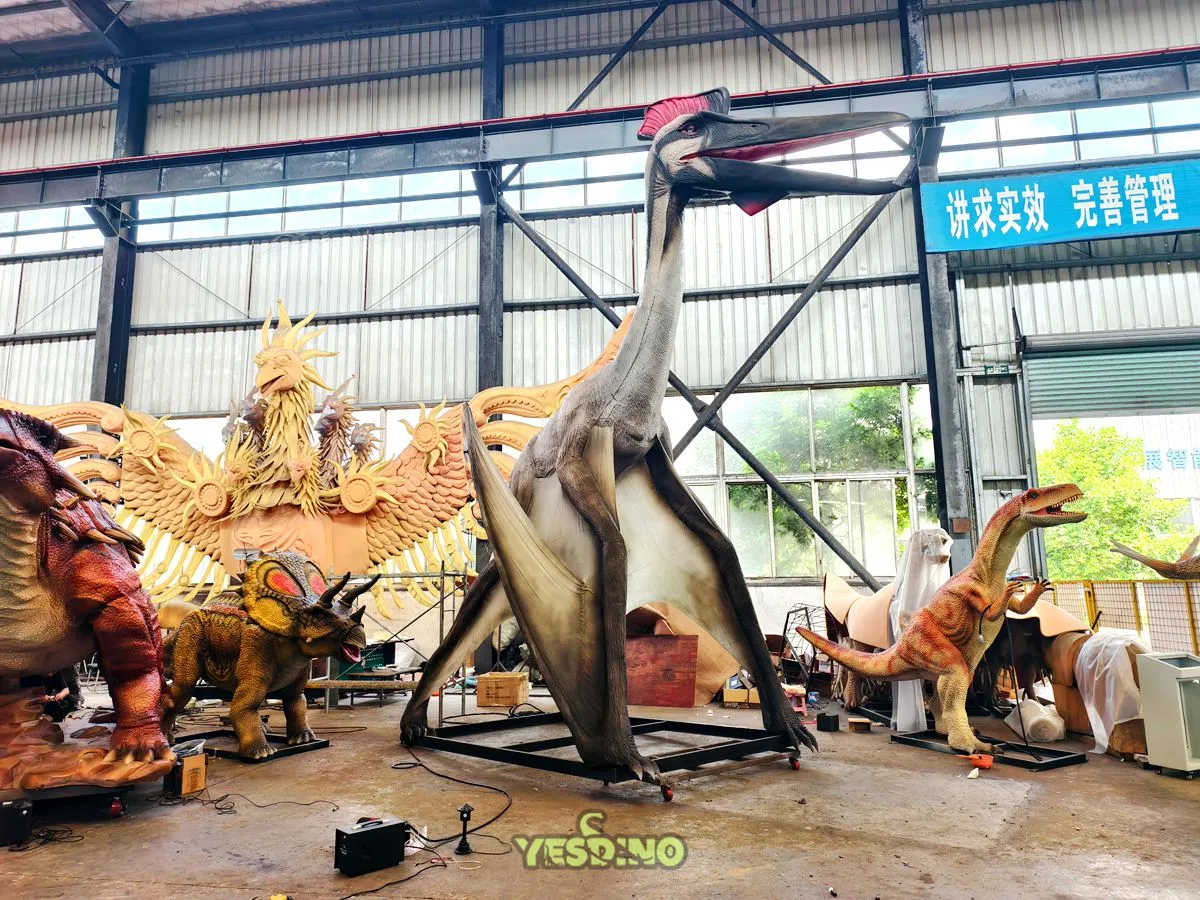
Option B: Ground / Tree-Perched Models (High Interaction & Wind-Resistant)Perfect for plaza entrances, trail intersections, or bolted directly onto real tree trunks. Three insider details make all the difference:
Pro Park-Planning Trick: Stage one pterodactyl on the ground and a matching one suspended overhead. Guests won’t see it as a duplicate,they’ll read it as a complete storytelling scene: one landing to hunt while its partner circles above. 4. Commercial Park-Grade vs. Cheap Display Models: What’s Under the Skin?Every supplier claims "100% customizable," from sculpting anatomically accurate species traits (like a Pteranodon’s swept-back cranial crest and toothless beak) to integrating infrared motion sensors and timed show controls. Before signing a PO, run your supplier’s specs against this commercial benchmark:
5. Vetting the Factory: 5 Questions That Expose PretendersNo matter how slick a supplier’s brochure looks, email them these five questions. If they dodge or give vague answers, walk away:
6. Quick-Fire FAQ for Theme Park BuyersHow long does production and shipping take for a custom animatronic pterodactyl?In-stock standard models can ship in roughly 15 days. Custom builds typically take 3 to 5 weeks in production. For giant 26 ft+ (8m+) models or complex track-flying systems, budget 15 to 20 weeks including ocean freight. Never confuse your factory ship date with your park grand opening date. Can you scale down the wingspan to fit a tighter indoor space?Yes. To preserve realistic prehistoric proportions, scaling down the wingspan means scaling down the torso, neck, and head crest proportionally,never just chopping the wingtips shorter. Can we order multiple pterodactyls to fly in a synchronized "flock"?Definitely. Multi-unit formations use synchronized show-control programming and overhead rail systems. Because that requires coordinated rigging and power drops, it’s best to plan it as a unified scene during your venue’s early layout phase. Ready to Price Out Your Exhibit? Skip the GuessworkOrdering a custom animatronic pterodactyl goes sideways when people guess on wingspan clearance, dynamic ceiling loads, wind exposure, or doorway widths. Instead of collecting a dozen vague "starting at" quotes, send over the real-world details of your space: site photos, ceiling height, target wingspan, indoor vs. outdoor placement, and your target opening date. The more specific your site info, the sharper your engineering layout and real-number budget will be,no lowball quotes followed by surprise fees later. |