|
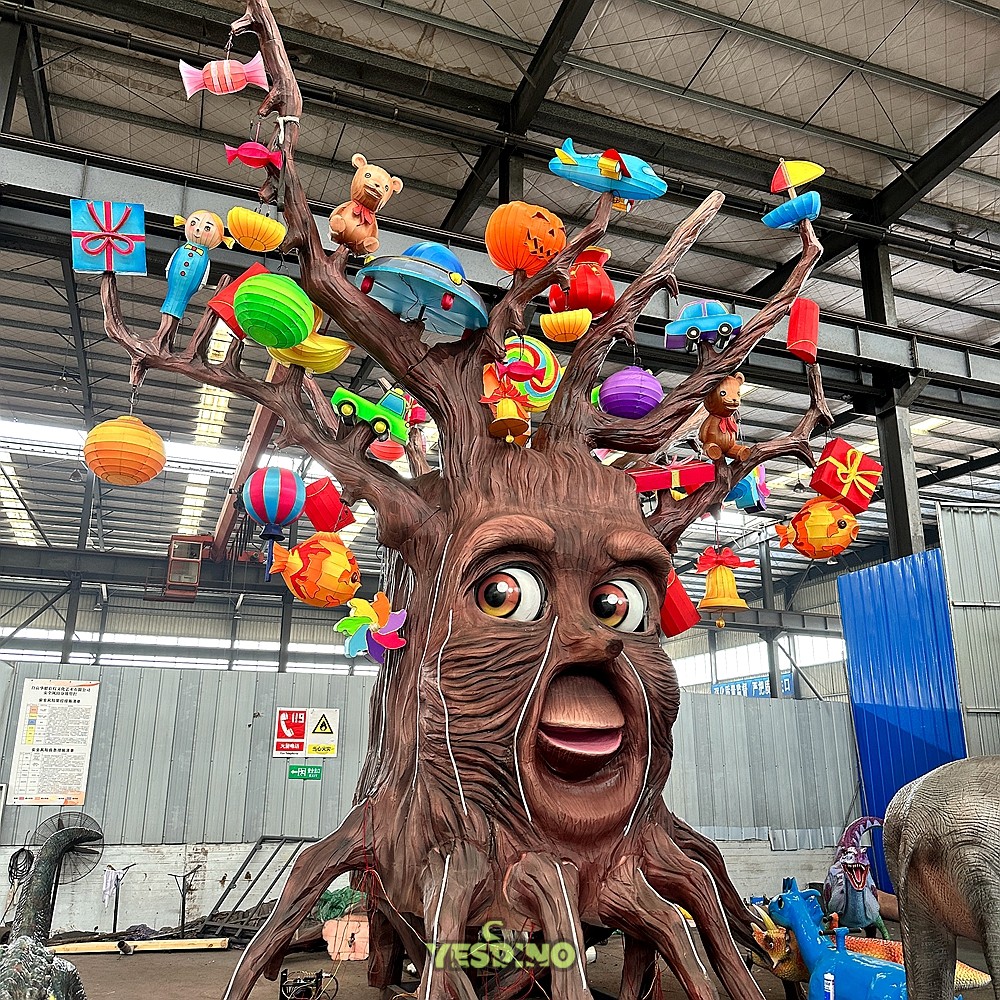
Bionic talking trees have been deployed at multiple theme parks across China — according to the China Association of Amusement Parks and Attractions 2023 report, voice-interactive installations increased average guest dwell time by 47% and repeat visit rate by 31% compared with static exhibits; the core of this system lies in the coordinated design of three subsystems — voice customization, motion sensors, and all-weather protection Voice CustomizationVoice RecordingMainstream bionic trees offer single-clip recording durations of 10-60 seconds at 16kHz or 22.05kHz sample rates in MP3 or WAV format — this window comfortably covers one greeting phrase, a short story segment, or a single interactive command. According to the Disney Parks technical white paper, voice content typically falls into three tiers: welcome greeting (10-15 seconds), functional guidance (20-30 seconds), and narrative scene (45-60 seconds); clips exceeding the 60-second single-session limit must be split across multiple trigger nodes. I once encountered a recording disaster at an oceanarium project: the operator recorded a 90-second whale-fact narration in one take, only to discover the device could only store the first 60 seconds — the final 30 seconds were silently truncated, leaving visitors confused — the root cause was a failure to verify the unit's maximum recording duration specification. Storage media is primarily MicroSD cards with capacities ranging from 8GB to 128GB; 8GB holds approximately 1500-2000 sixty-second audio clips. Mainstream systems employ circular overwrite logic: when storage fills up, the oldest visitor recording is automatically deleted while factory-preset voice content is preserved — this eliminates the need for operators to manually clear storage on a routine basis. It is particularly important to note that at equal recording duration, WAV format delivers superior sound quality over MP3 — WAV is uncompressed PCM (16bit/44.1kHz) at approximately 1411kbps bitrate; MP3 is lossy compressed at 128kbps, capping frequency response at approximately 18kHz, which cuts off high-frequency harmonics above 16kHz and causes a muffled sound. Children's voices carry rich high-frequency energy; for IP-driven attractions with frequent button-pressing by kids, WAV format paired with dynamic range compression (DRC) processing is recommended to prevent clipping distortion from sudden loud inputs. Volume AdjustmentVolume adjustment typically spans 40-80dB with a step precision of 1-3dB, and night mode automatically reduces output to below 40dB — this design satisfies the limits specified in GB 3096-2008 "Standard of Environmental Noise of Urban Areas" for residential zones at night. Peak daytime volume should not exceed 75dB, roughly equivalent to background sound pressure in a busy restaurant; after 10 PM the system automatically switches to the night curve, capping output at 50dB. I once helped debug a northern scenic area where a worker cranked the volume to 85dB during daytime, and the system failed to auto-reduce at night — nearby villagers immediately filed complaints with the park management — the issue was only resolved after installing a hardware volume cap lock. Volume adjustment also involves distance compensation algorithms: the system continuously samples ambient noise levels via its built-in microphone and automatically fine-tunes output volume so that a visitor 3 meters away hears clarity comparable to someone standing 1 meter from the unit — this parameter is commonly labeled "Adaptive Volume Control (AVC)" or "Ambient Noise Compensation," and budget systems lacking this feature are practically unusable in outdoor high-noise environments. Sound pressure level (dB SPL) measurement follows strict standards: readings must be taken with a sound level meter (A-weighting) positioned 1 meter directly in front of the device, with background noise at least 10dB below the measured level to ensure accuracy. Some lower-cost units advertise "maximum volume 80dB" as tested in an anechoic chamber under ideal conditions; real-world outdoor installations affected by mounting height and surrounding reflective surfaces may yield 3-5dB lower perceived volume — this margin is acceptable in quiet nighttime conditions but becomes inadequate against daytime outdoor ambient noise. Language OptionsBionic tree voice systems typically support 2-12 languages, with the mainstream configuration being 4-6 — Mandarin Chinese, English, Japanese, and Korean form the most common four-in-one package, while international IP venues like Disney and Universal add Thai, Vietnamese, and 2-3 European minority languages. According to the TEA/AECOM 2023 Global Theme Park Report, among parks with international visitor ratios exceeding 25%, 83% equipped their interactive installations with three or more language options; parks below this threshold typically offer only bilingual Chinese and English. I worked on a southern China resort project where the operator insisted on Chinese-English only, then found the summer season flooded with Japanese and Korean school groups — the interactive features became completely useless, and a last-minute addition of two language modules cost three times what upfront pre-installation would have. Multi-language systems are implemented either through local storage or cloud-based retrieval: local solutions pre-burn language audio packs into SD cards or internal Flash memory, switching instantly with no latency but imposing greater storage demands; cloud solutions support real-time downloading of new language packs with flexible extensibility but rely on network stability, and weak signal areas like underground zones or dense forest sections suffer from audio stuttering. Major equipment suppliers such as Beijing Langyu, Shenzhen Zhongshi, and Wenkex Garden all provide SDK interfaces by default for unified multi-language switching management across the park. Motion SensorsTrigger DistanceTrigger distance typically ranges from 1-5m with PIR (Passive Infrared Pyroelectric) sensors as the core technology — these detect changes in infrared radiation intensity emitted by the human body across the 8-14μm wavelength band to determine proximity, with signal trigger thresholds generally set at a 3-5°C increment above ambient background temperature. The field-verified optimal value for theme parks is 2-3m: beyond 3m during peak seasons with dense crowds, false triggering becomes frequent (one person triggers, a crowd gathers and watches, the unit repeatedly responds); below 1m requires visitors to intentionally lean in, destroying the sense of natural interaction. I participated in a theme park project where engineers labeled the sensing distance as "up to 5m," but in actual summer conditions at 37°C, the PIR sensor's background temperature versus human body temperature difference shrank to only about 2°C, dramatically reducing trigger sensitivity — visitors beyond 2m could barely activate the device — the problem was only solved after switching to a dual-element PIR sensor and increasing signal amplification gain. Premium solutions add microwave radar or ultrasonic sensors for dual-criteria verification: triggering only when both infrared and microwave signals simultaneously detect a target, reducing false trigger rates to below 5%. Installation method significantly impacts trigger distance: PIR sensors experience approximately 30% infrared transmittance reduction when a glass panel is placed in front of them, shortening effective detection range; mounting near metal posts creates false heat sources through thermal conduction, causing misfires or detection blind spots. Professional installation manuals typically require a minimum 30cm gap between the sensor and any glass surface, and at least 15cm clearance between the sensor and adjacent posts. Additionally, PIR sensors are most sensitive to vertically moving heat sources across the field of view — horizontally passing visitors produce a stronger trigger response than those walking directly toward the unit. Detection AngleDetection angles typically span 90°-180° in a fan-shaped coverage pattern; a 120° horizontal field of view is the mainstream configuration, covering approximately 120° in front of the tree crown. Mounting height is the key variable determining coverage area — at 1.2m (average child eye level) paired with a 120° wide-angle lens, ground coverage radius is approximately 3.5m; at 1.5m height the radius expands to approximately 4.5m, but creates a blind spot within the nearest 1m. I once observed a bionic tree installed at 1.8m where adults triggered it without issue but kindergarten children walking past registered no response at all — the park spent a week troubleshooting before discovering that the mounting position deviation combined with insufficient detection angle had created a lower-body blind zone. Another critical parameter for detection angle is the "near-field blind zone": the 0-0.3m area directly beneath the sensor where lens design creates invalid detection coverage. When selecting units, verify whether the blind zone range falls within acceptable parameters — PIR sensors with Fresnel lenses typically have blind zones of 0.2-0.4m, while microwave radar units using diffuse-reflection architecture have virtually no blind zone. On tree-form devices, sensors are typically installed at mid-to-upper trunk height (1.2-1.5m) with a 15-30 degree downward tilt — this angle covers the front fan-shaped area while minimizing unnecessary triggering in distant non-target zones. Some manufacturers provide adjustable gimbal mounting brackets supporting 0-360° horizontal and 0-45° vertical fine-tuning; fixed-angle solutions cost less but cannot compensate for complex terrain, easily creating detection dead zones in specific azimuths. Response SpeedResponse speed from detection to output typically ranges from 100-300ms, with sub-200ms being a hard specification for mainstream mid-to-high-end products — units exceeding 500ms make visitors feel noticeably "behind" the interaction, creating a jarring experience. Response latency originates from three stages: sensor signal processing (30-80ms), main controller algorithm computation (50-150ms), and speaker audio output initialization (20-70ms); the sum of these three segments determines end-to-end response time. I assisted a southern China theme park in diagnosing a lag issue where their device was labeled with a 200ms response time but actually measured 650ms — the root cause was speaker voice coil aging which increased the start-up time from 20ms to 300ms; replacing the driver unit restored normal performance. Engineering approaches to optimizing response speed include: replacing traditional microcontrollers with RISC-architecture MCUs (compressing algorithm computation from 150ms to 30ms), pre-loading audio buffers (pre-loading audio data into memory before playback is triggered), and selecting high-sensitivity speaker drivers with neodymium iron boron magnetic circuits (start-up time below 30ms). Audio output-side latency optimization has been a technical focus in recent years: traditional analog Class-AB amplifiers require approximately 50-100ms output establishment time, while new digital Class-D amplifiers can compress this to 5-15ms; combined with pre-loaded audio buffers from solid-state storage, overall response can be pushed below 80ms. Some venues with high interaction-experience standards such as Universal Studios have adopted optical triggering instead of PIR triggering — optogates have response times below 10ms, completely eliminating the latency bottleneck introduced by the sensing layer. All-Weather ProtectionRain ProtectionOutdoor bionic tree minimum protection rating is IP65 (GB 4208-2008), where the first digit 6 denotes complete dust tightness and the second digit 5 denotes protection against low-pressure water jets from any direction — this rating can withstand water projected from a standardized nozzle at 12.5L/min from 2.5-3m distance for 3 minutes without water ingress. For coastal salt-mist environments (Hainan, Guangdong) or industrial acid-rain areas, upgrading to IP67 or IP68 is recommended — IP67 withstands immersion in 1m of water for 30 minutes, while IP68's immersion depth and duration are vendor-defined under custom test conditions. I once observed at a coastal island theme park in Xiamen where bionic trees equipped with IP65 units suffered mainboard failure from salt-mist corrosion after just three peak seasons — all units were later replaced with IP66 units plus anti-corrosion coating treatment, and the one-time replacement cost exceeded the initial price differential by a factor of five. Rain protection structural design also involves acoustically transparent waterproof membranes for speakers and microphones: ePTFE (expanded polytetrafluoroethylene) microporous membranes are commonly used, breathable yet waterproof, with pore sizes of 0.1-1μm that allow sound transmission while blocking water droplets — this material is widely applied in outdoor speakers, medical device venting, and similar applications, with leading brands including American Gore and domestic ZJU Chuanxing. The IP rating test standard (GB 4208/IEC 60529) specifies IP65 spray test conditions as: nozzle inner diameter 6.3mm, water flow rate 12.5L/min, nozzle-to-specimen distance 2.5-3m, spray duration 3 minutes. Critically, IP ratings only evaluate water ingress protection and do not cover salt-corrosion resistance — so coastal projects require, beyond IP67+, additional anti-corrosion coating treatment; the standard approach is a dual-coating system of electrophoretic primer plus polyurethane topcoat on the exterior housing.
UV Resistance1000 hours of QUV accelerated weathering testing is the industry-standard method for evaluating outdoor bionic tree housing durability under prolonged UV exposure — results typically require tensile strength retention above 80% after the exposure cycle. Outdoor bionic tree housings are permanently exposed to ultraviolet (UV) radiation, which causes polymer chain scission and material embrittlement over time; the two most common housing materials are ABS and ASA engineering plastics, with ASA offering approximately 5-8 times better UV stability than ABS. ASA (acrylonitrile-styrene-acrylate terpolymer) achieves its UV stability from the acrylic rubber phase in its molecular structure — this phase undergoes slight crosslinking under prolonged UV exposure, which paradoxically increases surface hardness and forms a self-protecting mechanism, making ASA the superior choice for outdoor applications over ABS. The quality gap between domestic ASA and imported Sabic ASA primarily lies in the rubber-phase particle size distribution uniformity; inferior ASA develops a sticky surface after 500 hours of QUV exposure, while quality products maintain good surface gloss even after 2000 hours. Low-Temperature ResistanceBelow -30C, mainstream bionic tree housings experience a sharp drop in impact strength as the ductile-brittle transition temperature (Db) is crossed — polymer materials like ABS and polycarbonate become brittle, and battery discharge capacity degrades significantly. The Db range for mainstream housing polymers is between -30C and -40C. Lithium iron phosphate batteries (LiFePO4) deliver superior low-temperature discharge performance compared to lithium-ion ternary batteries: at -20C, LiFePO4 delivers approximately 80% of rated capacity versus 40-50% for ternary lithium batteries, making them the preferred choice for cold-climate bionic tree deployments. Low-temperature design verification: cold-start testing requires placing the equipment in a -30°C or lower constant-temperature chamber for more than 4 hours, then immediately powering on — key checks include whether motor starting current exceeds rated value, whether seals show any leakage due to contraction, and whether the LCD screen exhibits response lag or display anomalies. The industry standard requires passing three consecutive cold-start cycles for qualification. The core selection criteria for bionic talking trees: voice recording no more than 60 seconds with circular storage overwrite support, motion sensor trigger distance of 2-3m with response speed below 200ms, protection rating starting from IP65 with ASA housing QUV test duration of at least 1000 hours — products meeting these three baseline specifications typically achieve MTBF (Mean Time Between Failures) exceeding 30000 hours in high-frequency theme park operating environments
According to the China Association of Amusement Parks and Attractions 2023 report, voice-interactive installations increased average guest dwell time by 47% and repeat visit rate by 31% compared with static exhibits — bionic trees and similar interactive installations have become core tools for theme parks seeking to boost return visit rates. GB 3096-2008 "Standard of Environmental Noise of Urban Areas" specifies nighttime (22:00-06:00) outdoor sound limits of 50dB in residential zones and 55dB in industrial zones — automatic nighttime volume reduction to below 40dB on bionic trees is the baseline configuration required to satisfy this regulation. The QUV accelerated weathering test (ASTM G154) employs an 8-hour UV exposure (UVA-340 lamp, 0.89W/m2/nm at 340nm) plus 4-hour condensation cycle — 1000 hours of testing is approximately equivalent to 2 years of outdoor exposure in South China or 3 years in North China. PIR pyroelectric sensor core DRI metrics (Detect-Recognize-Identify) follow EN 62676-1-1 standard, where the recognition distance is approximately 50% of detection distance and the identification distance is approximately 25% — theme park applications typically only need to achieve the "detect" level to satisfy interactive triggering requirements. |