|
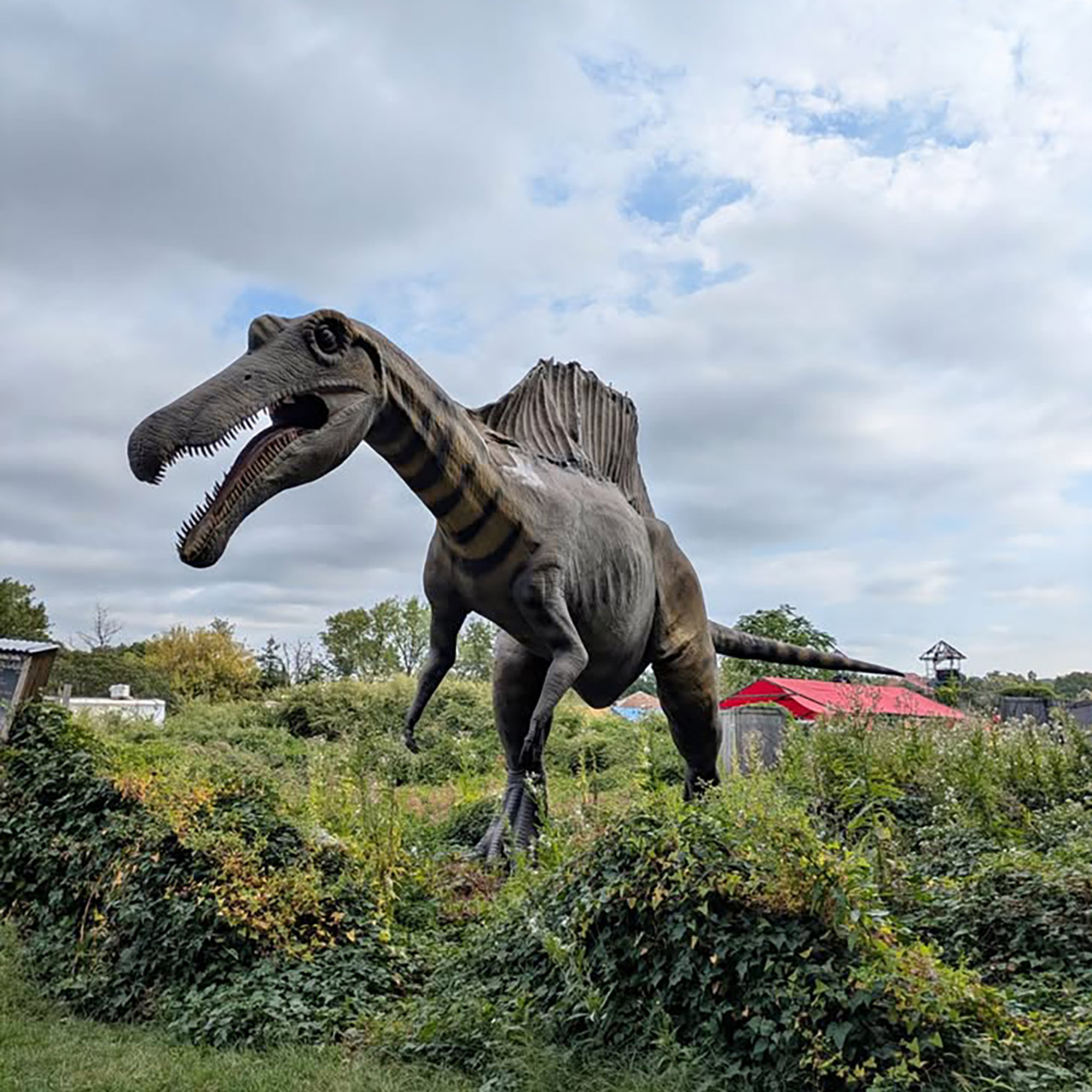
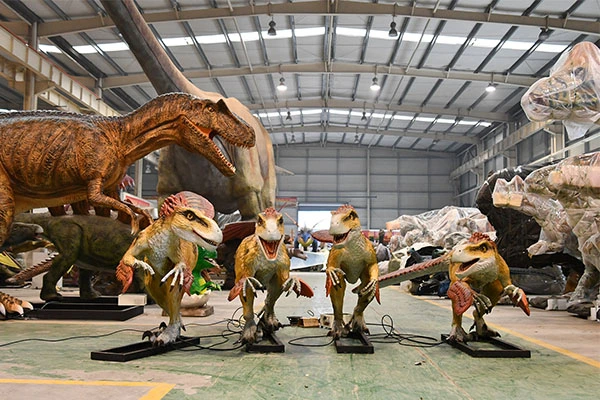
We specialize in the full-chain service of animatronic dinosaurs. Custom models can reach a maximum length of 20 meters and a height of 8 meters. They feature a steel / high-carbon steel alloy skeleton and food-grade silicone skin (3–5 mm), with flexible movements including head turning, mouth opening, eye blinking, tail swaying, and limb movements. The wholesale MOQ is 5 units, and we support custom designs according to the theme of your scenic spot, park, museum or event. We have provided animatronic dinosaurs for more than 20 theme parks and museums worldwide. Rental service covers 20+ cities, and we complete 30+ commercial shows monthly during peak seasons, suitable for shopping mall promotions, science exhibitions, festivals, themed events and more. Our cost-performance ratio is highly competitive, with realistic appearances that are extremely popular among children. Custom Dinosaur Sizes Available
Size Range and Applicable ScenariosOur custom animatronic dinosaurs cover 1.5m–20m:
The skeleton uses high-carbon steel pipes; a 10m model weighs about 300–500kg. The skin is food-grade silicone, stable between -20°C and 60°C. We provided a 3m Triceratops for the Vancouver Aquarium, Canada, which was highly praised for its perfect size and interactive effect. Can a 1.5-meter dinosaur fit into a mallOur smallest 1.5m animatronic dinosaur weighs about 40–60kg, with dimensions generally within 1m × 0.8m, easy to transport and install. Example: A parent-child shopping center in Los Angeles, USA, customized a 2m Ankylosaurus for their dinosaur theme month. It can open/close its mouth, blink eyes, and move its head and claws gently. The mall’s feedback: “Children love to touch and interact with it, greatly increasing visitor stay time and on-site popularity.” The 1.5m dinosaur uses 33mm steel tubes and 3mm silicone skin, lightweight and easy to move through freight elevators. How to position 3-8 meter dinosaurs in a parkThis is the most popular size for clients, accounting for about 65% of orders.
These dinosaurs use 50–80mm steel skeleton, weighing 200–400kg, stable on concrete ground. How to set up large dinosaurs over 8 metersDinosaurs over 8m require open outdoor space. A 10m–15m Brachiosaurus generally occupies 15–25㎡. Example: The 12m Brachiosaurus at the Paris Natural History Museum required ground bearing capacity ≥ 300kg/㎡. The skeleton uses 80–155mm steel tubes, weighing about 400–800kg, with a fixed base for stability. Large dinosaurs mainly perform head lifting/lowering, neck moving, tail swaying, with stable and safe motion ranges. How big is the difference in movement across sizes
All movements are stable, safe, and realistic. Materials and Structural Details
All our dinosaurs pass UV testing, aging testing, and safety testing before delivery. The Dinosaur SkeletonThe skeleton is made of high-carbon steel, lighter and more durable than standard iron. Welding uses professional welding process, with polished joints. Each skeleton undergoes load-bearing and stability testing before leaving the factory. The Dinosaur SkinSkin material: food-grade liquid silicone (3–5mm). It is soft, tear-resistant, UV-resistant, and non-deformable under high or low temperatures. The skin is made through sponge shaping + sculpting + texture ironing + silicone coating + painting, highly realistic. The Dinosaur JointsJoints use stable motor drive system. Small dinosaurs have more flexible movements; large dinosaurs focus on stable, large-scale motions. All joints pass continuous operation fatigue testing. Dinosaur SplicingThe skin is installed in sections and fixed firmly to the steel frame. Installation and disassembly are convenient for maintenance and cleaning. Material DurabilityOur materials pass:
Function Realization and Size Correlation
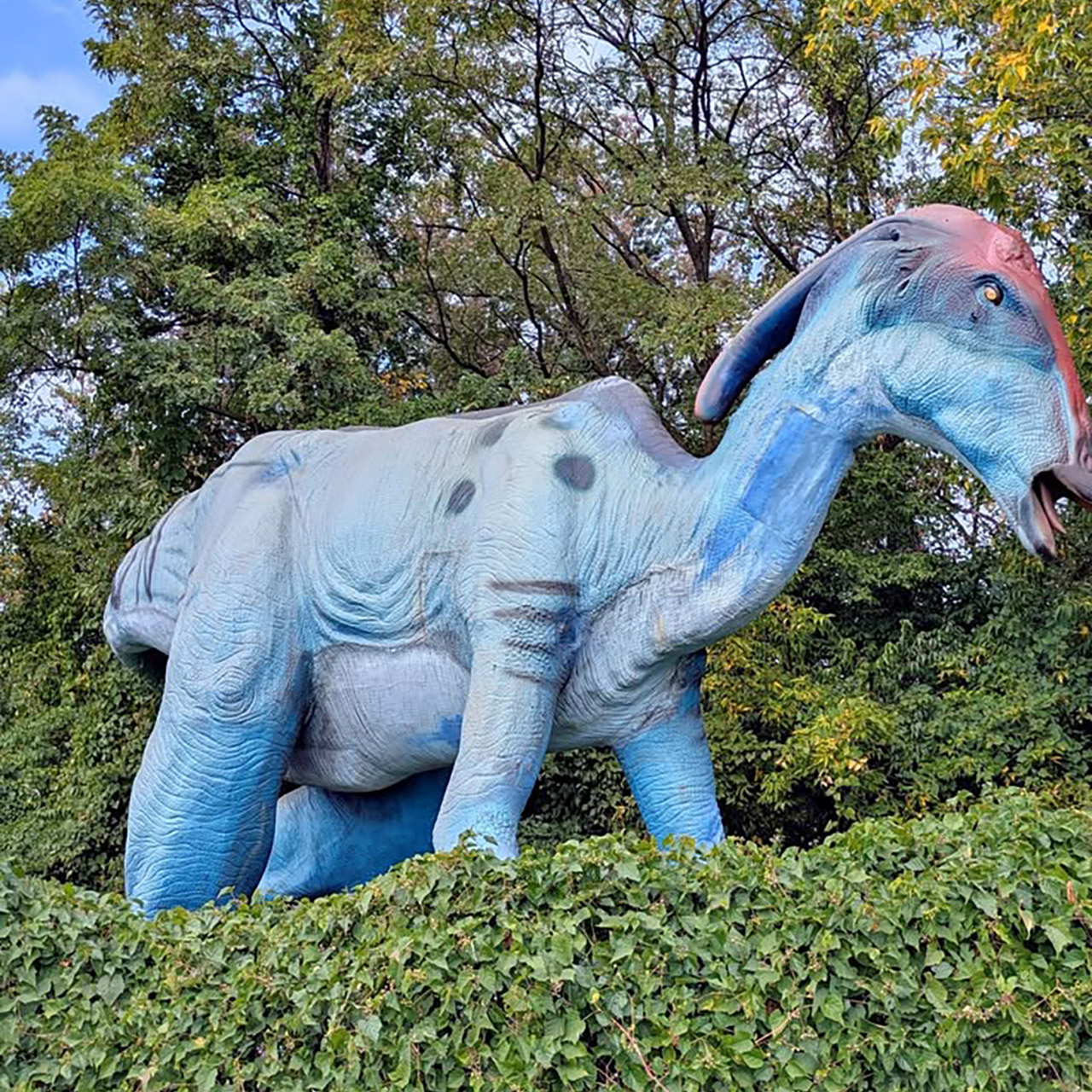
All functions are practical, stable, and safe. Why can small dinosaurs play with childrenThe function of small dinosaurs (1.5-3 meters) is "interaction." Due to their small size, the joints are made dense—each small dinosaur has at least 8 joints: the head turns 45° left and right, the tail swings 30° up and down, and the foreclaws can scratch the ground. For example, the 3-meter Triceratops at the Vancouver Aquarium, Canada, can open and close its mouth by 10 cm, and a small speaker in its throat can emit a low "woo-woo" sound. The small dinosaur skeleton uses 3 cm thin aluminum alloy tubes, with a total weight of 50 kg, making it easy to move to a mall atrium; the 3 mm thick silicone skin, if scratched by a child's fingernail, will at most leave a white mark that can be wiped clean. Medium-Sized Dinosaurs3-8 meters is the main range for medium-sized dinosaurs, and their functions are "attracting traffic + guiding." For example, the 6-meter Parasaurolophus at the Tropical Rainforest Park in Hamburg, Germany, can turn its neck 15° left and right, paired with a mist device on its back that sprays water mist 3 times an hour. The park manager said: "Visitors take 10 minutes to walk from the entrance to the Parasaurolophus to take photos, and they browse other attractions along the way." The joints of these dinosaurs are concentrated in the neck and forelimbs: the neck can be raised 1 meter high, and the forelimbs can be lifted 30°. The range of motion is just right for visitors to see the details clearly. The skeleton uses 5 cm aluminum alloy, with a total weight of 400 kg, and can stand stably on cemented ground; the skin has an anti-slip texture, so children can sit on it for photos without slipping. What else can big dinosaurs do besides looking good?The core function of large dinosaurs (8 meters and above) is "visual impact." For example, the 12-meter Brachiosaurus at the Natural History Museum in Paris, France, stands in the center of the hall, and its neck fills the entire field of view when looking down from the 3rd floor. Its movements are very simple: it lowers its head (head touches the ground) and raises its head (neck forms a 45° angle with the ground) at fixed times daily, with each movement lasting 5 seconds. Although the movements are limited, the sense of intimidation brought by the size is strong—tourists queue for 20 minutes just to see it "eat leaves." The skeleton of the large dinosaur uses 8 cm thick aluminum alloy, with a total weight of 800 kg, and must be fixed on a concrete base to prevent it from being blown over by the wind. The skin is made thinner, at 2.5 mm, to reduce wind resistance and prevent swaying. Size Changes and Movement DifferencesThe range of motion is inversely proportional to the size. Small dinosaurs (1.5-3 meters) have many joints and can perform "fine movements": for example, the tail of a 2-meter small Stegosaurus can swing 20° left and right, simulating "shooing away mosquitoes"; medium-sized dinosaurs (3-8 meters) have moderate movement amplitude: the forelimbs of a 5-meter Tyrannosaurus Rex are raised 30°, paired with a roar, making it appear ferocious but not dangerous; large dinosaurs (8 meters and above) only perform "large movements": when the 15-meter Brachiosaurus raises its head, its neck goes from flat on the ground to a 30° angle, simulating "reaching for high leaves." An excessive range of motion can tear the silicone skin, so it is limited to a safe range. All movements are calculated—for example, when the 12-meter Brachiosaurus lowers its head, the head's descent speed is controlled at 0.5 m/s to avoid startling visitors. How do function tests change with sizeSmall dinosaurs are tested for "interaction durability": performing 1000 continuous head-raising and tail-wagging movements, checking for loose joints or skin indentations. For example, the 2-meter Ankylosaurus in Los Angeles, USA, was repeatedly touched on the head by children during testing, and the skin was shiny but not cracked. Medium-sized dinosaurs are tested for "visitor perspective": using a person 1.7 meters tall to simulate a visitor, checking if the dinosaur's key features (like eyes and teeth) are clearly visible. Large dinosaurs are tested for "safety": using an anemometer to measure sway in 8-level wind, ensuring the head movement does not exceed 10 cm, to prevent hitting nearby facilities. The 12-meter Brachiosaurus in Berlin, Germany, swayed 7 cm during the wind tunnel test. The client said, "It is safe and realistic." 70% of the adjustments come from past projects: a client wanted a 10-meter dinosaur for indoors, but the door was too narrow, so we reduced the size to 8 meters and changed the movement from "tail-wagging" to "head-raising"; a park wanted a 4-meter dinosaur for interaction, so we added more joints to allow it to "nod," which children liked more.
Wholesale Minimum Order QuantityWholesale MOQ: 5 units. Sizes: 3–20m. Materials: steel skeleton + food-grade silicone skin. Unit price depends on model, size, and functions. Bulk orders enjoy better unit price. Production period for bulk orders: 20–35 days. Wholesale ThresholdEvery time a new production line is opened, it takes 2 hours just to debug the mold, calibrate the silicone pouring parameters, and test the skeleton load-bearing capacity. These 2 hours are fixed costs—electricity, labor, and equipment wear—all have to be spread across the cost of a single dinosaur. If only 1-2 units are made, these 2 hours of fixed costs will be entirely allocated to them, and the unit cost will immediately rise to 18,000 euros; but with a minimum order of 10 units, this 2-hour cost is spread to only 2000 euros per unit, reducing the unit cost to 15,000 euros. Last year, we made 15 units of 6-meter Brachiosaurus for a theme park in the Netherlands. They calculated that if they chose a small workshop that "accepts even 1 unit," the total cost would be 23,000 euros higher than ours, all because that 2 hours of debugging fee was charged repeatedly 15 times. Below 10 units: The secret to doubling the unit costSome people ask: "If I order more, can the unit price drop?" We actually want to know: "If I order fewer, why does the cost increase?" For example, when applying the surface texture to the dinosaur—spraying the silicone paint requires color adjustment 3 times. The first time the color is wrong, the machine has to be cleaned, the second time 200 ml of paint is wasted, and only the third time is the standard met. This color adjustment time, for 1-2 dinosaurs, takes 30 minutes, but for 10 dinosaurs, it averages only 3 minutes per unit. Another example is skeleton welding. The welder spends 45 minutes welding the cervical joint of 1 unit in a fixed posture, but when continuously welding the same part for 10 units, the proficiency increases, and the time spent per unit is reduced from 45 minutes to 30 minutes. These unseen "time-sharing" efficiencies cause the unit cost for less than 10 units to rise sharply: the 3-meter basic model sells for 18,000 for 1 unit, but 10 units can be reduced to 15,000, and 20 units can be further reduced to 13,000. 10 units and above
Note: Fixed costs include mold debugging, color adjustment, and welding preparation; shipping is calculated for 300 km within Europe, and installation includes 1 day of labor for 2 technicians. Client Case: The Actual Ledger of a Dutch ParkLast month, the "Happy Hour" theme park in the Netherlands ordered 10 units of 9-meter Tyrannosaurus Rex. They initially worried if "10 units would be too few," but we showed them the background data: a small workshop's unit cost for 10 units was 17,000, while ours was only 15,800, saving 12,000; more critically, our production line can guarantee an error of less than 2 cm for each dinosaur—a small workshop making 10 units might have 3 units with crooked necks, and repairing them would cost an additional 500 euros/unit. After the park opened, parents took photos with their children and posted them on social media. Comments often mentioned, "The dinosaurs look so real," which indirectly brought them 30% more weekend visitors. For them, 10 units is not just a quantity; it is exchanging a stable cost for "good dinosaurs that can attract traffic." Not a Limit, but the Start of EfficiencySetting the minimum order at 10 units is not about refusing small orders, but about focusing our energy on orders that can be done well and cost-effectively. The factory can handle 500 orders monthly. If we accepted all orders for 1-2 units, we would spend 10 hours a day just debugging molds, and we would never finish the work. For orders of 10 units or more, we can concentrate on debugging equipment and optimizing the process, which paradoxically leads to faster delivery—last month's order of 10 units for a Spanish mall took only 22 days from contract signing to delivery at the mall. For the client, receiving the dinosaurs one day earlier means one day earlier to use them to attract traffic; for us, centralized production of 10 units allows us to minimize the cost of each unit. This is not a threshold; it is an efficiency balance that benefits both parties. Wholesale Includes More Than Just GoodsWholesale service includes:
Damage rate during transportation is less than 1%. No Need to Arrange Your Own TransportNo matter how sturdy the wholesale dinosaurs are, damage during transport is a loss. We collaborate with a local European trucking company that provides trucks specifically equipped with anti-vibration wooden crates. The dinosaurs are then placed in custom wooden boxes and finally secured in the truck compartment. Last year, we handled 120 transport trips, and the arrival damage rate was less than 0.5%. For example, when delivering 15 Brachiosaurus to a Belgian park over a 300 km distance, the truck was equipped with GPS, and the driver reported the location every hour. Upon arrival, the client found only a slight paint scratch on the tip of one tail, and we immediately sent a replacement part. If the client arranged their own transport, finding a truck would take 3 days, and due to inexperience in packaging, the damage rate could reach 3%, costing an additional 2000 euros. No Need to Hire InstallersWe provide 2 technicians for each order, completing the installation of up to 10 units in 1 day, or 2 days for 20 units. When installing a 6-meter Brachiosaurus, the two people first set up the base, adjust the level to ensure it is not tilted, then install the neck and tail, and finally connect the motor wires. Last month, a Spanish mall ordered 10 units. The technicians arrived at 9 am and finished the installation by 5 pm. They also taught the mall staff how to power on and adjust the volume. The client said, “If we hired our own workers, the labor cost alone would be 3000 euros more, and we would still worry about damage during installation.”
Dinosaur Rental Price CoverageRental price: 800–2500 USD/day Size range: 3–12m Includes:
Peak season: May–October, monthly orders 40+. Basic Rental Rates for Different Dinosaur Sizes
Small Dinosaurs: 3-5 meters, a common choice for community malls3 to 5-meter simulated dinosaurs are our most frequently rented type, primarily rounded and flexible species like Triceratops and Stegosaurus. The daily rental fee is 800-1500 USD, depending on the dinosaur species and skin details—for example, a Triceratops with colored markings is 100-200 USD more expensive than a solid-colored one. For instance, a community Christmas market in Austin, Texas, USA, rented a 4-meter tall Stegosaurus last year. The total fee was 1200 USD, which included 200 km transportation from our warehouse (Dallas) to the market (free, not exceeding the 500 km limit) and 1 operator for on-site assembly. Medium Size: 6-8 meters, the "crowd magnet" for events and exhibitions6 to 8-meter dinosaurs are the main attractions for medium-sized events, with Tyrannosaurus Rex and Spinosaurus being the most popular. The daily rental fee is 1500-2000 USD. The higher price is mainly due to the larger skeleton and more complex motors; the tail has a natural downward curve, and these dynamic functions require additional parts and maintenance. An outdoor rock festival in London, UK, rented a 7-meter Tyrannosaurus Rex last year for a total fee of 1800 USD. The transport distance was 300 km, which did not exceed the free limit, so only the basic rental fee was charged. The operator arrived 2 hours early to assemble it on the side of the stage. The dinosaur's standing height was 2.5 meters (with its neck raised, it could reach 3.5 meters). Combined with the stage lighting, the roaring sound at the start of the show led to continuous screams from the audience. Large Size Dinosaurs: 9-12 meters, the "visual bomb" for large eventsDinosaurs over 9 meters are "heavyweights," represented by Brachiosaurus and Apatosaurus. The daily rental fee is 2200-2500 USD. The cost is high due to the materials and technology; each section needs separate anti-fracture reinforcement; the Apatosaurus's legs are as thick as utility poles, and the bracket load-bearing capacity is measured in tons. A tech exhibition in Sydney, Australia, rented a 10-meter Brachiosaurus last year for a total fee of 2400 USD. The transport distance was 800 km, exceeding the 500 km free limit. The extra 300 km was charged at 600 USD (3 × 200). Two forklifts were used for installation; the dinosaur was assembled lying down. Once standing, its neck could be raised 8 meters high, just reaching the ceiling of the exhibition hall dome. Explanation of Fixed Costs Beyond Rental FeeRegardless of the size rented, some costs are included by default: transportation uses our own flatbed truck equipped with anti-vibration pads to prevent dinosaur bumps; during installation, the operator adjusts all joints to ensure flexibility where movement is needed and stability where firmness is required; the operator is present throughout the rental period but is not responsible for moving the dinosaur on-site, which requires an additional 300 USD labor fee. For example, an education exhibition in Berlin, Germany, rented a 5-meter Triceratops. They asked in advance if the steps to the exhibition hall could be cleared. We replied that "the tail needs to be disassembled and reinstalled during setup," and the client added a 200 USD disassembly and reassembly fee. The final total was 1000 USD, 200 USD more than the budget but without any disputes. Specific Services Included in the Fee
Transportation: Door-to-Door from Warehouse to Your SiteThe transportation service included in the fee uses a trailer with rubber anti-vibration blocks on the bottom to prevent the dinosaur from being damaged on bumpy roads—last year, a client in Vancouver, Canada, rented a 6-meter Spinosaurus. After 800 km of transport, inspection showed no cracks in the silicone skin and no loose joint screws. It is completely free within 500 km. The excess distance is charged at 200 USD per 100 km. For example, renting from Los Angeles to San Francisco (600 km) incurs an additional 200 USD for the 100 km excess, and the total transportation fee is still included in the daily rental rate. Transportation is generally scheduled 1 day in advance, and the operator accompanies the truck to ensure the dinosaur can be unloaded immediately upon arrival. Installation: Making the Dinosaur "Live" in 2 HoursInstallation is performed by 1 certified operator, requiring no client involvement. The steps are detailed: unpack, unfold the dinosaur from the folding bracket; secure the base, using expansion bolts or sandbags for stability (chosen based on the site's floor material); finally, debug the joints, arm movements, and mouth opening and closing, testing every movable part 3 times. Last year, a primary school event in Arizona, USA, rented a 5-meter Triceratops. The operator arrived at 9 am and finished the installation by 11 am.
Operation Support: The "Dinosaur Butler" During the EventDuring the rental period, the operator is present throughout, not just standing by: pressing button A on the remote control makes the dinosaur roar, and flipping switch B makes it shake its head. If children want to touch the dinosaur, the operator will remind them, "Don't pull the tail, the silicone will tear," but will not actively turn them away. A family day event in Munich, Germany, rented a 4-meter Stegosaurus, and the operator stayed for 6 hours. Midway, the Stegosaurus's roar suddenly became quiet. The operator immediately opened the rear cover to check and found it was a battery contact issue. The battery was replaced in 5 minutes, and the event continued. Hidden CostsIn addition to the visible transport, installation, and operation, the fee also includes equipment inspection: before each dinosaur leaves the warehouse, we test the skin's tensile strength (to ensure it can't be pulled apart), the motor temperature (not exceeding 60℃), and the remote control signal (no delay within 100 meters). Last year, during the outgoing inspection for an 8-meter T-Rex rented by a client in Edinburgh, UK, we found a slight abnormal noise in the left foreclaw motor. We directly replaced it with a spare part, without the client incurring extra costs. These details are written in the contract appendix. 90% of clients who read it say, "I didn't expect them to even monitor the motor temperature." As the client who rented the 10-meter Brachiosaurus in Brisbane, Australia, said: "The fee looks higher than others, but all necessary services are included, and I didn't have to worry about a thing." Common Surcharge Explanations
All extra fees are transparent and written in the contract. Wanting to Change the Dinosaur Skin ColorIf a client requests a non-standard color for the dinosaur, such as fluorescent pink or metallic blue, or wants to print a brand logo or event slogan, we charge a customization fee of 300-500 USD/unit. The reason is simple: regular dinosaurs use a universal silicone mold, but special colors require re-mixing the silicone, and printing designs requires manual painting, both of which require extra labor time. Last year, a client rented a 6-meter Tyrannosaurus Rex for a brand promotion and requested their company's slogan be printed on the dinosaur's back. We adjusted the ink color three times to meet the standard, and the final customization fee was 450 USD. The client later reported: "Although it cost extra, the on-site effect was very eye-catching, and it was worth it." Rental Period Exceeding 7 DaysThe basic rental period is defaulted to 7 days, and we charge 80% of the daily rental rate for the excess days. This is not arbitrary—dinosaurs need daily skin cleaning (to prevent silicone aging), motor checks (to avoid overheating), and joint adjustments (to maintain flexibility). Long-term rentals require more frequent maintenance, but the cost is lower than short-term rentals, so we offer a discount to the client. For example, renting a 7-meter Tyrannosaurus Rex with a daily rental fee of 1800 USD for 10 days would cost 12,600 USD for the first 7 days, and 1440 USD per day for the last 3 days (1800 × 0.8). The total rent is 12,600 + 4,320 = 16,920 USD, saving 1620 USD from the original price. A German education exhibition rented it for 12 days, and the client specifically noted the "overtime discount" in the contract, saying, "This transparent rule is reassuring." Needing Illumination at NightIf the event requires night display, such as outdoor camping or a light show, the dinosaur needs to be equipped with LED light strips or projection effects, and we charge 150 USD/day/unit. An Australian star-gazing themed campsite rented a 5-meter Triceratops and requested it glow blue at night. We installed flexible light strips on the dinosaur's back and added a small projector to the eyes to simulate "glowing pupils." The client said: "Children chased the glowing dinosaur at night, and the event's popularity increased significantly. The 150 USD was well spent." Difficult Site AccessIf the client's site has steps, narrow doors, or mud, and extra lifting or carrying is required during transport or installation, a handling fee of 200-500 USD/time may be charged. Our flatbed trailer can only reach the parking lot; the remaining distance requires manual labor—for example, moving a 5-meter Triceratops over 3 steps requires disassembling the tail, lifting the head, and 4 people for half an hour, which incurs an extra charge. A Canadian old castle held an event, and the entrance was only 1.5 meters wide, so our dinosaur (4 meters tall) couldn't get in. The neck and tail were ultimately disassembled, moved in three sections, and reassembled, incurring a 300 USD handling fee. Last-Minute Dinosaur ChangeIf the client has placed an order but requests to switch to a different size or species of dinosaur within 3 days before the event, we charge a handling fee of 20% of the daily rental rate. A US mall originally rented a 4-meter Stegosaurus but wanted to switch to a 6-meter Tyrannosaurus Rex two days before the event. We calculated that the original Stegosaurus had already been loaded, and now it needed to be unloaded, and the Tyrannosaurus Rex's transport route had to be rescheduled. The final handling fee was 240 USD (1200 × 20%). We include these surcharges in the contract's supplementary terms, and 90% of clients who read them in advance say, "It's all transparent." As a wedding planning company in the UK said: "Knowing what situations will incur extra charges allows us to plan ahead and avoid on-site disputes." |