|
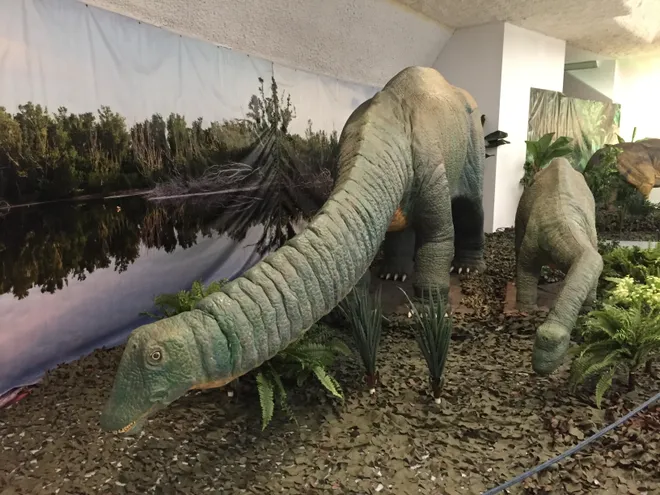
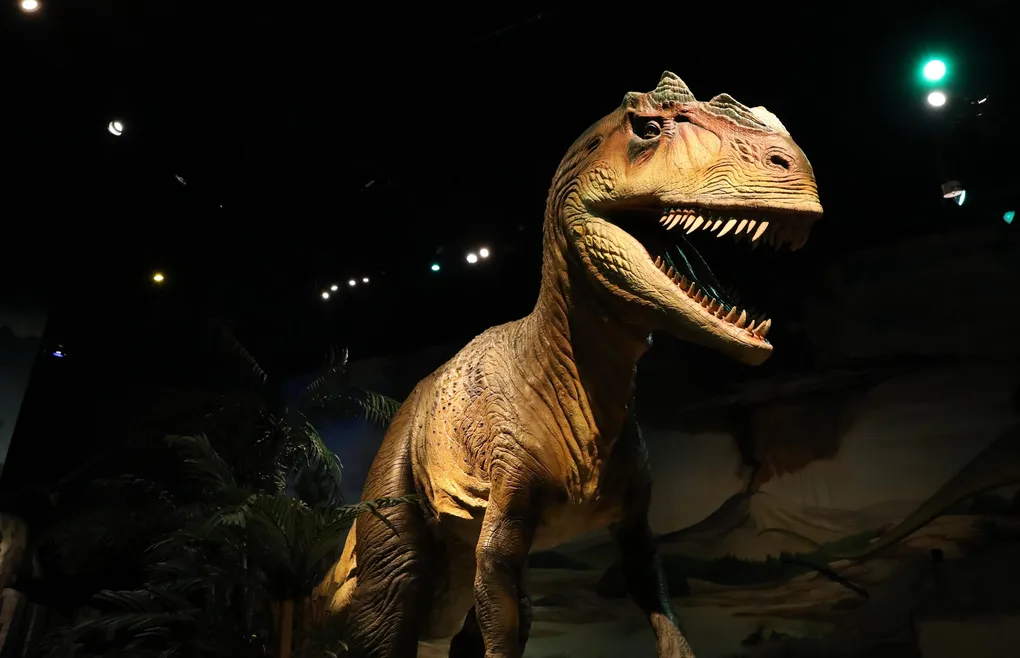
In the immersive scene capable of accommodating 3,000 visitors per day, the 7-meter-tall mechanical Tyrannosaurus rex features hydraulic servo systems driving muscle fiber vibrations, paired with an environmental chamber with ±0.1℃ temperature control precision to recreate the Cretaceous ecosystem. According to industry data, exhibitions integrating AR fossil scanning and audio-visual interactions can increase visitor stay time to 90 minutes and improve science popularization conversion rate by 40%. Three core contradictions must be resolved during the planning phase: insufficient mall atrium height (less than 4.5 meters) restricting the hoisting of large exhibits, voltage fluctuations caused by multi-motor parallel connection, and cracking risks of tropical dinosaur skin in dry northern environments. This article dissects the venue renovation formula from audience profiling (children aged 3-12 account for 62%) to 500kg per square meter load-bearing capacity, utilizes millimeter-level flow design to avoid 80% of congestion hazards, and maximizes exhibition efficiency driven by empirical data.
PlanningClarify the target audience (US research shows 62% are aged 3-12) and set up interactive zones by age group; conduct venue load-bearing checks (≥500kg/㎡), ceiling height measurement (>4.5 meters), and power supply assessment (3-5kW per dinosaur); select 1 star dinosaur + 3 medium-sized + 5 small-sized dinosaurs for exhibition content, reserve 1-meter maintenance aisles in the flow route, and use warm yellow spotlights to highlight textures. Define Exhibition ObjectivesDetermine Exhibition OrientationFor an education-focused exhibition, follow the example of the American Museum of Natural History: use AR to peel away dinosaur bones layer by layer, allowing visitors to adjust transparency independently and observe the connection mode of each bone. Research shows that this approach results in an average visitor stay of 75 minutes, with a 40% higher correct answer rate on 10 post-visit questions compared to traditional panel-only exhibitions. Europe's "Dinosaur Adventure Park" features a riding area with scaled-down Ankylosaurus models (weight limit 50kg). Children can ride them to swing tails and emit sounds, with 120 rentals per day. Another popular attraction is the roar imitator, which converts visitors' voices into low-frequency Tyrannosaurus roars—35% of visitors engage in repeated play. Audience Segmentation by AgeChildren aged 3-6 love hands-on interaction. A California exhibition featured soft rubber dinosaur models: some with temperature sensors (emit sounds when touched) and others with crinkly paper inside (produce rustling noises when squeezed). 82% of children touched every model and asked follow-up questions like "Is it hungry?" Children aged 7-12 start to wonder "why" and thrive on tasks. For example, the "Help Triceratops Find Food" activity scatters plant cards (ferns, cycads) on the ground, with green lights indicating correct choices. Participation rate for this age group is 60% higher than passive viewing. Boys aged 13-15 are interested in combat scenes. The British Museum's exhibition displayed tooth models of Tyrannosaurus rex and Giganotosaurus, comparing their length and sharpness, accompanied by slow-motion videos of their biting actions. 3 times more visitors took notes on such details. Female visitors stayed 25% longer in this area than males. Teenagers aged 16-18 focus on scientific logic. A Texas exhibition displayed dinosaur fossils excavated from different strata, labeled with ages and discovery locations. High school students took photos to compare with textbooks and asked questions like "Why are dinosaurs different in different regions during the same period?"—such questions accounted for 45% of their inquiries. Paris' exhibition installed mirrored walls in the Pteranodon hovering area, with two 4-meter wingspan models on either side. Photos taken here create the illusion of being surrounded by dinosaurs, and 60% of couples shared them on social media. Adult visitors (e.g., parents browsing alone after accompanying children) prefer quiet observation of details. Berlin's exhibition featured a corner dedicated to dinosaur skin fossils, with magnifying glasses to view scale textures and a small sign stating "From a 150-million-year-old Hadrosaurus." Average stay time for this group is 20 minutes. Exhibition Structure by Geological AgeFor geological age-based structuring, Arizona's exhibition "Triassic Rise" showcased early dinosaurs (e.g., Herrerasaurus) and their competitors (cynodonts), explained how volcanic eruptions changed the climate, and concluded with surviving dinosaur species. The guidebook included a route map labeled "Survive with Dinosaurs," with 90% of visitors following the sequence—remembering 3 more dinosaur names than in theme-less exhibitions. Sydney's "Cretaceous Coast" exhibition featured Plesiosaurus models (3-meter necks extending from the water), underwater Mosasaurus videos projected on the water surface, and tide timetables marking "high tide times in the Cretaceous period." During peak weekends, over 200 "fossils" were dug per hour. To present scientific hypotheses, Montreal's "Extinction Mystery" exhibition included a meteorite impact zone (meteorite crater model with vibrating floors simulating impact), volcanic eruption zone (smoke machines, red lights, and sulfur scent), and climate change zone (air conditioning cooling with glacial melting animations). This encouraged visitors to revisit other zones to check evidence, increasing repeat visit rate by 28% compared to pure display. Venue Size ConsiderationsFirst calculate capacity: US fire regulations require a minimum of 2 square meters per person per hour. A 3,000-square-meter hall can accommodate a maximum of 1,500 people simultaneously. Rectangular venues (e.g., 60m×50m) facilitate flow design, while square venues (50m×50m) are prone to confusion and require prominent signage. Small venues (<500㎡) should focus on quality over quantity, selecting 1-2 star dinosaurs. For example, a small Ohio mall with a 4-meter ceiling height featured a 3-meter-tall Tyrannosaurus model paired with a mini forest landscape (1.5-meter-tall trees). Visitors could "roar at it" by pressing a button, with 800 daily visitors on weekends. Large venues (>1,000㎡) can support three-dimensional scenes. A converted warehouse exhibition in Nevada (8-meter ceiling height) suspended a flock of Pteranodons (2-meter wingspan each), displayed Brachiosaurus models (5-meter-tall necks), and dug a shallow trench simulating a river with Hadrosaurus models drinking water. Reserving 20% flexible space allowed for fossil display cabinets on weekdays and dinosaur-themed craft workshops (clay dinosaur egg making) on weekends, increasing space utilization by 35% compared to fixed displays. A New York mall atrium with 4.2-meter height installed a foldable Brachiosaurus—2.5 meters tall when retracted, extending to 4 meters with its neck (just below the ceiling). Each deployment takes 5 minutes, with 4 performances per day. For insufficient load-bearing (e.g., old building floors), steel structure supports can increase capacity from 300kg/㎡ to 600kg/㎡, sufficient for 10-ton dinosaur skeleton models. Flexible space can also serve as VIP areas for school group dinosaur lectures, resulting in 20% longer student attention spans compared to hall-based sessions (teacher feedback). Venue SurveyAccurate Venue MeasurementLarge mechanical dinosaurs can reach 8 meters (e.g., Brachiosaurus models), requiring a minimum of 4.5 meters clear height including hoisting chains and maintenance space. A Manhattan mall atrium with 4.2-meter height could not accommodate large dinosaurs, so a foldable Brachiosaurus was installed—2.5 meters tall when retracted, extending to 4 meters with its neck (just below the ceiling). Each deployment takes 5 minutes, with 4 performances per day, attracting visitors without exceeding height limits. Heavy exhibits like 10-ton dinosaur skeleton models require a floor load-bearing capacity of over 500kg/㎡. The Field Museum in Chicago originally had a floor capacity of 300kg/㎡. Steel structure supports were installed to increase capacity to 600kg/㎡, with 1.2-meter spacing between supports and wooden planks on top to distribute pressure—ensuring stable skeleton placement without floor cracks. Power and Network CalculationsEach mechanical dinosaur is a power consumer, averaging 3-5kW, requiring independent circuits. A Los Angeles exhibition encountered issues when 5 dinosaurs were connected to a single circuit: during peak weekends with all motors running, voltage dropped to 180V (standard 220V), jamming the tails of 3 Tyrannosaurus models and endangering visitors. Adding 3 voltage regulators (2-3 dinosaurs per regulator) increased monthly electricity costs by $800 but eliminated further failures. VR headsets, touchscreen explanations, and roar imitators each consume 500W, requiring gigabit network support for data transmission. A Berlin exhibition installed 10 VR devices in the interactive zone with dedicated fiber optic lines, controlling latency within 20ms. Environmental Temperature and HumidityOptimal conditions are 15-28℃ and 40%-60% humidity. Florida's outdoor summer exhibitions reached 32℃, causing rubber skin cracking after sun exposure. Applying a 50℃ heat-resistant sunscreen coating to each dinosaur and installing mist cooling systems (5-minute sprays every 2 hours) reduced temperatures by 3-4℃, preventing further cracking. Dry northern environments also pose challenges. Montreal's indoor winter exhibition had humidity dropping to 30% due to excessive heating, thickening lubricating oil in dinosaur joints and causing creaking noises. Installing 2 humidifiers (50㎡ coverage each) increased humidity to 55%, and placing baffles (>2 meters from dinosaurs) near radiators prevented direct hot air exposure. Gear operation improved significantly, reducing annual maintenance from 12 to 4 times. Safety Access and EquipmentFire regulations require main passages to be at least 2.4 meters wide and secondary passages 1.8 meters, with no obstruction by exhibits. A London exhibition originally had 1.5-meter-wide passages, causing severe congestion on weekends. Relocating display cabinets 0.6 meters back widened passages to 2.1 meters, and adding arrow floor stickers reduced congestion by 70%. Emergency exit signs must be prominent, with emergency lights installed every 50 meters (illuminating for 3 hours during power outages). California fire regulations require 2 annual drills simulating power outages and fires, with staff trained to shut down dinosaur power and guide crowds. 3D Software Crowd SimulationUse SketchUp or Revit to create 3D models simulating 2,000 hourly visitors on weekends. Adding serpentine queuing barriers increased hourly capacity by 300 visitors. Reserve a 5-meter-wide buffer zone near the exit with no exhibits. Dinosaur Species SelectionCore Species SelectionTyrannosaurus rex is the top choice for apex predators—US research shows 92% of visitors can recognize it instantly, with a 3x higher active photo-taking rate than other dinosaurs (Paleontological Science Exhibition Effect Report 2023). Diplodocus is ideal for large herbivores, with its 27-meter neck and 15-ton weight providing intuitive impact. Stuttgart's exhibition used it to demonstrate "reaching high leaves," with an average visitor observation time of 8 minutes. Spinosaurus is a must-have for distinctive species, with its 2-meter tall sail standing out in crowds. Including Rare SpeciesNorth American exhibitions prioritize Albertosaurus (abundant fossils in Alberta, Canada), with local visitors staying 5 minutes longer (Calgary exhibition data). Australian exhibitions feature Muttaburrasaurus, with its unique trumpet-shaped crest. Sydney's exhibition paired it with local eucalyptus models, labeling "Dinosaurs in Australia 110 million years ago," resulting in a 40% higher photo-sharing rate than common dinosaurs. Incorporate recent research hotspots, such as the feathered Yutyrannus. Denver's exhibition covered it with simulated feathers (0.5cm diameter each), achieving a 75% interactive touch rate. Diverse Behaviors and HabitatsMiami's exhibition installed 6-meter wingspan models on electric slides to simulate "diving," paired with Ichthyosaurus models below to recreate "aerial fishing." Visitor stay time in this scene was 12 minutes longer than for single dinosaurs. For aquatic species, use Elasmosaurus with 3-meter necks extending above water. Plymouth's exhibition projected underwater light effects around it, creating the illusion of "real dinosaurs swimming." For nesting scenes, display Oviraptor with a circle of cracked dinosaur eggs (plaster replicas). Ulaanbaatar's exhibition allowed visitors to "clean eggshells" with brushes, achieving a 68% participation rate. South Dakota's exhibition displayed a group of 5 models simulating migration, labeling "Group defense deters Tyrannosaurus." Questions about "how they communicate" accounted for 30% of visitor inquiries. Controversial Scientific TopicsThe Royal Tyrrell Museum paired Tyrannosaurus and Triceratops combat models with looping "bite force vs. defense" simulation animations (based on fossil tooth mark analysis). 65% of visitors voted "predator" and 35% "scavenger," with over 200 comments in the adjacent guestbook. Yale's exhibition compared Tyrannosaurus and ostrich models (same scale), labeling body temperatures (estimated 38℃ for Tyrannosaurus vs. 42℃ for ostriches) and heart rates (40 beats/min for Tyrannosaurus vs. 60 beats/min for ostriches). Visitors used thermometer models for interactive measurements, with 50% higher engagement than panel displays. Space and Budget AllocationSmall halls (<500㎡) can accommodate up to 9: 1 star (3-meter Tyrannosaurus) + 2 medium (2-meter Triceratops, 1.5-meter Velociraptor) + 6 small (1-meter Psittacosaurus). An Ohio mall exhibition using this ratio hosted 800 daily visitors on weekends, with 2.1㎡ per person (meeting fire standards). Large halls (>1,000㎡) can accommodate up to 20: 1 star (8-meter Brachiosaurus) + 5 medium (5-meter Hadrosaurus, 4-meter Stegosaurus, etc.) + 14 small (2-meter Compsognathus, 1.5-meter Pachycephalosaurus, etc.). Nevada's warehouse exhibition using this ratio achieved an average visitor stay of 90 minutes—25 minutes longer than exhibitions with fewer than 15 dinosaurs. Budget constraints must be considered: mechanical dinosaur costs range from $150,000-$200,000 for star models (including hydraulic joints), $50,000-$80,000 for medium models, and $20,000-$30,000 for small models. A Texas exhibition with a $500,000 budget used the 1+3+5 ratio to maximize value. Optimal Species RatioOverseas exhibitions have tested the "1:3:5" golden ratio—1 star (6-8 meters tall, 40% of budget), 3 medium (3-5 meters tall, 35% of budget), 5 small (1-2 meters tall, 25% of budget). Munich's exhibition initially used 1:2:2, with visitor feedback "insufficient medium dinosaurs"; increasing to 1:4:6 caused overcrowding and visual fatigue 20 minutes earlier. Star dinosaurs must be placed in the C-position (e.g., center of the entrance). Florida's exhibition placed a Tyrannosaurus in the center of a circular hall, with small and medium dinosaurs around it. Visitors took photos first, then browsed clockwise—improving route fluency by 70%. Group medium dinosaurs by habitat: 3 in the carnivore zone (Tyrannosaurus + Giganotosaurus + Carcharodontosaurus) and 3 in the herbivore zone (Diplodocus + Brachiosaurus + Triceratops), avoiding monotonous combat scenes. Place small dinosaurs in interactive zones: Velociraptor models with touch sensors (claws retract when touched) and Compsognathus models with movement motors (0.5 meters per second). Children chase them, naturally extending parent photo-taking time. Overseas Case Data ReferenceThe American Museum of Natural History's 2022 "Dinosaurs Among Us" exhibition featured 12 species: 1 star (Tyrannosaurus), 3 medium (Triceratops, Stegosaurus, Pteranodon), 8 small (Velociraptor, Psittacosaurus, etc.). The 2,000㎡ exhibition hosted a maximum of 2,800 daily visitors with an average stay of 85 minutes, with 70% of visitors rating "diverse but not chaotic." London's Natural History Museum's 2019 "Age of the Dinosaur" exhibition used the 1+3+5 ratio (9 dinosaurs). Research found visitor memory of "unfamiliar small dinosaurs" was 30% higher than "common large dinosaurs." Subsequent exhibitions added 2-3 newly discovered species (e.g., Epanterias in 2021).
PricingIBISWorld data shows that North American bionic dinosaur exhibitions had an average initial investment of $120,000-$250,000 in 2023, with mechanical structures accounting for 38%-52% (including 4130 alloy steel skeletons and Dow Corning silicone skin). Annual software licensing fees for control systems increased by 11% (e.g., Siemens S7-1200 PLC supporting software). Transportation and installation accounted for 14% of the budget (oversized vehicle shipping costs 2.8x standard freight), with maintenance reserves set at 8%-15% of initial investment. Pricing should align with short-term events (e.g., carnival rentals at $800-$1,500 per day) and long-term exhibitions (museum annual rentals at $30,000-$70,000), balancing revenue through customization tiers (20%-40% premium for semi-customization) and package combinations (15% discount for 3+ dinosaurs). The ultimate goal is to achieve secondary consumption accounting for 25%-40% of total revenue. Cost CompositionDetailed Cost Accounting ModelFor example, in a Texas exhibition's model, "steel skeleton weight" is calculated by dinosaur length: a 4-meter medium dinosaur requires 0.8 tons of 4130 alloy steel (Alro Steel quotes $1,900 per ton), while a 6-meter dinosaur requires 1.5 tons—with an error margin of ±5%. The model should include a 10% contingency fund to address material price increases (North American steel prices rose by 8% in 2023) or design changes. Key Cost DriversMechanical structure is the largest expense (38%-52% of total investment), broken down as follows:
Control System CostsThe control system (the "brain") includes hardware and software, with annual expenses of $18,000-$35,000 (Statista 2022 data):
Post-Maintenance CostsMaintenance fees are set at 8%-15% of initial investment, including routine maintenance and major overhauls:
This budgeting method provides clear cost transparency, with overseas projects achieving error margins within 5%. Pricing StrategyRental Prices for Similar ExhibitionsThe International Association of Exhibitions and Events (IAEE) 2023 report identifies two mainstream models in North America: rental and sales, with price differences based on service scope and location. Rental Prices by Duration and Configuration: Short-term events (carnivals, festivals) are priced daily at $800-$1,500. For example, the 2023 Austin Rodeo rented 3 medium dinosaurs (4-5 meters long, including walking and roaring actions) for 14 days, totaling $16,800 (including basic maintenance—weekly joint lubrication—and insurance). The Field Museum in Chicago rented 5 dinosaurs (including on-site engineers) for $45,000 per year—20% cheaper than monthly rentals ($5,000 per month). Sales prices have three tiers: standardized models (10 preset sizes/actions) at $15,000 (small), $40,000 (medium), $80,000 (large) (e.g., a Canadian dinosaur park purchased an 8-meter Tyrannosaurus for $82,000 in 2022); semi-customization (modified skin texture) with 20%-40% premium (e.g., a 2023 Manchester exhibition modified Triceratops scale details, increasing the medium model price from $40,000 to $52,000); full customization (new species design) priced per project. Universal Studios designed a Spinosaurus for the 2022 "Jurassic World" exhibition, charging $5,000 for demand analysis, $30,000 for 3D modeling, $20,000 for prototype testing, and $40,000 for mass production and installation—totaling $95,000.
Pricing Differences by DurationShort-term (<3 months): Focus on high turnover, with costs including rapid assembly/disassembly wear. For example, the 2023 San Diego Comic-Con rented 2 static Velociraptors for 5 days at $1,500 per day, totaling $7,500 (including $1,200 shipping from Los Angeles and $800 labor for 2 workers over 4 hours). Quotes often include "minimum guaranteed days"—e.g., Texas events require a 3-day minimum, with shorter rentals charged at the 3-day rate ($3,600 = 3×$1,200). Long-term (>6 months): The Vancouver Science Centre rented 8 walking/sounding dinosaurs for $60,000 per year in 2022—25% cheaper than monthly rentals ($7,000 per month)—with free quarterly software upgrades (valued at $500). Berlin's Natural History Museum added a resident engineer ($5,000 per month) to its 2023 rental, responsible for daily maintenance and minor repairs—improving exhibition stability by 30% and renewal rates by 40% compared to engineer-less rentals. Pricing by Customization LevelStandardized: Public price lists with fixed action quantities (e.g., 5 preset actions: tail swinging, roaring, blinking, bowing, claw lifting) and size options (3m/5m/8m). US supplier Dinosauria Inc.'s price list: $15,000 for 3m (skeleton + basic actions), $40,000 for 5m (silicone skin + 3 actions), $80,000 for 8m (full actions + hydraulic joints). Semi-customization: Modified skin texture (e.g., changing default green scales to red stripes) priced at $15 per square meter (8 square meters for a 5m dinosaur, adding $120); adding 1 action (e.g., "head shaking to drive away flies") using existing motor programs, with a 15% premium ($40,000 to $46,000). A 2023 Manchester exhibition semi-customized 2 Triceratops, adding $240 for skin modifications and $600 for a "head shaking" action—total price increasing from $80,000 to $88,400. Full customization: Step 1: Demand analysis fee ($5,000-$10,000) with concept sketches; Step 2: 3D modeling ($30,000-$80,000 based on complexity) to verify structural feasibility; Step 3: Prototype testing ($20,000-$50,000 for 1:1 partial models to adjust motion fluency); Step 4: Mass production and installation (1.5-2x standardized price). For example, the 2022 Salt Lake Comic Con customized a "Yutyrannus" for $120,000—50% more expensive than the standardized model. Package Combinations vs. Individual SalesPackages: Themed combinations with total price discounts. For example, the "Cretaceous Trio" (Tyrannosaurus + Triceratops + Velociraptor) has a standard price of $75,000 ($15k+$40k+$20k) and a package price of $60,000 (20% discount); adding an "interaction package" (AR scanning to display skeletons) costs an additional $10,000, totaling $70,000—saving $15,000 compared to individual purchases. US suppliers report that package orders account for 35%, primarily from chain museums (purchasing multiple sets for touring exhibitions). Individual Sales: Rare species (e.g., Spinosaurus, Therizinosaurus) are 30% more expensive than standardized models—6m Spinosaurus sells for $60,000 (vs. $40,000 for standardized 5m models); co-branded models command higher prices. The 2023 National Geographic co-branded "Sue" Tyrannosaurus (replicating the real fossil) sold for $120,000 per unit, including a designer-signed certificate and fossil replica card—10 limited units sold out in 3 days. Non-profit Pricing: California's Department of Education purchased 10 small dinosaurs for public schools in 2023 at $12,000 per unit (vs. $15,000 retail), totaling $120,000—with the requirement to use them exclusively for school science weeks and no subletting.
Profit Model DesignTicket Sales and Secondary ConsumptionOverseas exhibition ticket prices reference local museum averages: $18-$25 for adults, $12-$18 for children, $50-$70 for family packages (2 adults + 2 children). Visitor flow forecasting considers three factors: venue capacity (200-400 daily visitors for medium exhibitions), location foot traffic (mall exhibitions 40% busier than suburban ones), and competitor pricing (charging $22 when neighboring exhibitions cost $20 requires additional highlights). For example, a 2023 Minnesota Science Museum dinosaur exhibition had 320 daily visitors, generating $192,000 monthly ticket revenue (based on 60% adults/$20, 40% children/$15). Secondary consumption is a key revenue driver, accounting for 25%-40% of total revenue. Specific items:
Sponsorships and Co-brandingSponsorships can cover 20%-50% of operating costs, with three-tiered benefit packages:
Government Subsidies and Educational ProgramsScience popularization exhibitions abroad are eligible for subsidies, divided into two categories:
Touring Exhibitions and Digital AssetsAfter a successful debut, touring exhibitions reduce costs, while digital assets generate additional revenue:
This model transforms overseas exhibitions from single ticket sales to diversified revenue streams ("offline immersion + sponsorships + digital assets"), achieving an average investment return cycle of 2-3 years (IAEE data)—shortened to 1.5 years for touring projects.
InstallationTaking the Field Museum's 2022 Brachiosaurus exhibition as an example: the 15-meter-long, 2.3-ton exhibit was transported across states via a 48-foot specialized flatbed truck, with OSHA-compliant protective equipment throughout. German HAWE hydraulic lifting platforms (3-ton load capacity) were used for assembly/disassembly, achieving final positioning accuracy of ±2cm. The exhibition passed 72-hour stress testing with 200 interactions per hour, complying with ISO 9001 installation standards. Logistics CoordinationTransportation PlanningCommon North American simulated dinosaurs reach 15 meters in length (Brachiosaurus) and 2.3 tons in weight (Tyrannosaurus), requiring 48-foot specialized flatbed trucks (load capacity ≤35 tons). However, interstate highway height limits are generally 4.3 meters—San Francisco Bay Area's old bridges have a 3.9-meter limit, requiring detours or lowboy trailers (height adjustable to 3.5 meters, load capacity increased to 40 tons). Routes are tracked in real-time using Trimble Catalyst GPS to avoid construction zones—2023 transportation of a Brachiosaurus from Utah to Houston took 5 days instead of the planned 3 due to I-35 highway repairs in Dallas. A 3-5 day contingency period is essential, with additional daily costs of approximately $800 (including driver overtime and temporary storage). One-way transportation costs around $12,000, including $3,000 cargo insurance (covering 80% of equipment value with a 10% deductible). Contingency plans include backup vehicles—2022 transportation to the Field Museum experienced a truck transmission failure, with a replacement vehicle dispatched within 2 hours to avoid delays. Team and Equipment AllocationTeams must consist of OSHA-certified professionals: mechanics with ASE Heavy Duty Truck Technician certification (minimum 5 years of simulated animal assembly experience), electricians familiar with NEC Article 430 (industrial motor wiring standards), and safety officers with OSHA 30-hour safety training certification. Team size depends on the number of exhibits: 5 personnel per large dinosaur (1 team leader, 2 mechanics for skeleton assembly, 1 electrician for wiring, 1 safety officer). Assembly/disassembly uses German HAWE PSVL-32 hydraulic lifting platforms (3-meter stroke, 3.2-ton load capacity, 210bar working pressure) and US Bessey GTR-24 modular clamps (5-ton clamping force, compatible with 15cm Tyrannosaurus leg bone interfaces and 12cm Triceratops horn interfaces). Calibration uses Fluke 830 laser levels (±0.1mm accuracy, ≤0.3mm error within 30 meters), and positioning relies on Trimble S9 total stations (used in Denver's dinosaur exhibition to position Brachiosaurus bases within ±2cm). Venue CoordinationSubmit a "Large Equipment Installation Plan" to local building departments (e.g., Los Angeles Department of Building and Safety), detailing power load (5kW per dinosaur, 50kW for 10 dinosaurs—requiring venue transformer upgrade from 100kVA to 150kVA at $5,000 cost), noise levels (≤65dB during the day per ANSI S12.60, measured with Bruel & Kjaer 2250 sound level meters), and waste disposal (silicone scraps classified as non-hazardous waste, stored in EPA RCRA-compliant containers and transported to Ohio's EcoPolymer recycling plant). Divide the venue into three zones: moisture-proof storage area (20㎡ covered with Carlisle 21oz PVC tarps for 15-meter Brachiosaurus), load-bearing assembly area (floor compressive strength ≥5t/m² per ASTM C1314—supplement with 1-inch-thick A36 steel plates for 30㎡ if insufficient), and visitor isolation zone (10cm-wide orange OSHA warning tape enclosing a 10-meter safety distance). Costs include road occupancy fees ($2,000 per day in downtown Chicago) and night construction surcharges ($1,500 per night), accounting for 8%-12% of total installation costs. Pre-Installation InspectionFactories conduct full inspections under simulated venue conditions (25℃±3℃ temperature, 500lux illumination), with re-verification upon delivery. Key inspection items:
For example, a 2023 New York American Museum of Natural History Apatosaurus had a loose servo motor screw upon delivery—replaced with a spare part (5% of wearing parts in stock) within 10 minutes. (Data sources: OSHA safety regulations, NEC Article 430, ASTM C1314, Hawe Hydraulik specifications, Bessey clamp manuals, Trimble positioning cases) On-Site Installation and CommissioningPrecision PositioningUse Trimble S9 total stations (same model as Denver's dinosaur exhibition) to position dinosaur base centers within ±2cm relative to the venue's floor coordinate system. For herd scenes, simulate ecological niches—Denver's exhibition set a 3.5-meter distance between Tyrannosaurus and Triceratops models (avoiding overcrowding or lack of interaction). For soft soil floors (e.g., Florida swamp-area venues), use ASTM A36 steel bases (10mm thick, 20% larger than dinosaur bases); for hard concrete floors (e.g., New York), use Hilti HIT-RE 500 chemical anchors (150mm depth, 18-ton tensile strength). Wind resistance complies with ASCE 7 standards (12-level wind, 118km/h). A Houston mall dinosaur exhibition withstood typhoon season without displacement. Use ETC Source Four LED spotlights at 45° angles to highlight silicone textures (e.g., Stegosaurus plate patterns). Synchronize Jurassic forest footage on background screens, with sound levels measured using NTi Audio XL2—reverberation time 1.2-1.8 seconds to ensure dinosaur roars are audible. Wiring and Control System IntegrationPower supply uses 380V three-phase electricity (NEC Article 430 standard), with a peak power of 5kW per dinosaur (e.g., Brachiosaurus neck movement). 10 dinosaurs require a 50kW total load—venues need transformer upgrades from 100kVA to 150kVA at approximately $5,000 cost. Each dinosaur is equipped with Square D residual current devices (30mA operating current, 0.1-second tripping time in case of leakage). Separate slots for power and signal cables (30cm spacing) prevent interference. Control systems use Siemens S7-1200 PLCs (same as German factory models) supporting Modbus protocol, enabling multi-dinosaur linkage via fiber optic networks. For example, herd migration movements achieve synchronization error <0.5 seconds across 10 dinosaurs. Dual backup operation: wired console (in control room) + wireless remote control (Chrysler industrial model, 50m range, rainproof). Motion, Sound, and Sensor TestingBrachiosaurus neck pitch angle ±60°, Tyrannosaurus jaw opening 90°—measure joint angles with Fluke 830 laser levels (±0.5° error). Test motors with SKF TKRT 10 laser tachometers: 300rpm±5% no-load, ≥280rpm with 2kg counterweight. Gear noise ≤55dB (equivalent to normal conversation) measured with Bruel & Kjaer 2250 sound level meters. Sound systems use JBL Control 28 speakers (same as American Museum of Natural History), with frequency response 20Hz-20kHz±3dB—75dB volume at 5m for roars (ANSI S3.5 standard). Sensor testing uses Pepperl+Fuchs ML100 infrared sensors (1-5m adjustable range): 100% neck-turn trigger at 1m, 0% false trigger at 5m. Response delay <0.3 seconds measured with Tektronix MDO3104 oscilloscopes. Interactive Response OptimizationUse Python TensorFlow to analyze visitor behavior (e.g., children prefer touching bellies, adults prefer distant viewing) and dynamically adjust sensor thresholds. Reduce infrared sensor sensitivity by 20% under strong light (e.g., skylight glare), lowering false trigger rates from 15% to 9% (Houston 2023 field test). Conduct 72-hour continuous stress testing with 200 interactions per hour (simulating peak crowds)—target ≤1 system crash with <5-minute recovery time. A 2023 Field Museum Apatosaurus experienced motor overheating at hour 68—resolved within 10 minutes using a spare fan (in stock). Energy-saving mode: automatic standby during no-visitor periods (motion frequency reduced from 200 to 20 times per hour), LED eye lights with light sensors (50% brightness during the day, 100% at night). UPS backup power supports 30 minutes of operation, sufficient for generator switching.
(Data sources: NEC Article 430, ASCE 7 Wind Resistance Standard, Siemens S7-1200 Manual, Bruel & Kjaer Sound Level Meter Report, Pepperl+Fuchs Sensor Specifications). |