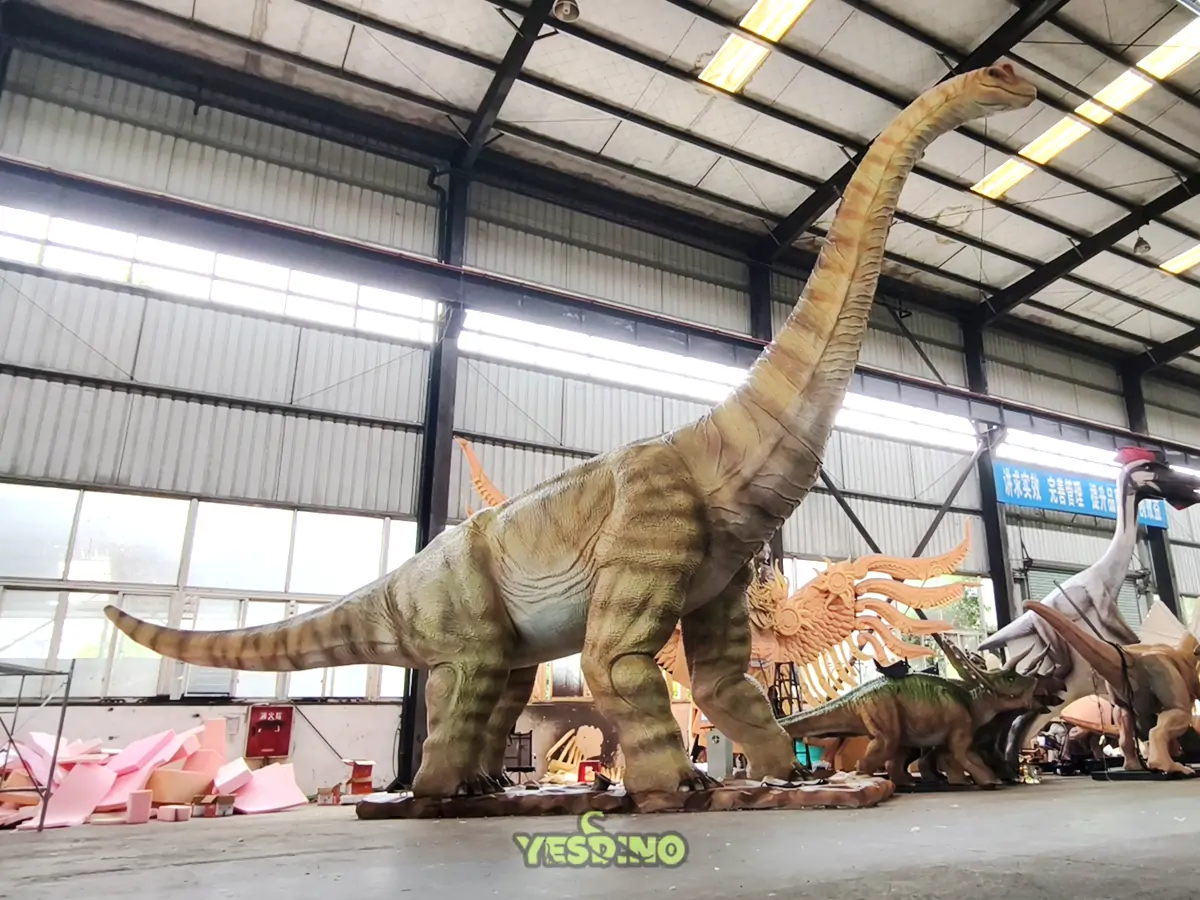
How to Choose an Animatronic Long-Neck Dinosaur: What a Factory Looks AtLong-neck dinosaurs are the models we build most often, and the ones that go wrong most often. The reason is simple: they are tall, they are heavy, and that neck is one long cantilever. On the drawing, everything looks fine. Then it is time to ship it, put it up and keep it running, and the problems start showing up one by one. This is what we tell buyers from the workshop floor and from real installations: where the money should go, and which mistakes you can catch before they cost you. Start With Size and Price. Do Not Chase the Biggest Number First.Get the common sizes straight in your head before you look at a quotation.
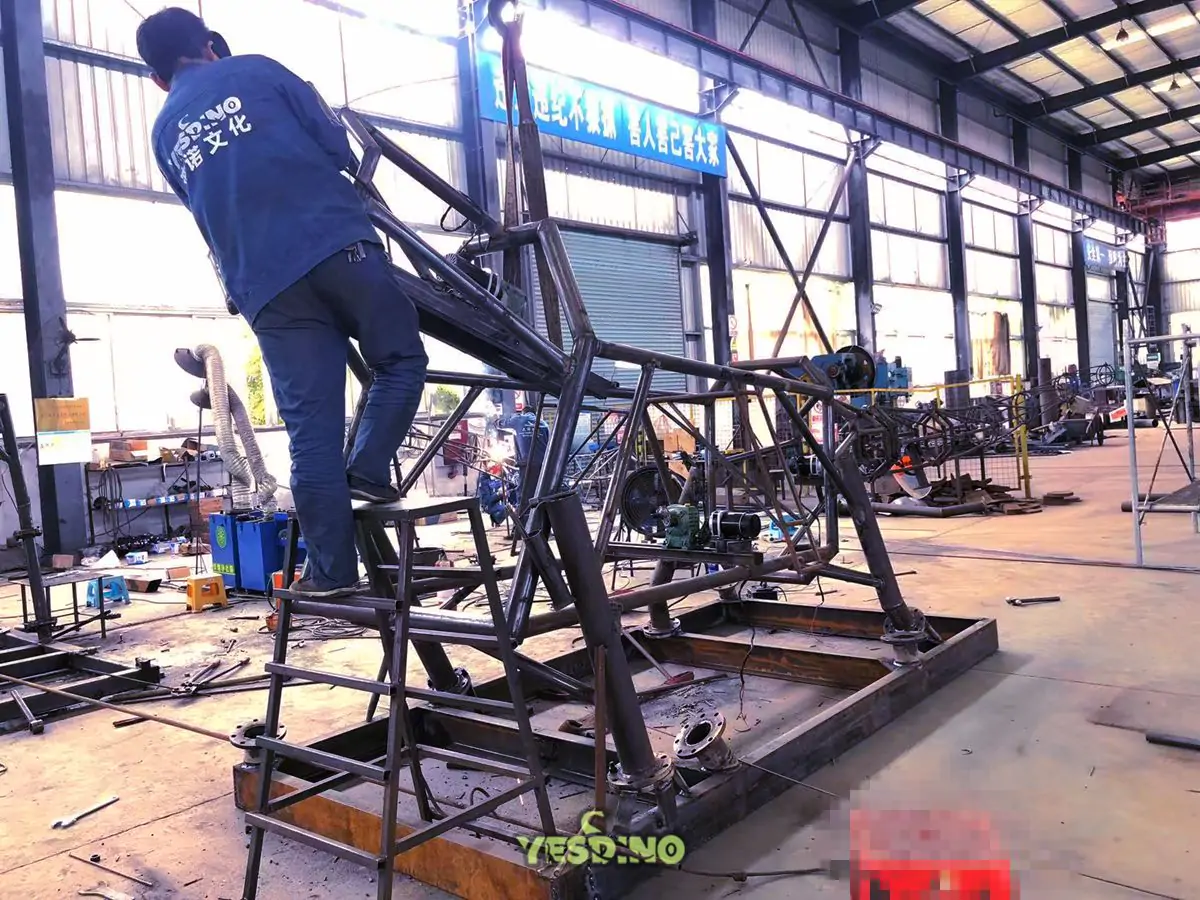
Two practical warnings. First, ignore the quotes you see online for hundreds of thousands or even millions of dollars. Those are hydraulic specialty rigs with dozens of degrees of freedom and liquid cooling. They are not what a normal park buys. Second, price does not rise in a straight line. Double the body length and the weight and cost tend to go up three or four times. The frame has to get heavier, the drives have to be spread across more sections, and every proportion has to be recalculated. If the budget is tight, a well-proportioned size that is built to last beats an oversized one you cannot maintain. The Neck, the Breakdown and the Container. This Is Where Most Jobs Go Wrong.The frame inside has to carry the neck. Do not trust foam and skin.On a large model, the structure inside is welded steel, commonly Q345B or similar, with high-density foam over it and an acid-cure silicone sealant brushed on in at least three coats. The neck needs a steel extension running into it. On the bigger machines we run a finite element analysis (FEA). If you expect the foam and the skin to hold that weight on their own, the neck will sag and split, and that is the single most common reason we get called back for repairs.
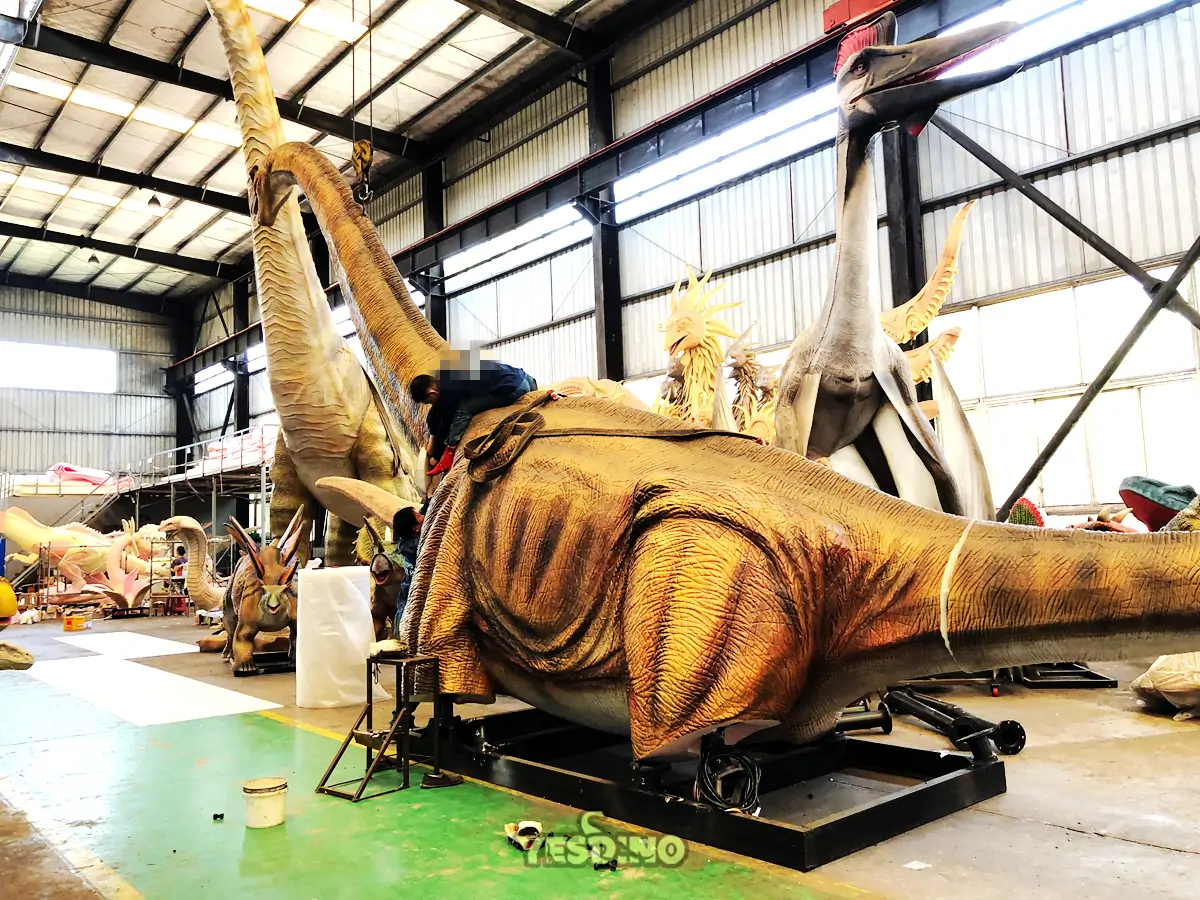
Plan the breakdown and the container before you quote.A dinosaur that is fifteen or twenty metres long cannot ship in one piece. The proper way is to break it down along the drawings into pre-wired modules: head, neck sections, body, tail and limbs, lined up by flanges on the internal frame or by matching number marks. Leave clear access for the assembly points. Do not put a join right across a hinge or a flange, or the crew will fight it on site. Whether it fits in a standard container or needs a high-cube, open-top or flat-rack changes the freight bill a lot. Work that out before you send the quotation, not when you are booking the vessel. Foundations, Headroom and Skin. Do Not Guess.Foundations: this is a moving machine, not a static block of iron.When a big model runs, the drive gear pushes and pulls. Ask whether the base needs expansion bolts. Outdoors, anything over about 6 m presents a large surface to the wind and normally needs a concrete foundation or embedded anchor bolts. For a temporary show, weighted steel plates can do the job. Run a power outlet into the foundation while you are pouring it, and give the concrete its full curing time. Put weight on green concrete and it settles. The geometry shifts, the movement drifts off, and your limit switches start throwing false trips.
Indoor headroom and lifting: if the ceiling is low, the neck cannot come up.For an indoor installation, watch two things: clear height and load capacity, including how the load spreads across the slab or roof. Allow roughly 1.5 times the height of the model in clear space. Otherwise the neck lifts into the ceiling or the lighting rig, and you find out after it is assembled. Check the unloading route and the lifting radius before the truck arrives. Use only the lifting points marked on the steel frame. Never wrap a sling around the skin, the neck or the tail, because you will crush the foam inside. Movement and skin: this is a long-term maintenance bill.Blinking, jaw opening, head turn, neck sway, breathing and sound are the usual set. A photo spot can be specified with a separate smoke effect. But every extra movement means more wiring, more limit points and more servicing later. For outdoor use, the skin has to resist UV, water and the local temperature range, commonly -20 C to +50 C and wider if needed. It lasts a few years in normal service. When you ask for a price, ask about the warranty period and the cost of later maintenance too. Do not look at the ex-works number alone.
How to Ask for a Quote Without Wasting Everyone's TimeGet these five things from the buyer in one go and the quotation will mean something.
When the quotation lands, look at four lines first: overall weight, the base and anchor bolts or the marked lifting points, the largest crate after modular packing, and the warranty and after-sales terms. The more solid those four lines are, the less chance of a "low price now, extras later" argument. If they are vague, the supplier probably has not done the installation maths. Plain truth: a long-neck dinosaur is not cheap, but it is the kind of piece that carries a whole venue. Get it right and it works for years. Get it wrong and the trouble starts on unloading day. Send us your site data and we will put together a configuration and quote real numbers. No games. |